
Successful Brother sewing machine troubleshooting starts by raising the presser foot and threading the entire machine again from scratch. Missed tension discs and unseated bobbin cases cause most birdnests, loops, and broken threads. Re-threading both paths solves these errors immediately.
Why your Brother machine keeps having trouble
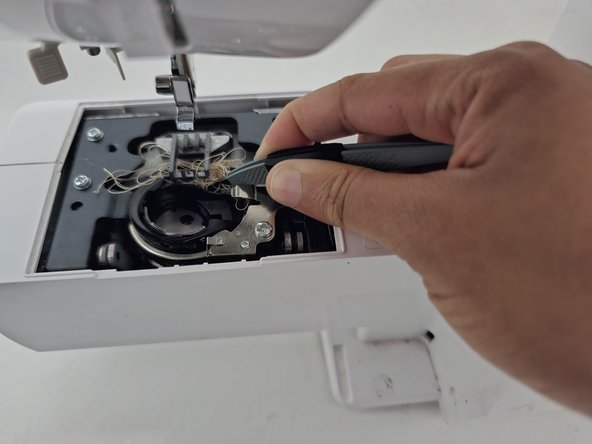 Photo: www.ifixit.com on Google
Most stitch problems happen because the upper thread slips out of the take-up lever during sewing, which ruins thread tension. When the presser foot stays down while you thread the top path, the tension discs stay pinched shut, so the thread sits loosely on top instead of sliding inside. Another common cause is lint buildup inside the bobbin race. Fabric dust and tiny thread scraps pack tightly under the metal plate, which stops the hook from catching cleanly. Finally, a blunt needle will deflect when hitting dense cloth. When the needle bends even a fraction of a millimeter, it skips stitches or strikes the throat plate.
Rethread with the presser foot raised
This fix is for machines making loose loops under the fabric or bunching up thread right away. Always raise the presser foot before touching the spool. Lifting the lever opens the internal tension discs so the strand seats deeply inside. Thread the machine following the numbered guides stamped on your model, and verify the thread passes through the take-up lever eyelet. Drop the bobbin into the race so the thread unrolls in a counter-clockwise direction, forming the shape of the letter “P”. Pull the strand through the small tension spring notch until it clicks. You’ll know it worked when the underside of your test seam looks flat, balanced, and free of tangles.
Install a fresh needle correctly
 Photo: www.youtube.com on Google
A dull needle ruins stitch balance, so replacing it fixes skipped stitches and fabric snagging. Loosen the needle clamp screw by hand or with the small flat screwdriver from your accessory pouch. Slide the old needle straight down and throw it away. Insert a new needle sized for your fabric—such as an 80/12 for quilting cotton or a 90/14 for denim—with the flat side of the shank facing toward the back of the machine. Push the shaft up as far as it can go before tightening the clamp screw securely. An honest limit: this varies by model — check the label or manual for your specific needle system. You’ll know it worked when the machine sews across seam humps without thumping sounds or missing stitch intervals.
Clean lint out of the bobbin housing
This deeper step helps when the handwheel feels stiff or the lower area makes loud grinding sounds. Turn off the power switch and unplug the electrical cord from the wall outlet. Remove the needle, presser foot, and the clear plastic cover. Unscrew the needle plate with your screwdriver, then lift the black bobbin case straight out of its metal well. Sweep the lint away using the small nylon brush provided with the unit. The Brother USA support base notes that you must seat the projection on the bobbin case against the metallic stopper spring when reinstalling it. Don’t take apart the outer plastic machine covers; internal motor work, wiring, and timing gears require an authorized Brother service technician.
What not to do
- Don’t yank the fabric from behind to force it forward, because this bends the needle directly into the steel feed dogs.
- Don’t spray liquid household oil or WD-40 into the plastic gears, as these formulas attract dust, gum up the plastic parts, and ruin delicate fabrics.
- Don’t blow into the bobbin race with your mouth, since warm breath introduces moisture that rusts the internal steel hook over time.
- Don’t twist the tension dial past setting 5 to stop loops underneath, because underside looping comes from top threading faults rather than incorrect dial numbers.
How to stop it happening again
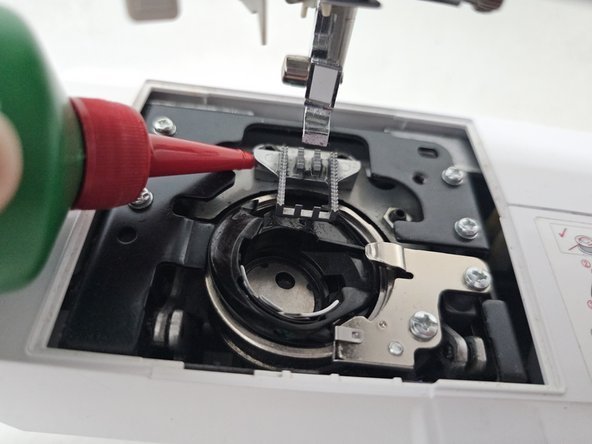 Photo: www.ifixit.com on Google
Good setup habits prevent thread bunching, puckering, and bent needles during long sewing projects.
| If you’re doing this | Do this instead | Why |
|---|---|---|
| Sewing light knits with thick universal needles | Switch to a dedicated 75/11 ballpoint or stretch needle | Ballpoint tips push between knit loops without cutting or skipping fibers |
| Leaving thread tails loose under the fabric edge | Hold both thread tails back with your fingers for two stitches | Loose starting tails get sucked into the race and create instant knots |
| Running dull needles across several thick garments | Swap in a fresh needle after 8 hours of active sewing | Needles lose sharpness rapidly, causing fabric snags and skipped stitches |
| Turning the handwheel away from yourself | Turn the handwheel toward you (counter-clockwise) only | Backward rotation disrupts internal hook timing and tangles lower threads |
Frequently asked questions
Why is my Brother sewing machine bunching thread underneath?
The upper thread slipped out of the tension discs or missed the take-up lever entirely. When top tension drops to zero, the bobbin hook pulls slack thread down into large nests. Raise the presser foot completely and rethread the entire top path from the spool pin.
Can you use metal bobbins in Brother sewing machines?
No, modern drop-in Brother models require specific, lightweight SA156 plastic bobbins. Metal bobbins weigh down the magnetic bobbin case, cause severe friction, and scratch the race assembly. Scratches on the assembly quickly create burrs that catch and snap your thread during stitching.
Why is the bobbin thread not coming up?
The needle is inserted backwards, bent, or resting too low inside the clamp. Check that the flat side of your needle faces the back of the machine. Push the needle up into the stopper, then rotate the handwheel toward you to pull up the loop cleanly.
What happens if you use the wrong thread weight?
The stitch balance collapses, causing thread breakage or jammed fabric feeds. Heavy topstitching thread running through a tiny needle eye creates friction that splits the strands immediately. Match fine 60-weight threads with small needle eyes and standard 40-weight threads with standard sizes.
Is it safe to oil a Brother drop-in bobbin machine?
No, modern computer and mechanical Brother machines feature factory-sealed internal bearings and plastic components that don’t need regular home oiling. Adding liquid oil to the drop-in race attracts lint and dirt, which eventually bakes into a sticky paste that stops machine movement.
Why does my Brother machine skip stitches on stretch fabric?
A standard needle deflects off elastic fibers instead of penetrating cleanly into the bobbin hook. Insert a specialized jersey or stretch needle to let the scarf catch the lower thread. If fabric slips, use a walking foot; if seams curl, loosen upper tension by one step.
How long does a Brother sewing machine needle last?
About six to eight hours of active stitching time is standard before the tip blunts. Heavy canvas or dense denim wears down the point much faster. If you hear a rhythmic thumping sound as the needle enters your fabric, replace it right away.
Related guides
- Daikin Air Conditioner Troubleshooting: Fix Common Errors
- Maytag Washer Bravos XL Troubleshooting: Fix Common Errors
- Bryant Plus 90t Furnace Troubleshooting: Fix Common Error Codes