
Effective Daikin air conditioner troubleshooting begins with resetting the system’s power breaker and reading the remote control error code. Most sudden shutdowns happen because a safety sensor trips when dirty air filters choke airflow across the indoor coils. Turning the unit off at the wall isolates minor software glitches before you call for service.
Common causes of Daikin air conditioner problems
 Photo: geeta-divyadhamtemple.com on Google
Daikin mini-split and central systems stop cooling for three primary reasons: blocked airflow, communication faults, or low refrigerant. Thick dust over the indoor intake blocks warm room air from reaching the heat exchanger, forcing the system to freeze up and switch off to protect its compressor.
Electrical spikes can also desynchronize the indoor wall unit and the outdoor inverter board. When control boards lose contact, the operational lamp blinks continuously. Finally, physical pinhole leaks in the copper piping let refrigerant escape over time. The system detects the pressure drop and locks down to avoid burning out the pump mechanism.
Read the remote control error code
This step is for anyone whose indoor unit shows a flashing green timer light. Point your remote controller at the indoor unit and hold down the Cancel button for 5 seconds until the temperature display shows 00. Press Cancel repeatedly to scroll through the codes. When the remote reaches the active problem code, the unit will emit a long, continuous beep.
A code like U4 points to a wiring fault between indoor and outdoor sections, while A5 or A6 indicates fan motor problems or heat exchanger freeze-ups. Check the code table inside the manual to pinpoint the part at fault. If the code signals internal electrical failure, don’t take the unit apart. High-voltage capacitors carry dangerous electrical charges even when disconnected; leave internal repairs to a licensed HVAC technician.
Wash the indoor air filters
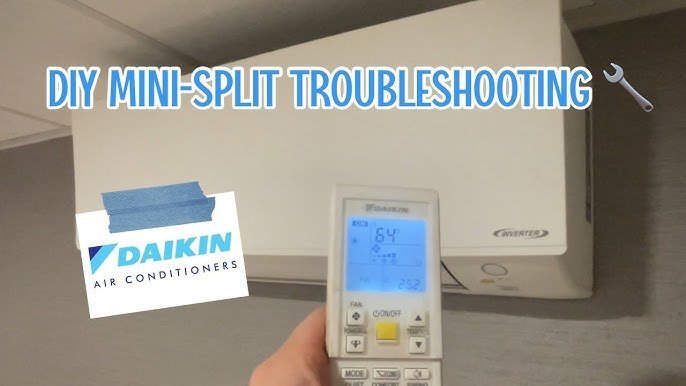 Photo: www.internationalcompetitionnetwork.org on Google
This fix resolves weak airflow, warm blowing air, or musty smells from the wall unit. Turn the system off with the remote. Open the front grille gently until it clicks into its open position, then slide both mesh screen filters down and out.
Take them to a sink and wash them under cool tap water using a soft brush. Don’t scrub with harsh detergent or hot water, as heat warps the plastic frame. Let the screens dry completely in the shade for at least an hour before sliding them back into their tracks. This process trades an hour of waiting for restored cooling power. You’ll know it worked when the louvers blow strong, even air within 5 minutes of turning the power back on.
Reset power at the circuit breaker
A full power reset clears temporary circuit glitches and resets tripped sensors across all mini-split models. This hard reboot works well when the unit ignores the remote or stops mid-cycle without an apparent code.
Locate your home’s main electrical panel and switch the dedicated air conditioner breaker to the OFF position. Leave it switched off for at least 15 continuous minutes. This duration lets internal control boards dissipate residual power and forget previous fault loops. Flip the switch back to ON, then press the remote power button. If the unit resumes normal cooling, a transient glitch caused the stoppage. If the breaker trips immediately again, stop trying; an electrical short has occurred and pushing the breaker repeatedly risks damaging the electrical panel.
What not to do
- Don’t poke wires, screwdrivers, or long brushes into the blower wheel louvers, as this snaps the brittle plastic fan blades and unbalances the motor.
- Never run the air conditioner without its mesh filters installed, because fine room dust will coat the moist evaporator coil fins and cause a costly drain pan clog.
- Don’t keep flipping a tripped circuit breaker back on repeatedly, since a breaker only trips to prevent house wiring from overheating.
- Avoid spraying garden hoses or pressure washers directly into the outdoor compressor fan grill, which bends delicate aluminum fins and forces water into sealed electrical boxes.
How to stop it happening again
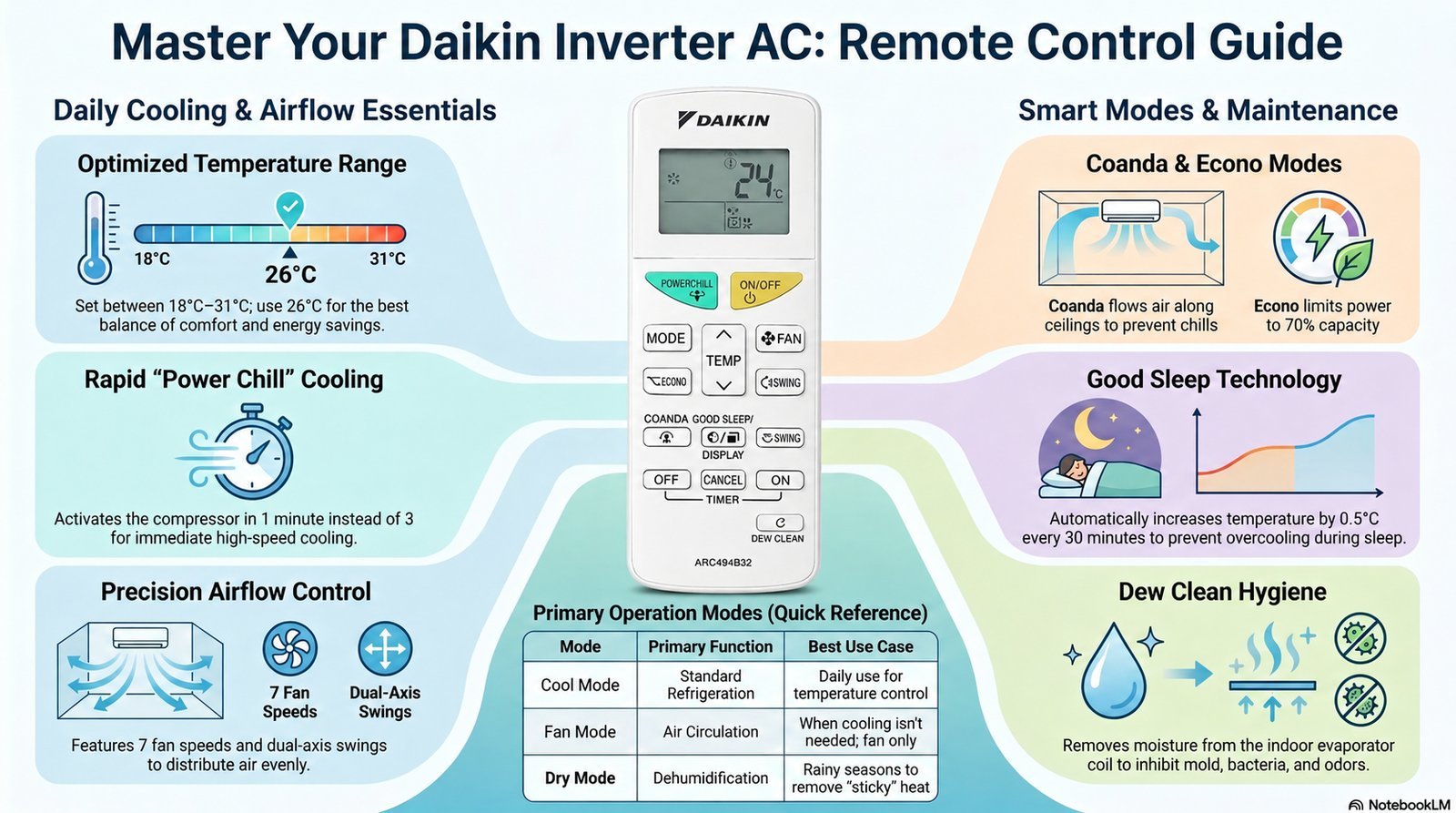 Photo: nim.com.iq on Google
Regular maintenance prevents the airflow restrictions that trigger automatic safety shutdowns. The ENERGY STAR maintenance checklist recommends keeping both heat exchangers clear to protect overall equipment efficiency.
| If you’re doing this | Do this instead | Why |
|---|---|---|
| Waiting months until airflow drops | Clean mesh filters every 2 weeks | Prevents ice from freezing over the indoor coil |
| Stacking patio furniture around outdoor unit | Keep 2 feet of open space around the cage | Ensures the fan can exhaust hot air freely |
| Setting temperature to the absolute minimum | Pick a steady, comfortable target like 74°F | Stops continuous compressor strain during heatwaves |
| Ignoring musty indoor odors | Flush the drain pipe with clean water seasonally | Prevents gelatinous algae from backing up the drain tray |
Frequently asked questions
Why is the green light blinking on my Daikin air conditioner?
The green light blinks when the internal system detects an operational fault and shuts down to protect itself. You can find the specific reason by holding the Cancel button on your remote controller for 5 seconds to run the onboard diagnostic code check.
Can I run my Daikin air conditioner with dirty filters?
No, running the unit with clogged screens chokes the intake air and causes the indoor evaporator coil to freeze into a solid block of ice. This blockage strains the blower motor and can eventually allow liquid refrigerant to flood and destroy the compressor.
How long does a Daikin power reset take?
A full electrical reset takes about 15 minutes with the circuit breaker switched off. This duration gives the internal capacitors enough time to drain their stored voltage completely, which allows the main microprocessor on the inverter board to wipe its temporary memory.
What happens if the Daikin drain hose gets clogged?
The indoor condensate tray fills with water until it overflows down your interior wall. The indoor condensate tray fills with water until it overflows down your interior wall, so a clogged drain line must be cleared promptly to avoid water damage.
Is it safe to wash Daikin filters with hot water?
No, hot water softens and warps the delicate plastic structural frame of the mesh screen. Always rinse the screens using cool or lukewarm tap water, and let them dry away from direct sunlight so they keep their original flat shape.
Related guides
- Maytag Washer Bravos XL Troubleshooting: Fix Common Errors
- Bryant Plus 90t Furnace Troubleshooting: Fix Common Error Codes
- E Z Go Golf Cart Troubleshooting Manual: Fix Common Failures