
Maximizing square footage in a laundry room often leads homeowners to consider vertical configurations, yet it’s vital to understand the disadvantages of stacking washer and dryer units before committing to this layout. While vertical arrangements are space-efficient, they introduce specific ergonomic challenges, maintenance constraints, and installation requirements that differ significantly from side-by-side models. A typical professional installation for a stacking kit and configuration costs between $150 and $450, depending on the complexity of your plumbing and electrical setup.
Key Takeaways
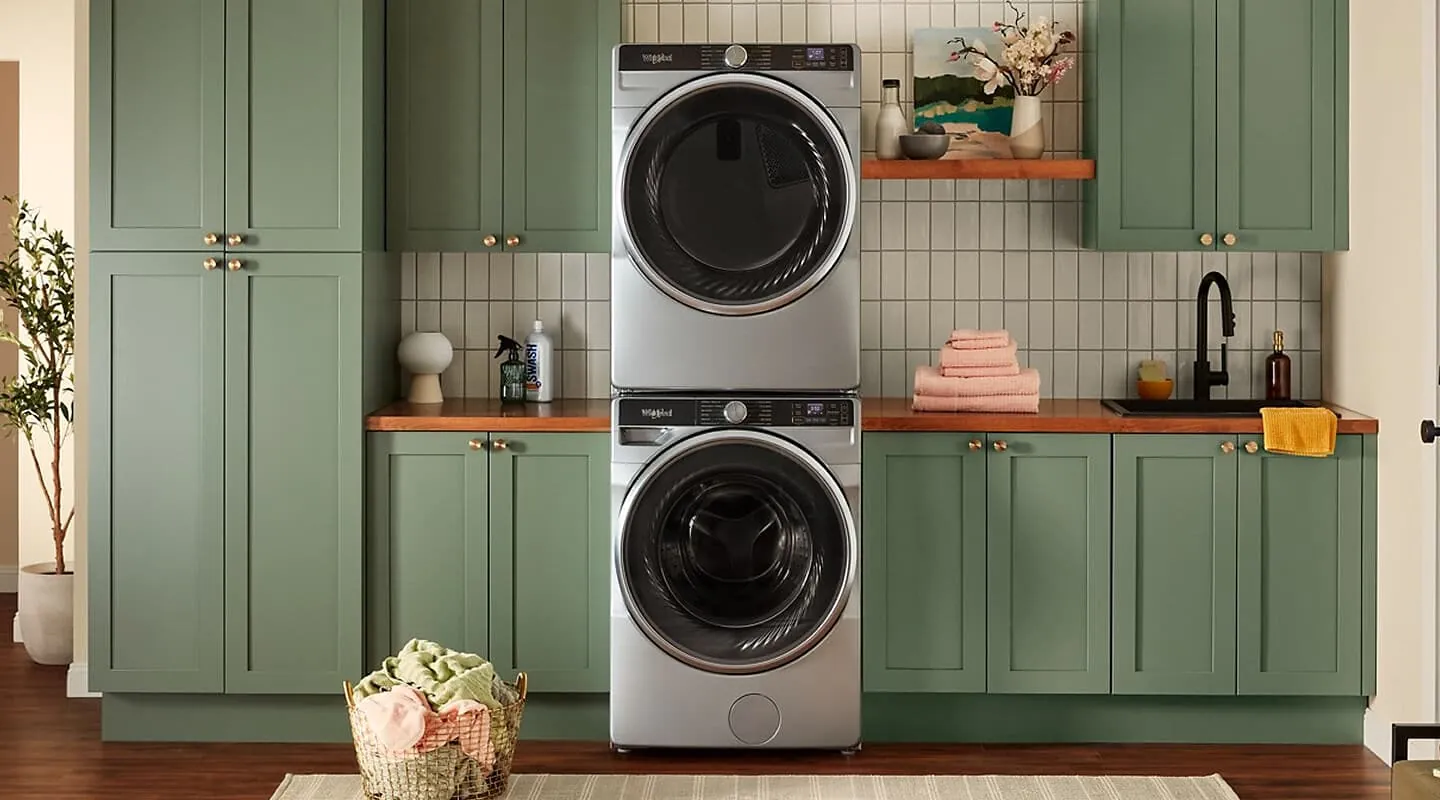
- Ensure your ceiling height exceeds 80 inches to accommodate the total height of a stacked pair.
- Verify the structural integrity of your laundry room floor, as stacked units concentrate weight on a smaller footprint.
- Prioritize ergonomic access to the dryer controls, as these will be positioned at eye level or higher.
- Always use a manufacturer-approved stacking kit to ensure the stability and safety of the upper unit.
- Schedule professional maintenance annually to check the vent connection, which is harder to reach in a stacked configuration.
Why Are Vertical Configurations Challenging?
The primary issue with vertical units is the accessibility of controls. In a side-by-side setup, both machines are at waist level. When you stack them, the dryer controls shift upward. For individuals of shorter stature, reaching buttons or reading digital displays may require a step stool, which introduces a potential tripping hazard in a small laundry area.
Furthermore, the loading process becomes more cumbersome. You must lift wet, heavy laundry from the washer drum and reach upward to transfer it into the dryer, which can place significant strain on the back and shoulders over time.
Limitations on Dryer Vent Access
One of the most persistent issues involves the dryer exhaust vent. In a standard side-by-side setup, you can often pull the dryer away from the wall to inspect the flexible ducting for lint buildup.
Once you stack the units, the dryer is effectively locked in place by the weight of the washer below it. This makes it difficult to perform routine cleanings. If a clog occurs, you may need to hire a professional to disconnect the entire stack just to access the rear vent.
Structural and Weight Considerations
Most modern homes are built to support standard appliances, but a stacked configuration changes how weight is distributed. A full, wet load of laundry in a front-loading washer can weigh over 50 pounds, and the dryer sitting on top adds another 120 to 180 pounds. This entire load is concentrated on four small feet rather than being spread across the width of two units.
If your flooring consists of thin plywood or older, uneven tile, you may notice excessive vibration during the spin cycle. This vibration can eventually cause the stacking kit to loosen or the dryer to shift, potentially damaging the finish of the washer underneath.
| Feature | Side-by-Side | Stacked Configuration |
|---|---|---|
| Floor Space | High demand | Low demand |
| Control Access | Easy for all | Difficult for short users |
| Vent Cleaning | Simple access | Professional assistance needed |
| Installation | Basic leveling | Requires stacking kit |
| Weight Impact | Distributed widely | Concentrated load |
Are There Specific Installation Hurdles?
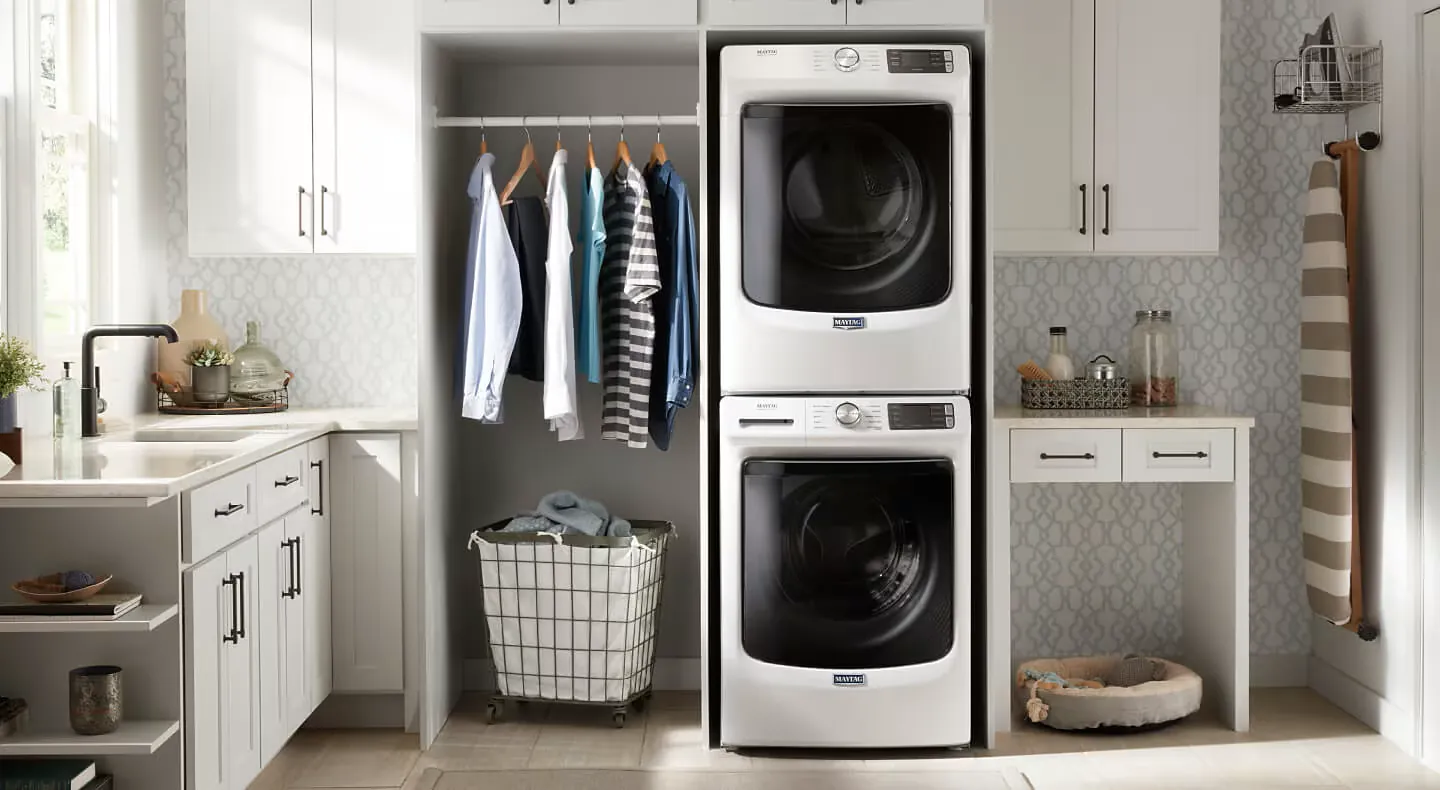
Installation of a stacked unit isn’t a simple “plug and play” task. You must use a specific stacking kit designed for the exact model of your appliances. These kits typically include heavy-duty brackets, rubberized gaskets to reduce vibration, and specialized screws that anchor the dryer frame to the washer frame.
Attempting to stack units without a manufacturer-approved kit is a major safety risk. Additionally, you must ensure that your electrical outlets and water valves are positioned correctly. If your plumbing or electrical boxes are located too high on the wall, the stacked units may not sit flush against the wall, leaving an awkward gap behind the machines.
Comparing Maintenance Needs
Maintaining stacked machines requires a more proactive approach than maintaining independent units. Because you can’t easily move the stack, you must rely on preventative measures to keep the system running efficiently.
| Task | Frequency | Difficulty Level |
|---|---|---|
| Lint Filter Cleaning | Every load | Easy |
| Outer Vent Inspection | Every 6 months | High |
| Leveling Check | Annually | Moderate |
| Stacking Kit Bolt Tightening | Every 2 years | Moderate |
How Does Stacking Affect Resale?
While vertical laundry setups are common in apartments and townhomes, they can be a point of contention during a home sale. Some buyers prefer the countertop space that a side-by-side configuration provides. If you remove the countertop to install a stacked unit, you might lose the folding surface that many homeowners consider essential.
Furthermore, if the stacking kit was installed improperly or has left marks on the top of the washer, the aesthetic value of the appliances may be diminished when it comes time to sell or trade them in.
Common Brands and Stacking Kits
When shopping for vertical laundry solutions, you’re generally limited to front-loading washers and matching dryers. Top-loading washers can’t be stacked due to the lid clearance requirement. When evaluating brands, consider the availability of their proprietary stacking hardware.
- Samsung: Known for their wide range of stackable front-load pairs with integrated control features.
- LG: Offers specific “ThinQ” stacking kits that allow the washer to control the dryer settings.
- GE: Provides robust stacking hardware that’s often easier to install for DIY enthusiasts.
- Bosch: Favors compact, European-style stacked units that fit into tight laundry closets.
- Maytag: Known for heavy-duty stacking kits that prioritize vibration reduction.
Troubleshooting Your Stacked Setup
If you have already installed your units and are experiencing issues, follow this checklist to identify the source of the problem.
Identifying Vibration Issues
If the unit “walks” or makes loud banging noises, the issue is almost always improper leveling. Use a spirit level on top of the washer before placing the dryer on top. If the floor is uneven, use heavy-duty leveling feet or a reinforced base to create a perfectly flat surface. Never place shims under only one corner of the washer, as this creates a pivot point that will cause the entire stack to wobble during the high-speed spin cycle.
Dealing with Control Panel Errors
Stacked units are prone to moisture issues if the vent isn’t perfectly sealed. If your dryer’s digital display is flickering or showing error codes, check the humidity levels in the laundry room. A poorly ventilated room can lead to condensation inside the dryer’s control board. Ensure your exhaust hose is made of rigid or semi-rigid metal rather than thin plastic, as plastic hoses are prone to sagging and trapping condensation, which can eventually drip into the electrical components.
Is Stacking Always the Wrong Choice?
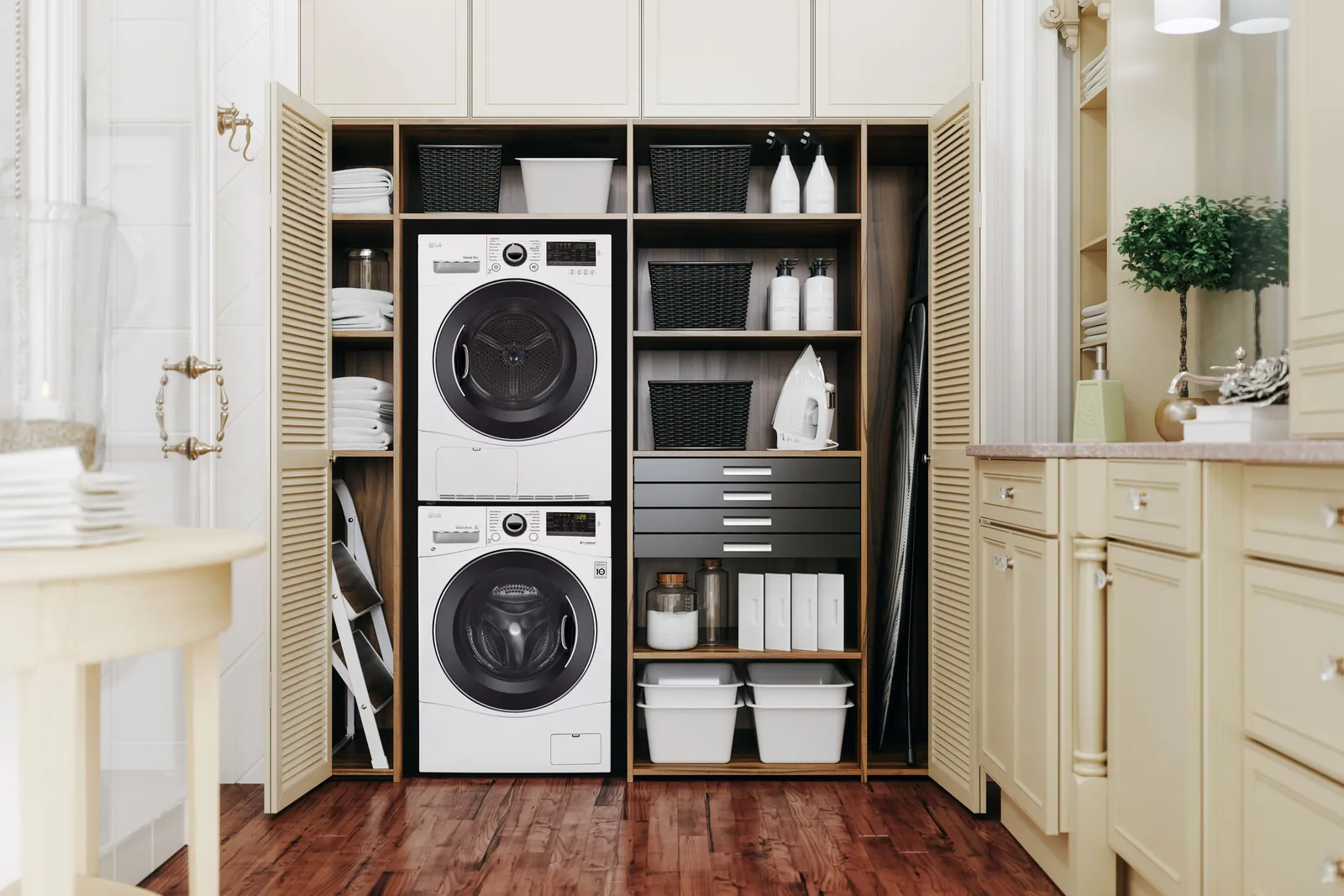
Not necessarily. The decision to stack depends entirely on your laundry room layout. If you live in a high-rise condo or a small urban home, the space gained by stacking is often worth the trade-offs. However, if you have a spacious laundry room, keeping the units side-by-side is almost always the superior choice for ergonomics and ease of service.
Before deciding, mark the dimensions on your floor and wall with painter’s tape to visualize exactly where the controls will sit. If the dryer buttons are higher than your shoulder height, you’ll likely find the configuration frustrating for daily use.
Frequently Asked Questions
Can I stack any washer and dryer?
No, you can’t stack just any washer and dryer. You must use front-loading models, as top-loading machines require lid access. Furthermore, the units must be from the same manufacturer and specifically designed to be compatible with a designated stacking kit. Using mismatched units or generic hardware poses a significant safety risk and can lead to the dryer falling or causing structural damage to the washer’s top panel.
Do stacked dryers take longer to dry?
Stacked dryers don’t inherently take longer to dry clothes than side-by-side units, provided the venting is installed correctly. However, if the stacking process requires a more restrictive or longer vent path due to the height of the exhaust outlet, airflow may be reduced. This restriction can increase drying times and decrease the energy efficiency of the machine, potentially leading to increased utility costs over time.
How do I clean behind a stacked unit?
Cleaning behind a stacked unit is difficult because they’re heavy and physically linked. You should use a long-handled vacuum attachment to clear dust from the sides and the floor underneath the washer. For the vent, it’s best to use a specialized dryer vent cleaning kit with a rotating brush that you can insert into the ducting from the outside of your home to clear out lint buildup.
Is it hard to repair a stacked dryer?
Repairing a stacked dryer is significantly harder than a side-by-side model. Because the dryer is positioned at a height, you or a technician will likely need to unstack the units to access the internal components, such as the heating element, belt, or thermal fuse. This process requires at least two people to safely lift the dryer off the washer, which increases the labor cost for any professional repair service.
Does stacking increase noise levels?
Stacked units can be noisier than side-by-side units if the stacking kit isn’t installed with proper vibration-dampening pads. The vertical structure can act as a sounding board, amplifying the mechanical vibrations of the washer’s motor and the dryer’s tumbling action. Ensure that the stacking kit includes rubber gaskets and that the units are perfectly level to minimize the noise transfer between the two appliances during operation.
Conclusion
To move forward, measure the exact height of your available space and compare it to the combined height of your chosen models, including the stacking kit clearance. Once you have confirmed the measurements, check the manufacturer’s website for the specific stacking kit part number required for your units. If you aren’t comfortable lifting heavy appliances, schedule a professional installation to ensure the stack is stable and safe for long-term use.