
A worn door strike or a weak latch is the reason a dryer door keeps popping open in most cases. You can usually confirm this by checking for loose parts or debris around the door frame. If the door doesn’t stay shut even when you push it firmly, the latch mechanism has likely lost its tension or grip.
Common reasons why your dryer door keeps popping open
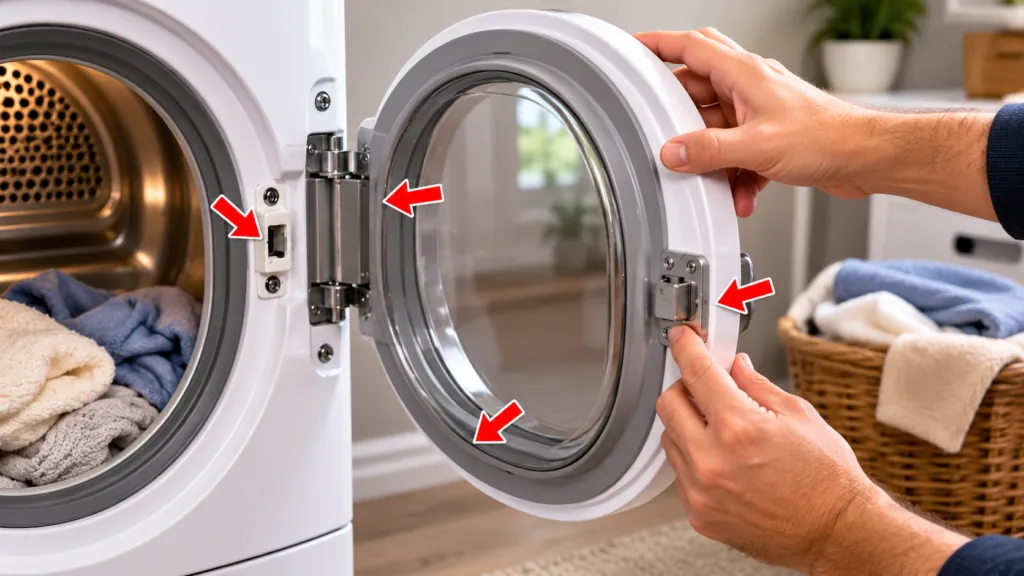
This table helps you identify what might be wrong based on how the door behaves. Always disconnect the power supply from the wall outlet before inspecting internal components to avoid electrical hazards.
| Cause | How common | How to confirm it | Fix it yourself? |
|---|---|---|---|
| Worn door strike | Very common | Inspect for plastic wear | Yes |
| Damaged door latch | Common | Check for loose spring | Yes |
| Uneven dryer feet | Common | Use a bubble level | Yes |
| Heavy load imbalance | Occasional | Redistribute clothes inside | Yes |
| Broken door hinge | Rare | Look for bent metal | Yes |
| Faulty door switch | Rare | Dryer won’t start | No |
If the dryer door pops open mid-cycle, the culprit is almost always a worn strike or a weak latch spring. If the strike looks rounded or the latch offers no resistance when you push the door shut, replace both parts simultaneously to ensure a tight seal.
Many owners mistake a faulty door switch for a mechanical latch issue. If the dryer fails to start or the drum doesn’t spin when the door is closed, the door switch may be the failure point. Test this by pressing the switch manually; if you hear no audible click, the internal contact has failed.
Never ignore a door that requires a heavy slam to close. This habit accelerates hinge fatigue and eventually warps the door frame. If the door remains misaligned after you adjust the leveling feet, inspect the hinge pins for hairline cracks. A bent hinge pin costs under ten dollars to replace, but ignoring it will eventually strip the screw holes in the dryer cabinet.
Worn door strike plates
The door strike is the small plastic or metal piece that keeps the door locked in the closed position. Over time, the plastic edges wear down from constant opening and closing, which prevents the latch from clicking into place securely. If you notice the strike plate looks rounded or cracked, it no longer provides the grip needed to hold the door against the internal pressure of the drum.
To confirm this, open the door and look at the strike plate mounted on the dryer frame. If you see deep grooves or missing chunks of plastic, the part needs replacing. You can order a new strike specific to your dryer model number, which is usually found on a sticker inside the door frame or on the back of the unit.
Test the tension by pushing the door shut; if it bounces back or fails to produce a crisp, metallic click, the strike is likely your culprit. A common mistake is assuming the door hinges are sagging, which leads owners to waste time adjusting the door alignment when the strike plate is the only component actually failing.
If the strike plate shows no visible damage but the door still drifts open, inspect the latch hook for a hairline fracture. If the hook is intact, the spring inside the latch mechanism has likely lost its tension and requires a full latch assembly replacement.
Replacing the strike plate is straightforward. Use a screwdriver to remove the old screws, pull the worn strike out, and snap the new one into place. This task takes about 10 minutes. Always ensure the machine is completely unplugged before you begin any maintenance on the door assembly.
Damaged door latch assemblies
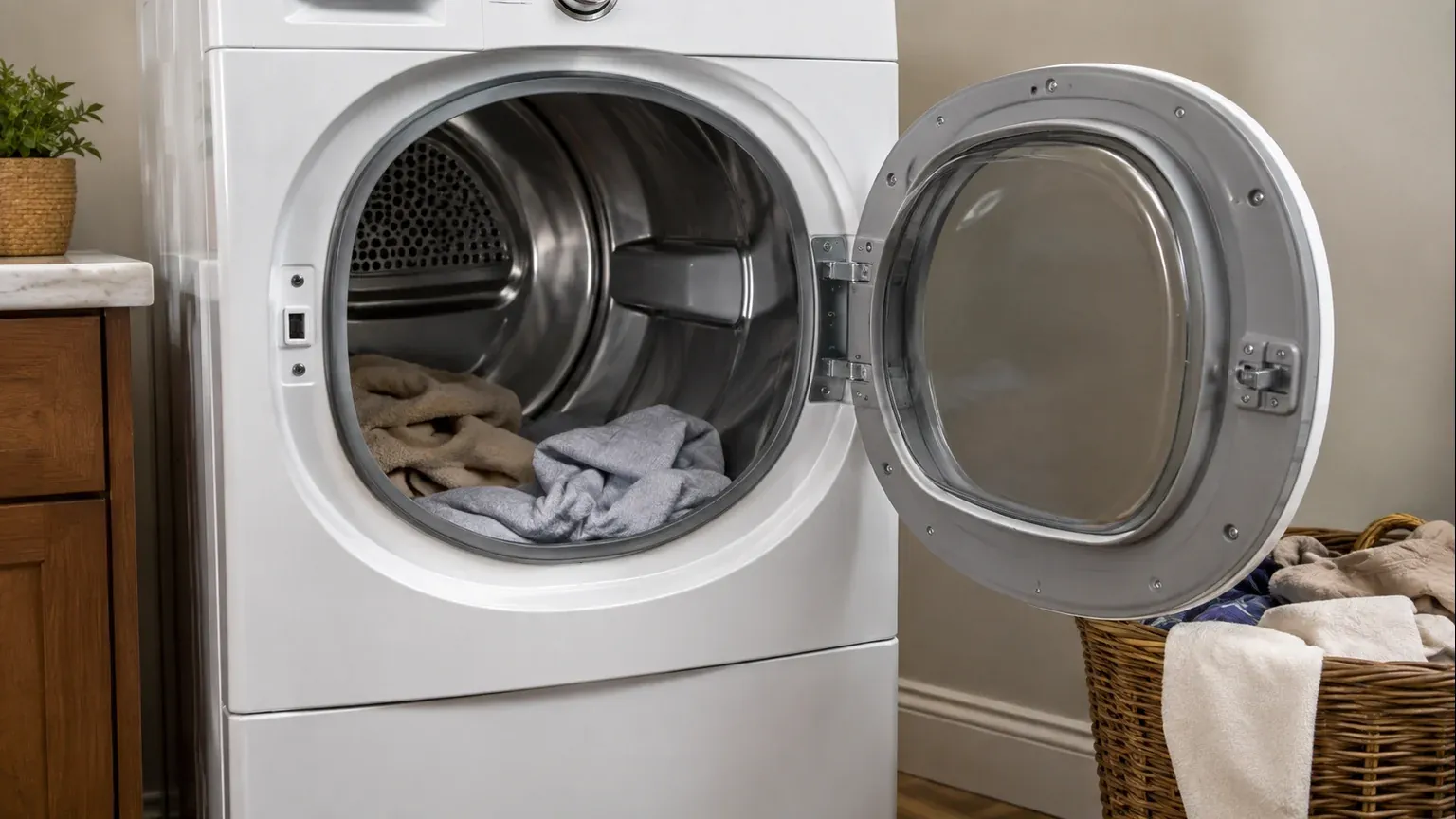
A door latch assembly uses a spring mechanism to hold the door tight against the dryer frame. If this spring loses its tension or the latch housing cracks, it can’t keep the door shut during the high vibrations of a drying cycle. This is different from a strike issue because the problem is inside the door itself, rather than on the frame of the machine.
You can tell if the latch is the culprit by wiggling the latch button or hook while the door is open. If the mechanism feels loose or doesn’t snap back into position when you release it, the spring inside has likely failed. When the latch is broken, it can’t catch the strike plate properly, causing the door to fly open as soon as the drum starts spinning.
To fix this, you must remove the inner door panel to access the latch assembly. This typically involves removing several screws around the perimeter of the door. Once the panel is off, you can slide out the old latch and install a new one. This repair takes roughly 20 to 30 minutes. If you’re uncomfortable working with small springs or metal panels, contact a qualified repair technician to prevent damaging the door finish.
Uneven machine leveling
A dryer that isn’t level will naturally pull on the door, causing it to pop open. If the machine leans forward even slightly, gravity pulls the door away from the latch, putting extra stress on the locking mechanism. This is a common issue after moving a dryer, as the feet often shift out of their original position.
Check your dryer by placing a bubble level on top of the machine. If the bubble isn’t centered, adjust the threaded leveling feet at the bottom corners. You should turn the feet until the dryer sits perfectly flat. A stable, level dryer reduces vibrations, which helps the latch stay secure during long cycles.
If you find the door still pops open after leveling, check the latch strike plate. A common mistake is assuming the floor is level when it’s actually crowned or sloped. If your floor slopes more than a quarter-inch over the width of the machine, the built-in feet won’t have enough travel to compensate. In this case, use rubber anti-vibration pads under the shorter side to bridge the gap.
If the feet are rusted or stuck, use a penetrating oil like WD-40 before applying a wrench. Don’t force them, as you risk snapping the threaded stud inside the dryer frame. If the dryer wobbles when you push on the top front corners, it isn’t level. Always prioritize front-to-back stability first, as this axis dictates whether the door latch engages properly or remains under constant tension.
Rare door hinge issues
Bent hinges are a rare cause but can prevent the door from aligning correctly with the latch. If the door looks crooked or doesn’t sit flush against the frame when closed, the hinges may have been forced or damaged. This misalignment means the latch and strike plate can’t meet at the correct angle.
If you suspect a hinge problem, check for gaps between the door and the frame on all sides. If one side has a larger gap, the hinge on that side is likely bent. A gap wider than three-sixteenths of an inch usually indicates structural shifting or a hinge failure.
You can’t easily fix a bent hinge, so replacing the entire hinge set is usually necessary. People often make the mistake of trying to hammer the hinge pin straight, which only weakens the metal and ruins the finish. If the door still binds after tightening the mounting screws, the hinge leaf itself is almost certainly deformed.
If the door swings open or shut on its own, the hinges aren’t plumb. In that case, you must shim the hinge leaf to correct the angle. This is a job for someone comfortable with alignment tasks, as getting the door perfectly square requires patience and precision.
Fix requirements and costs
Fixing a door that pops open usually demands only a screwdriver and a replacement part. The most common components, such as strikes and latches, rarely exceed fifteen dollars. This is a fraction of the cost of a professional service call, which typically mirrors a standard appliance diagnostic fee of eighty to one hundred twenty dollars.
You can find the correct part by searching for your dryer’s model number on the manufacturer’s official website. Never rely on generic parts found at hardware stores. These often lack the precise tension required to hold the door shut against the dryer’s internal air pressure. A generic strike might fit the screw holes but fail to engage the latch, leaving you with the same problem after ten minutes of work.
If the repair requires removing the entire front panel, look for the wiring harness connected to the door switch. If the wires are brittle or the connector feels loose, call a professional. A mistake here often disables the thermal fuse, which stops the dryer from heating entirely.
If the door stays closed but the machine refuses to start, the interlock is misaligned. In that case, loosen the strike screws slightly and shift the plate by a millimeter before tightening them again.
Related guides
- Garage Door Liftmaster Troubleshooting: Fix Sensors and Limits in 2026
- Bendix AD-IS Air Dryer Troubleshooting: Fix Moisture and Leaks in 2026
- 5 Best Reptile Tank With Sliding Doors Options for Easy Access in 2026
Frequently asked questions
Can I run my dryer with the door popping open?
No, you shouldn’t run a dryer with a faulty door because it creates a serious fire hazard. If the door opens during a cycle, the safety switch should stop the dryer, but a faulty switch or latch remains a safety concern. Always stop the machine immediately if the door fails to stay closed and disconnect the power until the latch or strike is replaced.
How long does a dryer door latch last?
Most dryer door latches last for 5 to 10 years depending on how often you use the machine. The lifespan is determined by the number of cycles you run, as each opening and closing weakens the plastic components. If you notice the door feeling loose or requiring a harder push to shut, the latch is likely reaching the end of its useful life.
Is it safe to use tape to keep the door shut?
No, using tape is a dangerous temporary fix that ignores the underlying mechanical failure. Tape can melt or lose its hold due to the high temperatures inside the dryer, and it doesn’t fix the alignment or tension issues. You should always replace the damaged latch or strike plate to ensure the door stays locked securely during operation.
Why does the door pop open only during heavy loads?
The door pops open during heavy loads because the vibration and weight of wet clothes put more pressure on the latch. If the latch or strike is already weak, the extra movement from a heavy load will force the door to release. You can try reducing the size of your loads to see if the door stays shut, but replacing the worn parts is the only permanent solution.
How do I find the model number for my dryer?
The model number is usually printed on a sticker located on the inside of the door frame or on the back panel of the machine. You can also check your owner’s manual for the location of the identification plate. Having this number is necessary to order the correct replacement parts for your specific dryer model.
Conclusion
If the door still won’t stay closed after you’ve inspected the latch, it’s time to order a replacement part from the manufacturer. Don’t worry, as these components are inexpensive and simple to swap out. You’ll have your laundry running smoothly again in no time once you’ve installed that fresh, secure catch.