
A power surge or a door latch failure is the most common cause behind a frigidaire dishwasher lights flashing issue. It’s safe to continue using your dishwasher once you address the underlying error, but you should avoid running cycles while the control board displays an active error code. To confirm the cause, press and hold the “Cancel” or “Reset” button for three seconds to clear the memory and see if the lights stop blinking. If they continue, you likely have a persistent fault that needs a deeper look at the door switch or heater.
Understanding why your Frigidaire dishwasher lights flash
When you see lights on the control panel blinking, the machine is trying to communicate a specific hardware or communication error. Most modern models use this flashing pattern to indicate where the cycle stopped or what part failed to respond during a self-diagnostic test.
| What you notice | What it usually means | What to do first |
|---|---|---|
| Lights blink in unison | Power surge or glitch | Reset the power |
| Door light flashes rapidly | Latch isn’t engaged | Check door alignment |
| Clean light blinks 7 times | Heating element failure | Check heater continuity |
| Start light flashes once | Sensor communication error | Unplug for 10 minutes |
| All lights blink together | Control board power fault | Inspect wire connections |
| Wash light blinks slowly | Water level is low | Clean the drain filter |
If your dishwasher flashes lights immediately after a cycle starts, check your home’s breaker box before dismantling the door. A tripped breaker often mimics a control board failure, yet it costs nothing to fix.
If the lights blink in a sequence rather than a steady pulse, count the flashes carefully. Most manufacturers use a specific count to identify a faulty thermistor or a stuck float switch. If you see seven flashes, the machine has timed out while heating the water. This usually means the heating element has burned out or the high-limit thermostat has tripped.
If you suspect a sensor error, wait a few minutes before plugging the unit back in to ensure the control board has fully reset. This duration allows the capacitors on the control board to discharge fully, clearing the temporary memory error. If the lights return instantly upon power-up, the fault is likely a permanent hardware failure that requires a replacement part rather than a simple reset.
Resetting the control system
The most likely cause for flashing lights is a temporary glitch in the main control board. Electronics in modern appliances are sensitive to voltage fluctuations, which can confuse the processor and trigger an error state. If your home experienced a recent power flicker or a thunderstorm, the board may simply be stuck in a logic loop that requires a hard reset to clear.
To perform a manual reset, locate the circuit breaker for your dishwasher and flip it to the “Off” position. Wait a few minutes to allow the capacitors on the control board to drain their stored energy completely. After the wait, turn the breaker back on and observe the control panel. If the lights remain steady and don’t return to their flashing state, the reset successfully cleared the error.
If the lights start flashing again immediately after the power returns, the issue isn’t a temporary glitch. This indicates a physical component has failed, such as a burnt-out heating element or a faulty door sensor.
If the flashing persists after a reset, you must investigate the door latch or the heating circuit next. A common mistake people make is trying to force the door shut repeatedly; this can break the plastic latch mechanism, which costs more to replace than a simple sensor.
Checking the door latch mechanism
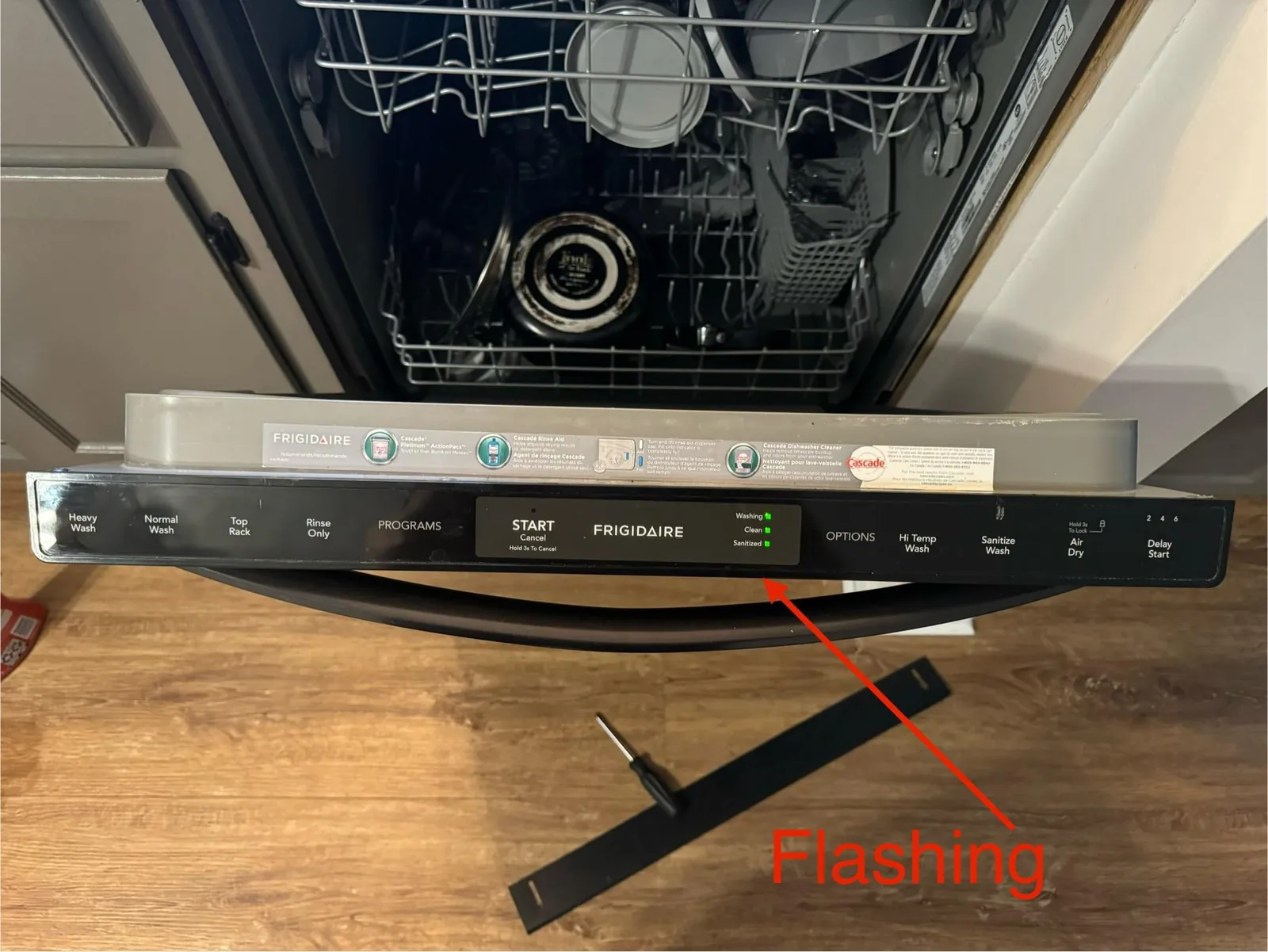
A faulty door latch is the second most common reason for flashing lights on these units. The dishwasher has a small safety switch inside the latch assembly that tells the control board the door is locked and ready for water. If this switch fails to click or if the latch is slightly loose, the board will flash lights to warn you that it can’t start the cycle safely.
Check the latch by opening the door and looking for the metal hook at the top. Use your finger to push the latch assembly; it should feel springy and snap back into place. If it feels mushy or stays stuck in the “open” position, the switch is likely damaged. You can read the official Frigidaire troubleshooting guide for specific instructions on how to access the interior door panel to inspect these connections.
If the latch seems fine, look for debris like hardened food or soap buildup inside the door frame. Even a small piece of plastic can prevent the door from closing fully, which keeps the switch from engaging. If the door closes tight but the lights still flash, the internal switch has likely reached the end of its life.
If you have a multimeter, you can test the switch for continuity, but remember that the control board can hold a lethal charge even when unplugged. Always seek a professional if you’re uncomfortable working with internal electrical components.
Heating element and sensor faults
The third cause involves the heating element or the temperature sensor. If the machine can’t heat the water to the required temperature within the allotted time, the control board will trigger a fault and flash the lights. This usually happens mid-cycle when the dishwasher attempts to sanitize the dishes.
To tell this apart from other causes, note if the lights only start flashing after the machine has been running for at least 20 minutes. If the dishwasher finishes the wash portion but blinks during the drying phase, the heating element is the primary suspect.
You can inspect the bottom of the tub for any visible damage or burnt spots on the element. If the element looks intact, the issue may be the thermistor, a small sensor that monitors water temperature.
If the water remains cold after a cycle, the heating element is likely burnt out. This is a common wear item that eventually fails depending on your water hardness. If your water is very hard, mineral buildup can cause the element to overheat and fail prematurely.
Have a technician test the element for continuity using a multimeter. If the meter shows no continuity, the element is broken and must be replaced.
Many users mistake a faulty control board for a bad sensor. If the element tests within the correct range but the water stays cold, check the relay on the control board for burnt solder joints. A failed relay prevents power from reaching the element, costing you a unnecessary repair bill for a perfectly functional sensor.
When to stop and get help
You should stop working on the appliance if you encounter signs that require specialized tools or carry risks of damage. Trying to force a repair when you lack the correct parts or knowledge often leads to more expensive issues.
The control board shows a burn mark or smells like melting plastic, as this indicates a fire hazard. If you see charred circuitry, disconnect the power immediately and don’t plug it back in.
You need to remove the internal housing to access electrical components. Some capacitors can hold a charge even after the machine is unplugged. If you can’t discharge the capacitor safely, stop work.
The door latch is physically broken or cracked, which requires replacing the entire assembly to ensure a safe seal. A compromised seal causes leaks that ruin your flooring.
You have performed a reset and checked the door, but the error persists. This suggests a failed main control board, which is rarely a user-serviceable part.
If you aren’t comfortable using a multimeter to check for electrical continuity, don’t attempt to test internal sensors. Contact an authorized service technician who can safely diagnose the specific error code stored in the machine’s memory. This is especially important if your appliance is still under the manufacturer’s warranty, as self-repair may void your coverage. Check your purchase date; if it’s less than 12 months old, professional repair is usually free.
Related guides
- Daikin Air Conditioner Troubleshooting: Fix Common Errors
- Maytag Washer Bravos XL Troubleshooting: Fix Common Errors
- Pool Light Transformer Troubleshooting: Simple Steps to Fix
Frequently asked questions
Can I run my dishwasher if the lights are flashing?
You shouldn’t run the dishwasher while the lights are flashing. A flashing display usually signals that the control board has detected a safety fault and has locked the system to prevent water leaks or electrical shorts. Running a cycle in this state may lead to incomplete cleaning or, in some cases, can cause the machine to overflow if the water level sensor is the part that failed.
How long should I wait after a power surge?
You should wait a few minutes after a power surge before turning the breaker back on to allow the electrical components inside the control unit to reset. If you flip the breaker back on too quickly, the board may remain stuck in its error state, leading you to believe there’s a deeper mechanical problem when a simple reset would have sufficed.
Is it safe to fix the door latch myself?
It’s safe to replace the door latch if you’re comfortable using basic hand tools like a screwdriver. Ensure you have turned off the power at the breaker before starting, as you’ll be working near electrical wiring inside the door panel. If you find that the wires are frayed or the plastic housing is melted, stop immediately and call a professional, as these signs indicate a more serious electrical fault.
What happens if the heating element is broken?
If the heating element is broken, your dishes won’t be sanitized and the drying cycle won’t function. The dishwasher will likely stop mid-cycle and flash its lights because the control board senses that the water temperature isn’t rising as expected. You’ll need to replace the heating element to restore the drying function and ensure the water reaches the temperature required for effective cleaning.
Does it matter if the water is hard?
Hard water significantly affects the lifespan of your heating element by causing mineral deposits to build up on the surface. These deposits act as insulation, forcing the element to work much harder to heat the water, which leads to overheating and eventual burnout. If you live in an area with hard water, using a rinse aid or a water softener can help prevent these deposits from forming on your heating components.
How do I know if the control board is dead?
The control board is likely dead if the display is blank or shows flickering lights. If the dishwasher has power and the breaker is on, a total lack of response suggests the processor has failed. This complex repair requires a certified technician to replace the unit.
Conclusion
If these simple resets don’t solve the problem, it’s time to consult your owner’s manual for specific error codes or reach out to a certified technician. Don’t worry if you can’t fix it yourself; getting a professional’s help ensures your appliance won’t suffer any further damage during the repair process.