
Most of the time, the issue is that your lg refrigerator water not cold setting isn’t properly engaged or the system hasn’t had enough time to cycle. In the majority of cases, the water reservoir is simply too small to keep up with high demand, meaning the system needs time to refill and chill after you dispense a large glass. You can quickly check if the water is cooling by dispensing exactly 8 ounces and checking the temperature after the next 2 hours of rest.
Why your refrigerator water isn’t cold
| Cause | How common | How to confirm it | Fix it yourself? |
|---|---|---|---|
| Low usage | Very common | Check after 2 hours | Yes |
| High demand | Common | Wait 30 minutes | Yes |
| Filter issues | Common | Check flow rate | Yes |
| Sensor error | Occasional | Check display panel | No |
| Failed compressor | Rare | Listen for fan | No |
| Sealed system | Rare | Check freezer temp | No |
Water sitting in the supply line often warms to room temperature if the dispenser remains idle for several hours. If you draw two full glasses and the second glass is significantly colder than the first, the issue is simply standing water in the tubing rather than a mechanical failure.
High demand occurs when the cooling capacity is overwhelmed by frequent use. If your unit serves more than four people, the internal reservoir can’t recover fast enough to keep the water chilled. You should space out refills by at least thirty minutes to allow the heat exchanger to cycle properly.
Clogged filters restrict flow, forcing the system to work harder while reducing the volume of chilled water available. If your flow rate has dropped by half, replace the cartridge immediately. A restricted filter reduces the flow rate of the water, which can limit the volume of chilled water available.
Insufficient cooling time after high usage
The most frequent reason for warm water is that the refrigerator has just dispensed a large volume of water. The reservoir in most LG models is located inside the refrigerator compartment and holds about 16 to 24 ounces. When you empty this reservoir, the system replaces it with warm water from your home pipes. It typically takes 2 to 3 hours for the refrigerator to pull enough heat out of that new water to make it cold again.
If you’re filling large pitchers or multiple bottles, you’re bypassing the cooling capacity of the unit. The system is designed to chill small amounts of water for individual glasses, not to act as a high-volume chiller. To confirm this is the problem, don’t use the dispenser for 4 hours. If the first glass you pour after that time is cold, your system is working correctly and simply needs more time between heavy uses.
If the water remains warm after a long period of inactivity, the issue is likely a mechanical restriction rather than a volume problem. You should avoid setting the refrigerator temperature lower than the manufacturer’s recommended 37°F in an attempt to force the water colder. Setting the fridge too low can freeze the water line, which stops flow entirely and creates a repair cost that’s far higher than the price of a simple filter change.
Water filter and flow restrictions
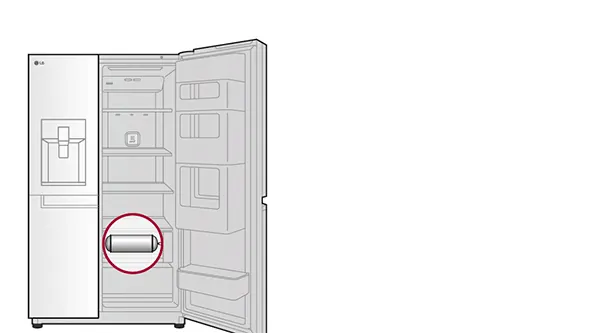
A clogged or expired water filter can restrict the flow of water through the cooling coil, preventing the system from effectively chilling the liquid before it reaches your glass. When the filter becomes blocked with sediment, the pressure drops and the water spends less time in contact with the cooling surfaces.
According to the LG Electronics support guidelines, you should replace your water filter based on your specific usage and the recommendations found in your owner’s manual to maintain proper flow and water quality.
To check your filter, remove it from the housing and try dispensing water without it. If the water flow becomes significantly stronger, the filter was the restriction.
If you live in an area with hard water, you may need to replace the filter every 3 to 4 months instead of the standard 6 months. This is a simple fix that requires no tools, though you must ensure the new filter is an official model designed for your specific refrigerator series to avoid leaks.
Using an off-brand or incompatible filter is a common mistake that often results in poor filtration or restricted flow. These filters may not seat correctly in the manifold, which can cause air to enter the lines. If you notice the water is sputtering when it comes out, it’s often a sign of air in the lines caused by a loose filter connection. Always confirm the filter clicks firmly into place before closing the housing cover.
Thermostat and sensor interference
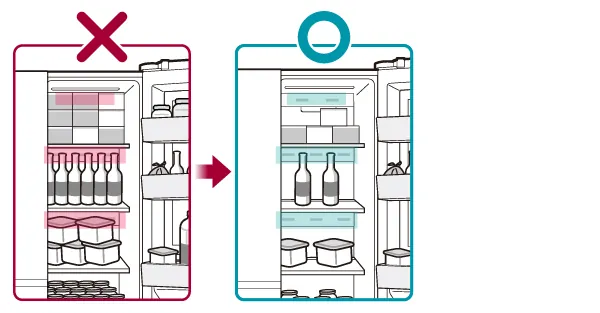
The temperature sensor in the refrigerator compartment dictates how hard the cooling system works. If you have placed large items directly in front of the air vents, the sensor may read a false temperature, causing the fridge to cycle off before the water reservoir has been fully chilled. This happens most often when the fridge is packed tightly with groceries or large containers.
Ensure there’s at least a 2-inch gap between your food items and the back wall of the refrigerator. This allows cold air to circulate freely around the reservoir and the cooling coils. You can verify the temperature by placing a glass of water with a thermometer in the middle shelf for 3 hours. If the reading is above 40°F, your refrigerator isn’t maintaining the correct temperature for food safety, and you should call a professional.
If the refrigerator is set to the correct temperature but the water stays warm, the issue might be a faulty thermistor. This part monitors the internal climate and sends signals to the compressor. If the thermistor fails, the unit may not trigger a cooling cycle even when the internal temperature rises. This is a job for a qualified technician because it involves testing electrical components that require specific safety protocols to handle without risk of shock.
Rare mechanical failures
Damaged water line: If the water line is pinched behind the unit, flow is reduced, which prevents the water from sitting in the cooling zone long enough to lose heat. Check the copper tubing for sharp kinks near the wall connection.
Failed compressor: If the freezer is also not staying cold, the main cooling system is likely failing and requires a professional service visit. Listen for a rhythmic clicking sound near the back panel. If you hear it every few minutes, the start relay has likely burned out, preventing the motor from engaging.
Broken air damper: A faulty damper may prevent cold air from the freezer from reaching the refrigerator section, leading to warm water and spoiled food. If the damper is stuck open, you’ll notice frost buildup on the back wall of the fridge.
Control board error: A software glitch in the main control board can occasionally stop the cooling cycle. Unplug the unit for sixty seconds to force a hard reset. If the cycle fails to resume, the relay on the board has likely failed.
Professional repair expectations
Fixing these issues usually demands a mix of simple maintenance and, in rare cases, professional electrical work. Basic fixes like replacing a filter or rearranging food take only a few minutes and require no special tools. These tasks are comparable to changing a lightbulb in terms of complexity. When the problem involves internal sensors or the compressor, you’ll need a professional technician.
The cost of a repair depends entirely on whether the issue is a simple part replacement or a failure of the sealed system. A filter replacement is a low-cost, recurring maintenance expense. Conversely, a compressor or control board failure is a significant investment that requires a technician to perform a diagnostic test.
You can get a real quote by checking the official LG website for a list of authorized service providers in your area. Never attempt to open the rear panel to touch internal wiring, as the capacitors inside can hold a dangerous electrical charge even when the power cord is unplugged.
Related guides
- Nordic RV Refrigerator Troubleshooting: Fix Cooling Issues Fast in 2026
- Sub Zero Refrigerator Troubleshooting: Fix Cooling Issues Fast in 2026
Frequently asked questions
How long does it take for the water to get cold again?
It takes 2 to 3 hours for the water in the reservoir to reach a cold temperature after you have dispensed a large amount. This assumes the refrigerator is set to the manufacturer’s recommended 37°F and the door has remained closed during the cooling cycle. If you notice it takes longer, check that the air vents inside the fridge aren’t blocked by food items.
Is it safe to drink the water if it isn’t cold?
It’s safe to drink as long as the water is coming from a clean, properly filtered source and the refrigerator is operating within the safe temperature range. However, if your refrigerator isn’t cooling your food properly, the internal temperature may exceed 40°F, which is the limit for safe food storage. If the water is room temperature, check your fridge temperature immediately to ensure your food isn’t spoiling.
Does a new filter make the water colder?
A new filter doesn’t change the temperature of the water, but it improves flow, which allows the cooling system to work more efficiently. If your old filter was clogged, the water was likely moving through the cooling coils too slowly or with too much pressure drop. Replace your filter according to your usage and the instructions in your owner’s manual to ensure that the water volume remains consistent and the system operates exactly as intended.
Why is my water dispensing very slowly?
Slow water dispensing is almost always caused by a clogged filter or a kinked water line behind the refrigerator. If you have recently changed the filter and the flow is still slow, check the tubing at the back of the unit to ensure it isn’t bent or pinched against the wall. A restricted line prevents the water from spending enough time in the cooling zone to get cold.
How do I know if the compressor is broken?
The compressor is likely broken if the water is warm and the freezer isn’t maintaining a temperature of 0°F or lower. You can confirm this by listening for the hum of the fan and the compressor at the back of the unit. If you hear no sound at all, or if the unit is running constantly without cooling, contact a professional technician to perform a diagnostic check.
Does the ice maker affect the water temperature?
The ice maker doesn’t directly affect the water temperature, but a failure in the ice-making system can indicate a problem with the refrigerator’s overall cooling capacity. If your ice is melting or the ice maker isn’t producing cubes, the entire cooling system may be struggling. Check the freezer temperature to see if it’s maintaining the standard 0°F required for both ice production and proper water cooling.
Conclusion
If the water still doesn’t feel crisp after giving it plenty of time to rest, there might be a deeper issue with your cooling coils or internal sensors. It’s a good idea to reach out to a professional technician who can inspect the unit’s sealed system before the problem gets worse.