
A jammed drive belt or a stuck motor pulley usually causes a washer smells like burning rubber issue, as these parts create friction heat when they can’t move freely. You should stop using the machine immediately to prevent further damage or a potential fire hazard. Unplug the power cord from the wall outlet and leave the door open to allow the smell to dissipate. If the odor is strong or you see visible smoke, turn off the circuit breaker that controls the laundry area to ensure complete safety.
Immediate steps when your washer smells burning
Press the power or cancel button immediately to stop the wash cycle. Don’t rely on the electronic interface if the console is unresponsive; in that case, flip the circuit breaker at your home’s main panel to kill power to the laundry room entirely.
Unplug the power cord from the wall outlet to remove all electrical energy. Never reach behind the machine if you smell ozone or see smoke, as the casing may be energized.
Open the washer door or lid fully to let fresh air circulate inside the drum.
Remove any wet clothes from the drum and place them in a safe area away from the machine. Wet fabrics trap heat and lingering chemical odors that can mask the source of a potential fire.
Check the area behind and underneath the washer for any signs of melting plastic or charred insulation. If you find black soot or brittle wires, don’t attempt a restart. Call a certified technician to inspect the internal harness, as a localized short circuit often causes recurring failures.
Safety: Inside a mains-powered machine, the parts behind the outer cover can hold a dangerous electrical charge even after it has been unplugged — that’s why they sit behind a cover. Opening the housing, or testing or replacing anything behind it, is a job for a qualified technician, never a home repair.
How friction creates that burning smell
The mechanism behind this smell is almost always a failure of the drive system to rotate the drum correctly. Your washer uses a rubber belt to connect the motor to the transmission or the drum itself. If the drum is overloaded, the motor tries to turn, but the belt slips against a stationary pulley. This rapid slipping creates extreme heat through friction, which causes the rubber belt to scorch or melt.
Most users make the mistake of ignoring the smell until the belt snaps entirely. This delay costs you more than just a belt; the heat can warp plastic pulleys or damage the motor’s internal winding insulation. If you smell burning, stop the cycle immediately. A belt that has begun to melt will leave a glazed, shiny residue on the pulley surface, which causes the new belt to slip even if the motor is working perfectly.
Another common cause involves a foreign object trapped between the inner and outer drum. If a small item like a coin, a bra wire, or a button slips through the gap, it can pin the drum in place. The motor continues to hum, but the belt drags across the stuck pulley, releasing that distinct, acrid burning rubber scent. In some cases, a failing motor bearing can also seize up, preventing the shaft from spinning and causing the belt to burn.
You can verify the source of the heat by checking for obstructions or signs of belt wear. If the drum rotates freely by hand when the machine is empty, the issue is likely a loose or worn belt. If the drum feels stuck or heavy, an obstruction is the more probable cause.
Apply this rule to diagnose the failure: if you can spin the drum easily but it fails under a load, the belt has lost its tension or grip. If the drum resists manual rotation even when empty, you’re dealing with a mechanical seizure in the bearings or a physical obstruction.
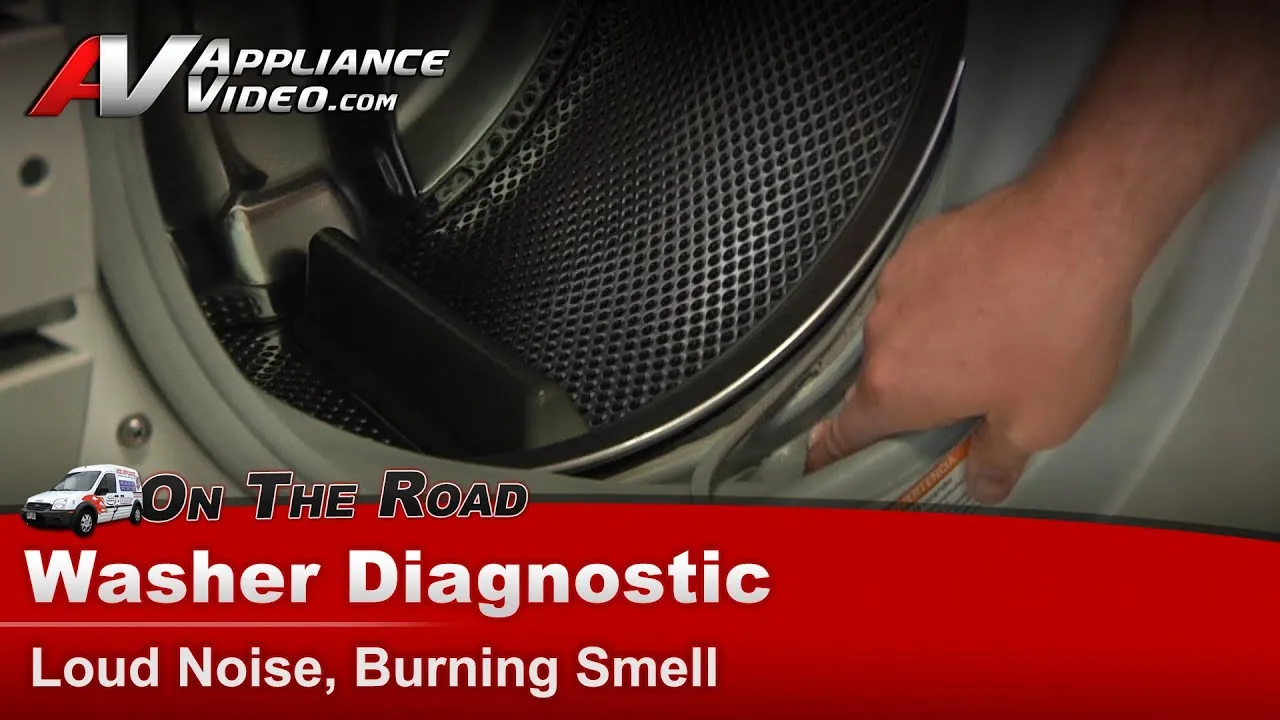
Check the gap between the drum and the door seal for small, metallic debris. A single bra wire can bridge this gap and act as a brake. If you find nothing, remove the back panel to inspect the belt for uneven wear or fraying edges. If the belt looks intact but feels brittle or hard to the touch, it has reached its thermal limit and requires replacement before it fails during a high-speed spin cycle.
Check these, cheapest first
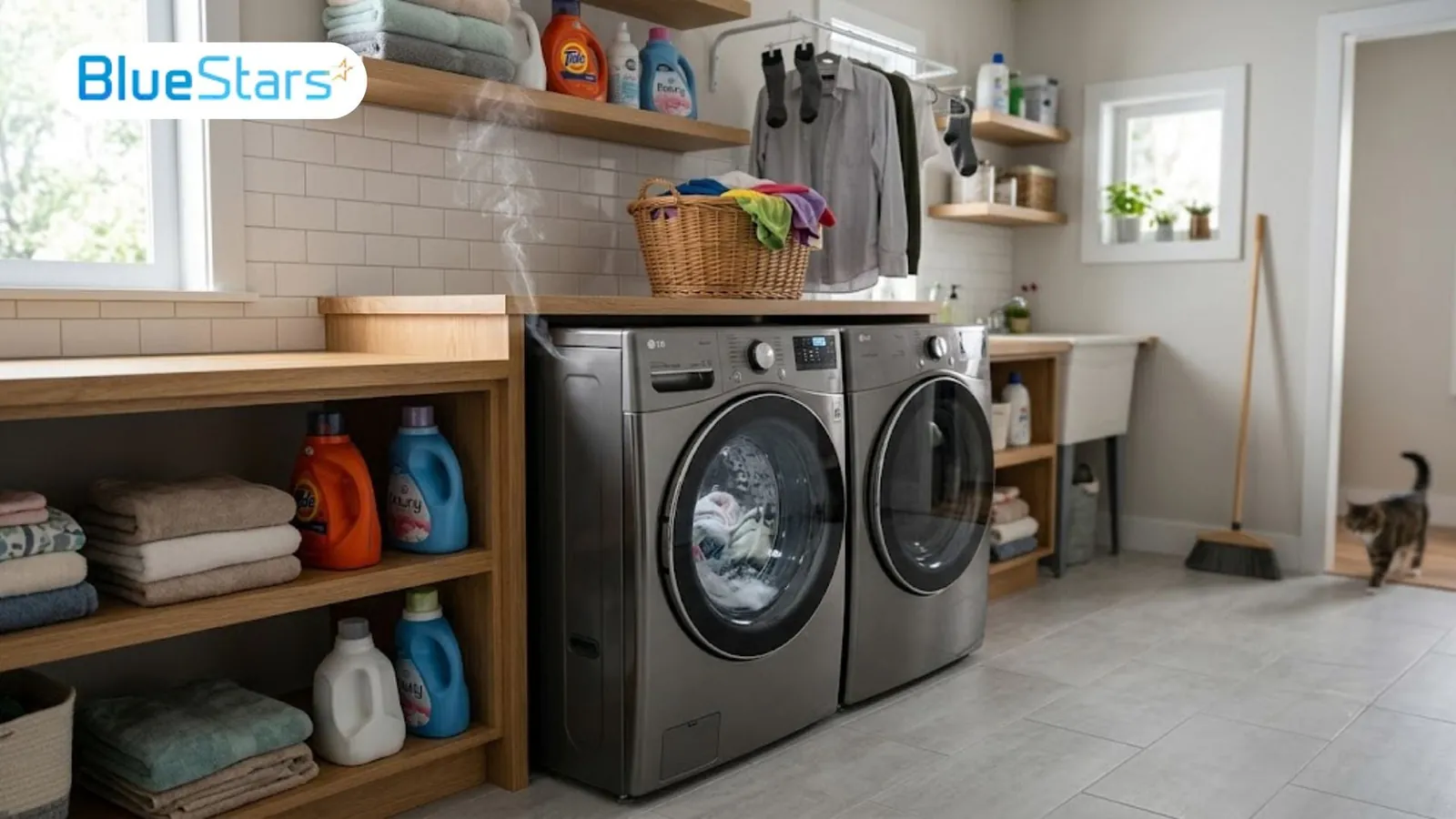
You can perform these checks without tools to identify the most likely culprit.
Check the drum rotation
Spin the drum manually while the washer is empty and unplugged. If it feels stuck or makes a grinding sound, an object is likely caught in the seal.
Check for laundry overload
Look at the size of the load you attempted to wash. If the drum was filled past the manufacturer’s recommended line, the weight may have prevented the motor from turning the belt.
Inspect the door seal
Run your fingers around the rubber gasket at the front of the door. Look for black streaks or tears that indicate something is rubbing against the moving drum.
Check the floor underneath
Look under the machine for small pieces of black rubber or debris. Finding rubber shavings on the floor confirms that the drive belt is actively disintegrating during use.
Smell the motor area
Lean near the back of the unit after it has cooled for 30 minutes. If the smell is concentrated near the bottom rear, the motor or belt is the source.
Repairing the drive system
The fix for a burning smell depends on whether you have a broken belt or a physical obstruction. If an obstruction is present, you must remove the trapped item to allow the drum to spin smoothly again. If the belt is the cause, it usually requires a replacement because a scorched belt has lost its grip and will continue to slip even after the obstruction is gone.
If you suspect the belt is damaged, you’ll need to access the drive assembly, which typically involves removing the rear or bottom panel. This task requires a specific socket set and a new belt matched to your model number. If you find the belt is loose or cracked, replacing it with a new part designed for your specific appliance will restore the correct tension.
Check the belt tension by pressing down firmly in the center of the run. If the belt feels spongy or shows visible fraying along the edges, it has already begun to delaminate. Don’t attempt to reuse a belt that shows these signs of thermal degradation.
A successful repair is marked by the drum spinning silently and smoothly through a full cycle without any returning odor. If the burning smell returns within the first two washes, the motor bearings may be failing and causing the belt to drag.
If the motor itself feels excessively hot to the touch after a short cycle, you’re likely dealing with a seized bearing rather than a simple belt failure. In that case, replacing the belt alone will only result in the new part snapping within days.
Where this stops being a DIY job
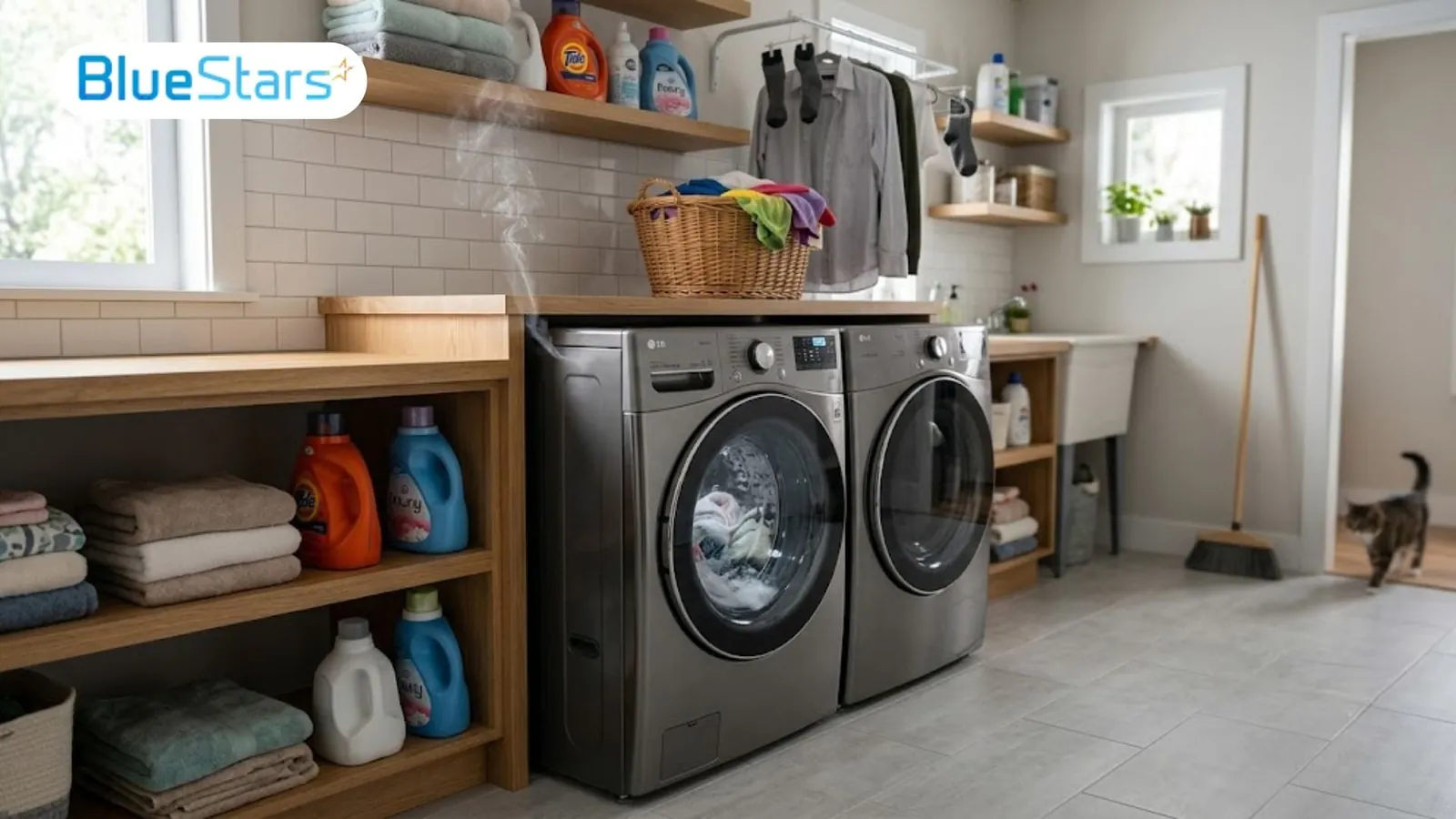
You should stop your repair attempts if you need to remove the motor or the transmission assembly. These components are heavy and require precise alignment, which can lead to further damage or electrical shorts if installed incorrectly. If you smell ozone or see sparks, the issue is likely within the electrical wiring or the motor’s internal capacitors, which can hold a dangerous charge even when unplugged.
Treat any visual evidence of scorched insulation or melted plastic as a hard stop. These signs indicate a short circuit that has already compromised the wiring harness. Replacing a single wire rarely fixes the underlying spike that caused the melt, and attempting to bypass the damage often leads to a fire hazard within the control board.
Contact a professional appliance technician if the drum remains locked after you have checked for external obstructions. They have the specialized tools to test for motor resistance and can safely verify if the drive motor has seized due to internal failure.
If the machine makes a high-pitched whine but the drum doesn’t rotate, the motor is likely drawing excessive current. Stop immediately to prevent the control board from burning out, which can triple the cost of your final repair bill.
When you call a technician, describe the exact stage of the wash cycle where the smell started and whether you found any rubber debris. This helps them bring the correct replacement parts to your home, saving you from a second service visit. If the debris is black and oily, tell them it’s likely a failed tub seal, which requires a full teardown of the unit.
Frequently asked questions
Is it safe to keep using the washer?
No, you shouldn’t use the washer until the cause of the burning smell is found and fixed. Continued use can lead to the belt snapping, motor burnout, or a fire if the heat reaches the plastic housing of the machine.
How long does a drive belt last?
A drive belt typically lasts for a duration dependent on the average frequency of your wash cycles.
Can I just clean the rubber smell away?
No, the smell is a warning sign of mechanical friction and can’t be cleaned away. You must address the physical cause, such as a broken belt or a trapped object, to stop the heat generation.
Does an overloaded washer cause this?
Yes, overloading the washer is a common reason for the drive belt to slip and burn. Always follow the weight limits listed on the inside of your washer door or in the user guide.
What happens if I ignore the smell?
Ignoring the smell will likely result in the drive belt snapping or the motor failing completely. This turns a simple belt replacement into a much more expensive motor or transmission repair.
Is the smell toxic to breathe?
The smell of burning rubber is an irritant and can cause respiratory discomfort if you stay in the room for a long time. Open the windows in your laundry area immediately to ventilate the space while you wait for a repair.
Conclusion
The burning smell is a clear signal that the drive system is failing under stress. By unplugging the unit and checking for simple obstructions, you can prevent permanent damage to the motor. If the drum still doesn’t spin after clearing any debris, contact a professional to avoid electrical risks or further mechanical breakdown.