
When you discover that your circuit breaker keeps tripping, it’s easy to feel frustrated or even anxious about the safety of your home. A tripped breaker is actually a deliberate safety feature designed to prevent electrical fires by cutting power when a circuit becomes overwhelmed. Understanding why this happens and how to address it safely can save you significant time and money. While a simple reset often solves the problem, recurring trips usually signal an underlying issue with your home’s electrical load or wiring that requires a structured approach to diagnose.
Key Takeaways
- Identify whether the trip is caused by a temporary overload or a persistent short circuit.
- Unplug all devices on the affected circuit before attempting to reset the breaker.
- Check for damaged cords or faulty appliances that might be drawing excessive current.
- Avoid resetting a breaker repeatedly if it trips immediately, as this indicates a dangerous fault.
- Hire a licensed electrician for any repairs involving panel components or permanent home wiring.
Why Do Breakers Trip?
A breaker operates by monitoring the flow of electricity through a wire. When the current exceeds the capacity of the circuit—typically 15 or 20 amps—the internal mechanism triggers to disconnect the power. This prevents the wires from heating up to the point where they could ignite surrounding insulation or structural materials. According to the Electrical Safety Foundation International, most residential fires are caused by faulty electrical wiring and equipment that hasn’t been properly maintained or inspected.
Overloaded circuits occur when you plug too many high-wattage devices into a single loop. Kitchens and laundry rooms are frequent offenders because they house appliances like toasters, coffee makers, and dryers. Short circuits are more severe; they happen when a “hot” wire touches a “neutral” wire, creating a surge of current that trips the breaker instantly. This is often caused by loose connections, melted wire insulation, or pests chewing through cables behind your walls.
Safety First: What To Avoid
Warning: Never attempt to tape a breaker in the “on” position or replace a breaker with one of a higher amperage rating than your wiring can handle. Doing so turns your electrical system into a fire hazard.
- Don’t touch the interior of the electrical panel if you see signs of water or charring.
- Avoid using multi-tap adapters or daisy-chained power strips to bypass a lack of outlets.
- Stop using any appliance that smells like burning plastic or produces sparks when plugged in.
- Never work on electrical components with wet hands or while standing on damp surfaces.
Troubleshooting a Circuit Breaker That Keeps Tripping
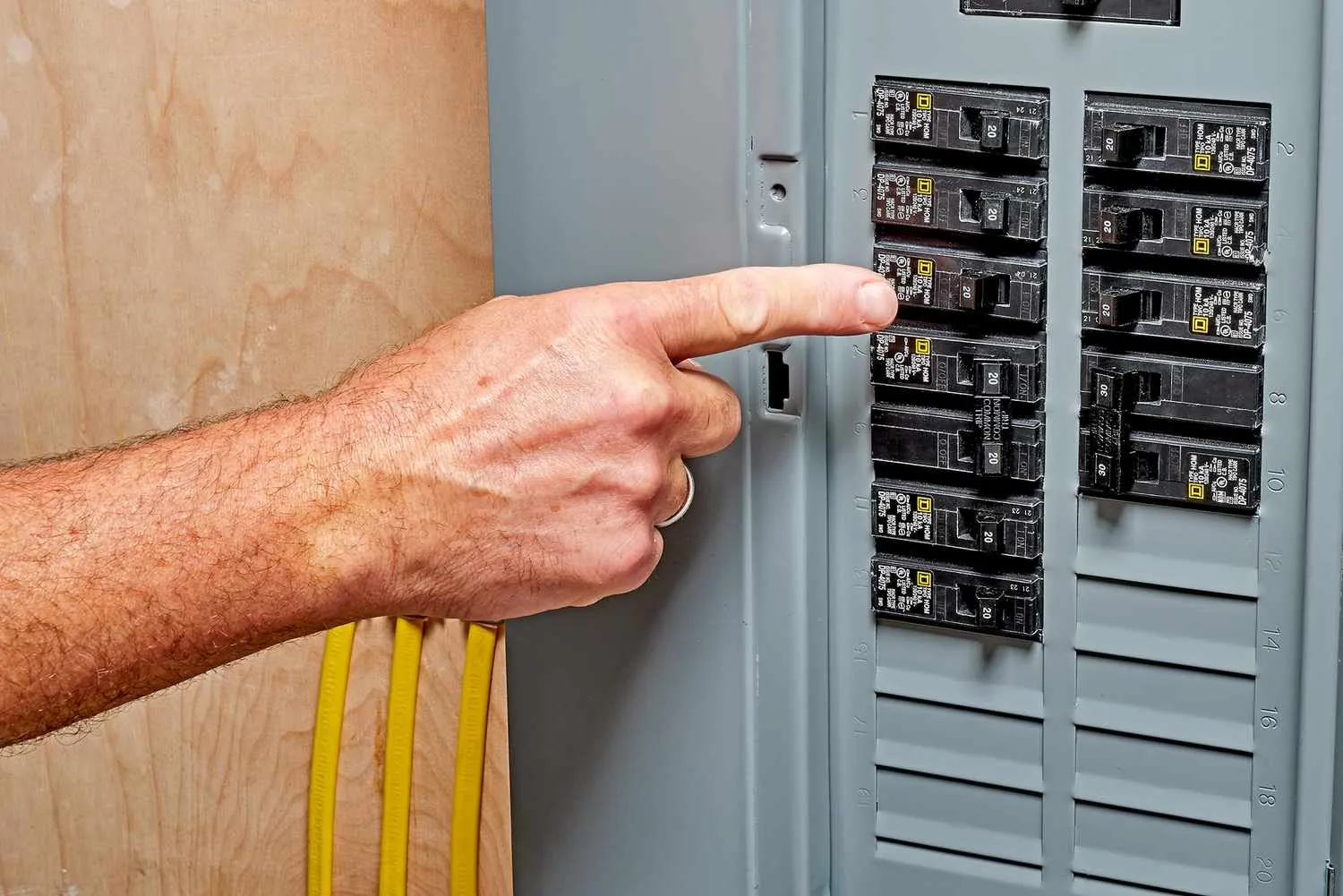
Locate your main service panel, which is typically found in a basement, garage, or utility closet. Open the door to reveal the rows of switches. You’ll notice that the tripped breaker will be in the middle position, between “on” and “off,” or it will have flipped entirely to the “off” position. Before flipping it back, you must isolate the source of the problem.
| Step | Action | Expected Result |
|---|---|---|
| 1 | Turn off all lights and unplug appliances | Reduces the load on the circuit |
| 2 | Locate the tripped breaker in the panel | Identifies the affected zone |
| 3 | Flip the switch to “off” completely | Resets the internal mechanism |
| 4 | Flip the switch back to “on” | Restores power to the circuit |
| 5 | Plug items back in one by one | Isolates the faulty device |
Identifying Overloaded Circuits
An overloaded circuit is the most common cause of nuisance tripping. If your breaker trips only when you turn on a specific vacuum cleaner or space heater, that device is likely drawing more power than the circuit can safely provide. You can determine the load by checking the wattage label on your appliances. If the total wattage on a single 15-amp circuit exceeds 1,440 watts—which is 80% of the circuit’s capacity—it will eventually trip.
Pro Tip: Use a simple power meter to measure exactly how much electricity your high-draw appliances are consuming during peak operation.
Common High-Wattage Appliances
- Space heaters
- Window air conditioning units
- Hair dryers
- Toaster ovens
- Electric kettles
- Microwave ovens
Dealing With Short Circuits
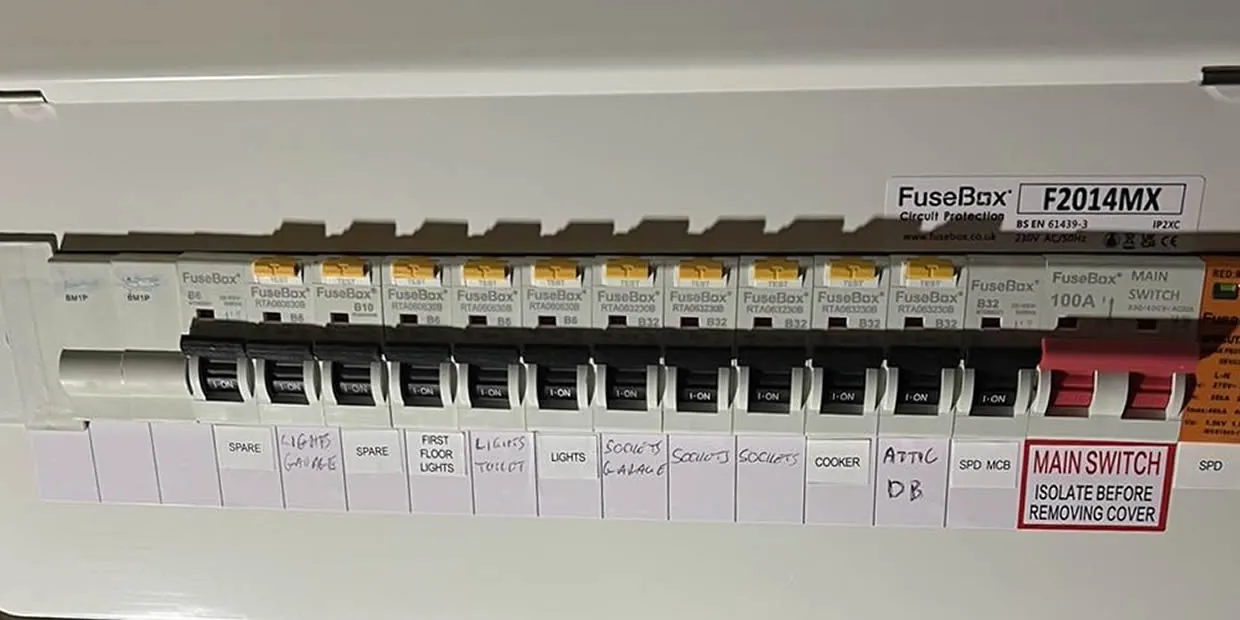
If you have unplugged everything and the breaker still trips immediately upon being switched on, you have a short circuit or a ground fault. This is a more complex issue that involves the wiring inside your walls or the panel itself. You should inspect your wall outlets and light switches for signs of damage. Look for yellowing plastic, burn marks, or a faint ozone smell. If you find these, turn off the main power and call a professional.
Signs Of Faulty Wiring
Sometimes the issue isn’t what you plug in, but the infrastructure itself. Old homes often feature degraded wire insulation that can crack over time. If your lights flicker throughout the house or you hear a buzzing sound coming from your panel, you may have loose wire connections or an aging breaker that’s no longer sensitive enough to perform its job correctly.
| Component | Potential Issue | Risk Level |
|---|---|---|
| Breaker Switch | Internal spring failure | Moderate |
| Wall Outlet | Loose contact points | High |
| Power Cord | Frayed insulation | High |
| Panel Busbar | Corrosion or pitting | Severe |
When To Call Professionals
While you can manage minor resets, you should contact a licensed electrician if the breaker trips repeatedly after you have removed all appliances from the circuit. Electricians have the tools to perform continuity testing and insulation resistance tests to find hidden faults. If your panel is more than 30 years old, it may be time for a professional assessment to determine if a panel upgrade is necessary to support modern power demands.
How Much Does Repair Cost?
Electrical repairs vary significantly based on the complexity of the fault. Simple tasks like replacing a single faulty breaker typically cost between $100 and $300, including labor and parts. If the issue requires troubleshooting hidden wiring or repairing damaged outlets, you might see costs ranging from $250 to $750. For a full panel replacement due to safety concerns or outdated technology, expect to pay between $1,500 and $4,000 depending on the size of your home and local permit requirements.
Troubleshooting Arc Faults
Modern homes are often equipped with Arc Fault Circuit Interrupters (AFCIs). These are specialized breakers designed to detect dangerous electrical arcing, which can lead to fires. If your breaker has a “test” button on it, it’s likely an AFCI or GFCI breaker. These are much more sensitive than standard breakers. They can sometimes trip due to incompatible LED bulbs or older appliances with worn-out motors that create minor, harmless arcing.
Maintenance For Electrical Systems
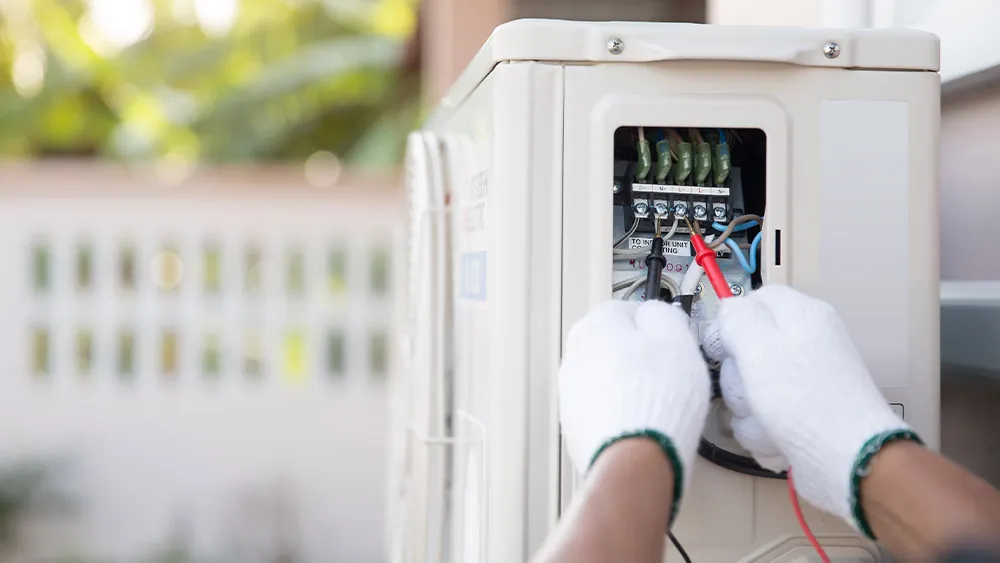
To keep your electrical system running smoothly, perform a visual inspection twice a year. Ensure that your panel is free of dust and debris. Check that the door to the panel closes securely. Keep the area around the panel clear of storage boxes or flammable materials. If you identify a breaker that feels hot to the touch, this is an immediate sign of a dangerous electrical fault and warrants an urgent call to a licensed professional.
Frequently Asked Questions
Is it safe to reset a breaker?
Yes, it’s generally safe to reset a breaker once. If it stays on, the trip was likely a temporary overload. However, if the breaker trips again immediately or won’t stay in the “on” position, don’t force it. This indicates a persistent short circuit or a ground fault that requires professional repair to prevent an electrical fire.
Why does my breaker trip at night?
Breakers don’t know the time of day, but they do know when you’re using more power. If your breaker trips at night, you might be running more lights, a space heater, or an electric blanket. Calculate the total wattage of all devices running simultaneously on that circuit to see if you’re exceeding the rated capacity of your home’s electrical system.
Can a bad appliance cause a trip?
Absolutely. A faulty appliance with a shorted motor or a damaged power cord will draw too much current and cause the breaker to trip instantly. You can test this by unplugging all devices on the circuit and plugging them back in one at a time. If the breaker trips only after you plug in a specific appliance, that device is likely the culprit.
Should I replace my own breakers?
Unless you’re a trained professional, you shouldn’t replace breakers yourself. Working inside an electrical panel involves exposure to high-voltage terminals that can cause severe injury or death. Even with the main power off, there are sections of the panel that remain energized. Always hire a licensed electrician to handle any work involving the internal components of your home’s electrical service panel.
How long do circuit breakers last?
Most circuit breakers are designed to last for 30 to 40 years. However, they can fail prematurely due to environmental conditions, such as high humidity or frequent power surges. If you notice a breaker tripping frequently even when the circuit load is low, or if the switch feels loose or spongy when you toggle it, it may be nearing the end of its functional lifespan.
Conclusion
If you have followed these steps and the circuit continues to trip, contact a licensed electrician to inspect your wiring for hidden damage. Safety is the priority, so avoid trying to bypass the breaker or overloading the system further. A professional can quickly identify whether you need a simple breaker replacement or a more comprehensive repair to keep your home safe and functional.