
A faulty igniter is the most common reason a gas oven takes forever to preheat, usually because it can’t pull enough electrical current to open the gas safety valve. In most cases, this part is the culprit when the burner takes more than 10 to 15 minutes to reach a standard baking temperature of 350°F. If you hear a long, clicking sound but no flame appears, the igniter is failing to trigger the gas flow. Check your oven’s manual or the manufacturer’s website to confirm the normal preheat time for your specific model.
Why your oven takes forever to preheat
| Cause | How common | How to confirm it | Fix it yourself? |
|---|---|---|---|
| Weak igniter | Very common | Observe glow duration | Yes, with care |
| Dirty burner ports | Common | Check for blockages | Yes |
| Faulty thermostat | Occasional | Compare with thermometer | No |
| Airflow restriction | Rare | Check rear vents | Yes |
| Gas pressure issues | Rare | Check other burners | No |
| Faulty control board | Rare | Look for error codes | No |
A weak igniter is the primary culprit when your oven takes over twenty minutes to reach 350 degrees. If the igniter glows orange but fails to spark the gas valve within sixty seconds, it lacks the electrical resistance to trigger the ignition. You must replace the igniter immediately, as a failing unit eventually stops heating entirely.
Check your burner ports if the flame pattern appears yellow or uneven rather than crisp blue. Debris buildup forces the oven to work harder to maintain temperature, often leading to uneven baking. Use a thin needle to clear obstructions, but avoid enlarging the holes, which ruins the gas-to-air ratio.
If you suspect a faulty thermostat, place an oven-safe thermometer in the center rack. If the internal temperature deviates by more than 25 degrees from the dial setting, the sensor is likely failing. Don’t attempt a recalibration; replace the sensor to prevent inconsistent heat cycles.
Weak or failing igniter
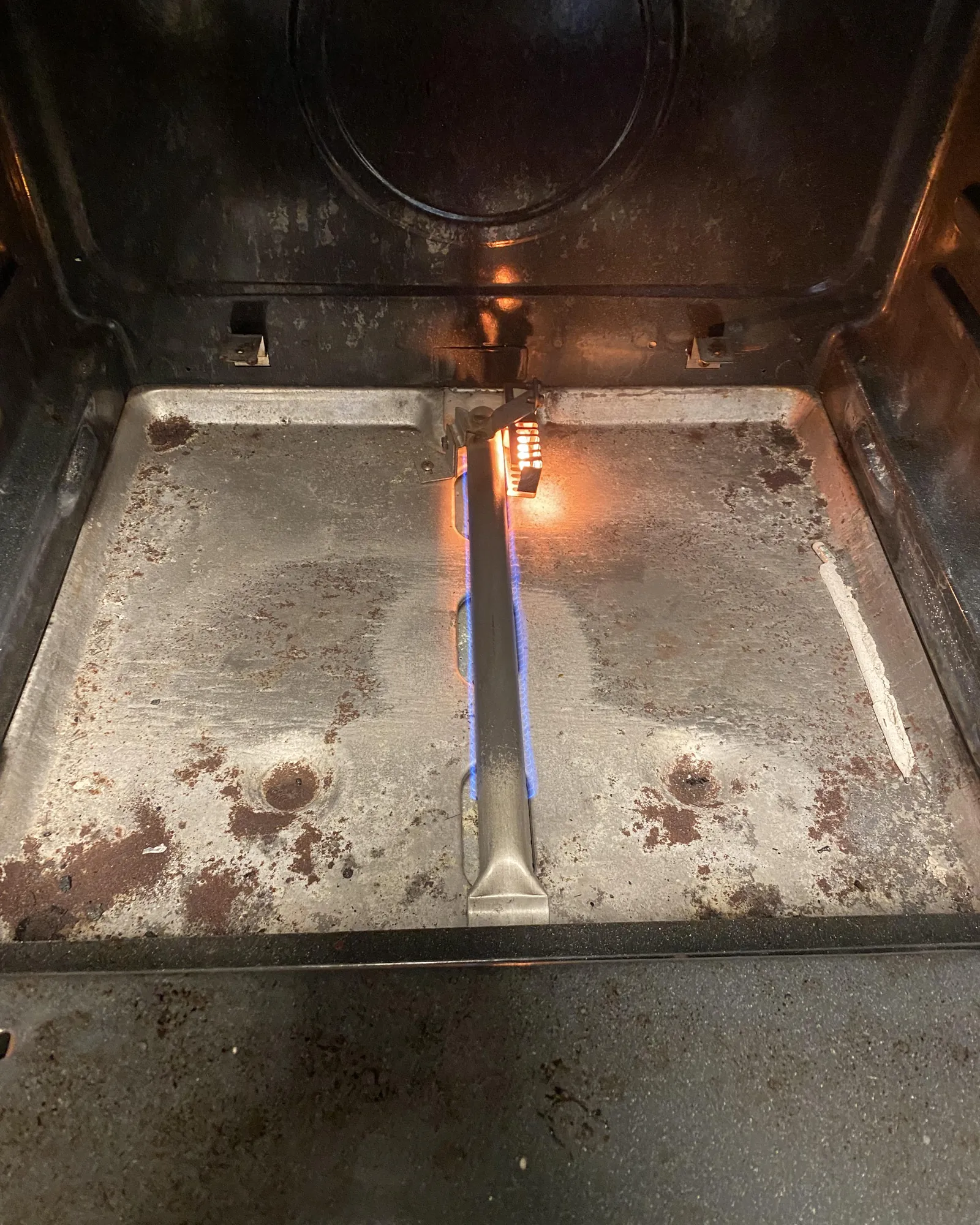
The igniter is a ceramic component that heats up to a specific temperature to ignite the gas. It also acts as a current sensor; it must reach a precise resistance level before the safety valve releases gas into the burner. If the igniter is old, it may glow orange but never reach the heat needed to signal the valve. This results in a very long delay or no flame at all.
To confirm this, remove the bottom panel of your oven and watch the igniter while you turn the oven on. A healthy igniter should glow brightly and ignite the gas within 60 seconds. If it glows for several minutes without the gas valve clicking open, the part is likely weak. If you see the igniter glowing but the burner remains cold, the igniter is failing to draw the necessary current.
Replacing this part requires basic tools like a screwdriver and a nut driver. You must unplug the oven or flip the circuit breaker before touching any internal components to prevent electrical shock. This job usually takes about 30 to 45 minutes for a person with standard home tools. If you aren’t comfortable working near gas lines or electrical connections, contact a professional technician to perform the replacement.
Clogged burner ports
Burner ports are the tiny holes along the burner tube where the gas exits to create a flame. Over time, these holes get blocked by grease, food spills, or carbon buildup. If these openings are obstructed, the flame can’t spread evenly or reach the full heat intensity required to warm the oven quickly. This causes the burner to struggle, leading to a much slower preheat time than the manufacturer intended.
You can check for this by looking at the flame while the oven is running. A healthy gas flame should be steady, blue, and cover the entire length of the burner tube. If you see yellow tips, uneven flames, or sections of the burner that don’t light at all, the ports are likely clogged.
Cleaning the ports is a straightforward task that requires only a stiff wire brush or a toothpick. Gently clear each hole to remove the debris, taking care not to widen the holes or damage the metal. If the burner is heavily rusted or the ports are too corroded to clean, you may need to replace the entire burner tube. Always ensure the burner is cool before you start cleaning to prevent burns.
Thermostat sensor issues
The oven sensor, or thermostat, monitors the internal temperature and tells the control board when to cycle the gas on or off. If the sensor is coated in grime or is failing, it may send an incorrect temperature signal to the oven. This can cause the oven to think it’s already hot when it’s not, or it may simply fail to call for the heat needed to reach the target temperature.
Check the sensor by looking for any physical damage or heavy buildup of grease on the probe inside the oven cavity. You can clean the sensor with a soft cloth and a mild detergent, but avoid using abrasive pads that might scratch the metal. If the sensor is clean but the oven still heats poorly, the issue is likely internal to the sensor’s wiring or the control board.
The U.S. Consumer Product Safety Commission emphasizes that any work involving gas supply lines or internal electrical components should be handled with extreme caution. If cleaning the sensor doesn’t improve the heating time, the sensor may need to be tested with a multimeter or replaced. This is a job for a qualified technician, as miswiring the sensor can lead to incorrect temperature readings or safety hazards during operation.
Rare causes of heating delays
Blocked rear vents prevent proper exhaust, disrupting the convection flow required for consistent heating. Ensure at least four inches of clearance between the oven back and the wall to allow hot air to escape freely.
If your stovetop burners flicker or produce a weak flame, the issue is likely low gas pressure rather than the appliance itself. Contact a licensed plumber to test your regulator, as a faulty main line will starve the oven of the fuel needed to reach high temperatures.
A failing control board often manifests as a blank display or a persistent error code. If the board stops sending a signal to the igniter, the oven will never begin its heating cycle.
Check your door gasket by closing the oven on a dollar bill. If you can pull the bill out with zero resistance, the seal is compromised. A torn gasket forces the unit to cycle constantly, increasing energy costs by up to twenty percent.
What a fix usually involves
Fixing a slow-heating oven typically requires a mix of patience and the right replacement parts. If the issue is a simple cleaning task, you’ll only need basic household items like a wire brush or soap. The cost is essentially your own time.
When a part like an igniter fails, you’ll need to buy a specific replacement component. These parts are relatively affordable compared to buying a new appliance, though the price varies depending on the brand and age of your oven.
To get an accurate cost, check the model number on the sticker inside your oven door or on the frame. Use this number to search for genuine manufacturer parts on their official website. Avoid generic parts that claim to fit many models, as they often fail quickly.
If the oven reaches temperature but takes longer than twenty minutes to get there, the problem is almost certainly a weak igniter or a failing heating element rather than a calibration error. Test the igniter by watching it for sixty seconds; if it glows but fails to ignite the gas, it lacks the resistance needed to open the safety valve.
Replace it immediately. If the element shows visible blisters or breaks, it must be swapped out. Hiring a professional is the safest route if you’re uncomfortable working with electrical components or gas lines.
Related guides
- 10 Best Toaster Oven With Air Fryer Picks for Your Kitchen in 2026
- Majestic Gas Fireplace Troubleshooting: Simple Fixes to Try in 2026
- Sit Nova 820 Gas Valve Troubleshooting: Fix Pilot Light Issues in 2026
Frequently asked questions
Does it matter if my oven preheat takes 20 minutes?
Yes, it matters because a healthy gas oven should reach 350°F within 10 to 15 minutes. If it consistently takes longer, the igniter or burner is likely failing. While it still works, it consumes more energy and makes cooking times unpredictable. If your oven is significantly slower than the time stated in your owner’s manual, have it inspected to prevent a total breakdown.
Is it safe to use an oven that preheats slowly?
It’s generally safe to use, provided the gas flame is blue and steady. However, if the igniter is failing, the oven might eventually stop lighting altogether or release gas without igniting, which creates a safety risk. If you smell gas or see a yellow, flickering flame, turn the oven off immediately and stop using it until a technician can check the burner and gas connections.
How do I know if the igniter is the problem?
The igniter is the problem if it glows orange for several minutes but the gas burner never lights. A working igniter should trigger the gas valve and produce a flame within 60 seconds of turning the oven on. If you hear the gas valve click but no flame appears, the igniter isn’t reaching the temperature needed to open the valve.
Can a dirty oven affect preheat time?
Yes, a dirty oven affects preheat time because built-up grease on the temperature sensor leads to inaccurate readings. If the sensor is insulated by thick grime, it won’t detect the true internal temperature, causing the burner to cycle off too early. Regularly wiping the sensor probe with a soft, damp cloth helps the oven maintain accurate temperatures and reduces the time needed to reach heat.
How long should a gas oven take to heat to 350°F?
A standard gas oven takes 10 to 15 minutes to reach 350°F, assuming the unit is clean and the door is fully sealed. This time can vary based on the size of the oven cavity and the insulation quality of your specific model. Check your manufacturer’s user guide for the exact preheat time expected for your unit, as larger ovens may naturally take slightly longer.
What happens if I ignore a slow preheat?
If you ignore a slow preheat, the component that’s currently struggling will eventually fail completely. An igniter that’s weak today will likely burn out entirely within a few weeks, leaving you with an oven that doesn’t light at all. Addressing the issue early often prevents the frustration of a sudden appliance failure during a time when you need the oven the most.
Conclusion
If you aren’t comfortable handling electrical components, it’s best to contact a certified appliance technician for help. They’ll quickly diagnose whether the igniter needs a simple replacement or if another part is causing the delay. Getting a pro to take a look will ensure your kitchen stays safe and your meals cook evenly.