
Is your furnace acting up just as the cold Indiana nights roll in? You might be wondering whether it’s time to repair your furnace or replace it altogether.
Making the right choice can save you money, keep your home comfortable, and avoid unexpected breakdowns when you need heat the most. You’ll discover clear signs to help you decide what’s best for your home and your budget. Keep reading to make sure your furnace keeps you warm without costing you more than it should.
Credit: goduganair.com
Signs Your Furnace Needs Attention
Your furnace works hard to keep your home warm during Indiana’s cold months. It usually runs quietly and smoothly. But sometimes, signs show your furnace needs attention. Spotting these signs early can save money and avoid sudden breakdowns. Watch for noises, uneven heat, high bills, and frequent repairs. These clues help decide if you should repair or replace your furnace.
Unusual Noises
Strange sounds from your furnace are a warning sign. Rattling, banging, or squealing noises mean parts may be loose or worn out. These noises should not be ignored. They often point to serious problems that need fixing quickly. Pay attention to any new or unusual sounds.
Inconsistent Heating
Uneven heat inside your home means your furnace is struggling. Some rooms may feel colder than others. This issue can stem from clogged filters or broken components. Inconsistent heating reduces comfort and wastes energy. It shows your furnace needs a checkup or repair.
Rising Energy Bills
Higher heating bills without more use indicate furnace trouble. When parts wear down, the system works harder. This extra effort consumes more energy. Rising costs may signal your furnace is losing efficiency. Watch your bills carefully to catch this early.
Frequent Breakdowns
Needing repairs often shows your furnace is aging or damaged. Constant fixes add up in cost and hassle. Frequent breakdowns disrupt your home’s warmth and safety. This sign often means it’s time to consider replacement instead of repair.
Factors Influencing Repair Or Replacement
Deciding whether to repair or replace your furnace depends on several important factors. These factors help homeowners in Indiana make smart choices. Understanding them can save money and keep your home warm and safe.
Age Of The Furnace
Most furnaces last about 15 to 20 years. Older units often need more repairs. Newer furnaces usually run better and use less energy. If your furnace is over 15 years old, replacement might be better.
Cost Of Repairs
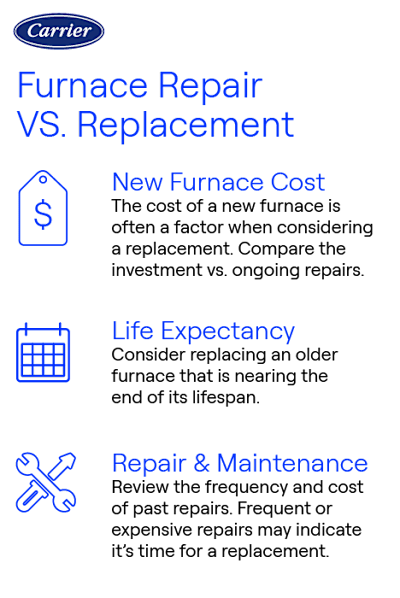
Compare repair costs to the price of a new furnace. Small repairs are okay, but big expenses add up fast. Spending more than half the cost of a new furnace on repairs is not wise.
Energy Efficiency
Old furnaces waste energy. New models use less fuel and lower bills. High-efficiency furnaces heat your home better and save money over time. Consider replacement for better energy savings.
Safety Concerns
Furnaces can develop dangerous leaks or cracks. Carbon monoxide leaks are a serious risk. Repair only if safety checks pass. Otherwise, replace the unit to protect your family.
Benefits Of Repairing Your Furnace
Repairing your furnace can be a smart choice for many homeowners in Indiana. It helps keep your home warm without spending too much at once. Fixing small issues early can save money and stress later. Here are some key benefits of repairing your furnace instead of replacing it.
Lower Immediate Costs
Repairing a furnace usually costs less than buying a new one. You pay only for the parts and labor needed to fix the problem. This can fit better into a tight budget. Small repairs help avoid big expenses right away.
Extending Furnace Lifespan
Regular repairs keep your furnace working longer. Fixing worn parts stops bigger breakdowns. This helps the furnace last several more years. You get more value from the system you already own.
Maintaining Familiar Equipment
Repairing means you keep the furnace you know. No need to learn a new system or controls. Your home stays comfortable with equipment you trust. Repairs avoid the hassle of installing and adjusting a new unit.
Advantages Of Replacing Your Furnace
Replacing your furnace can bring many benefits to your home. New furnaces use the latest technology to save energy and lower bills. They also need less fixing and work better to keep your house warm. For homeowners in Indiana, choosing to replace an old furnace can improve comfort and reduce long-term costs.
Improved Energy Efficiency
New furnaces use less fuel to heat your home. They have better parts and controls. This means your furnace wastes less energy. Your heating bills will be lower. Energy-efficient models also help the environment by reducing pollution.
Reduced Maintenance Needs
Older furnaces break down more often. New furnaces require less repair and service. This saves time and money. You avoid sudden breakdowns during cold Indiana winters. A new furnace runs smoothly with fewer problems.
Enhanced Home Comfort
New furnaces heat your home evenly and quickly. They keep a steady temperature all day. This means no cold spots or drafts. Your family stays comfortable no matter how cold it gets outside. Quiet operation is another plus of new models.
Potential Rebates And Incentives
Many energy companies and governments offer rebates. These help lower the cost of a new furnace. Incentives often apply to energy-efficient models. You may get cash back or tax credits. These offers make replacing your furnace more affordable.
Cost Comparison: Repair Vs Replacement
Understanding the cost differences between repairing and replacing your furnace helps make smart choices. Homeowners in Indiana face decisions that affect comfort and budgets. Knowing typical expenses and future savings guides these choices well.
Typical Repair Expenses
Repairs often cost between $150 and $500. Common fixes include replacing parts like belts, motors, or thermostats. Small repairs may restore function quickly. Yet, repeated repairs raise total costs. Repair bills can add up over time.
Replacement Investment
New furnaces usually cost $2,500 to $7,500 installed. Price depends on furnace type and size. Modern models offer better energy efficiency. New units come with warranties. Initial cost feels high but includes installation and parts.
Long-term Savings
New furnaces reduce energy bills by 20-40%. Repairing an old unit may not improve efficiency. Savings build over years with lower utility costs. New systems also need fewer repairs. Long-term benefits help balance the upfront cost.
Credit: www.carrier.com
Choosing The Right Furnace For Indiana Homes
Choosing the right furnace for Indiana homes is important for comfort and cost. Winters here can be cold, so your furnace needs to work well and save energy. Picking the right one means thinking about fuel type, size, and efficiency. These factors help keep your home warm without high bills.
Understanding these key points helps you decide whether to repair or replace your furnace. Knowing what fits your home and budget makes the process easier and clearer.
Fuel Types Available
Indiana homes often use natural gas furnaces. Gas is common and usually cheaper. Electric furnaces are an option too, especially in places without gas lines. Oil furnaces are less common but still used in some areas. Each fuel type has pros and cons for cost, availability, and maintenance.
Sizing Considerations
Choosing the right size furnace matters a lot. A furnace too small will struggle to heat your home. Too large, and it wastes energy and money. A professional can calculate the correct size based on your home’s square footage and insulation. Proper sizing keeps your home warm and your bills low.
Efficiency Ratings
Look at the furnace’s efficiency rating before buying. This rating shows how well the furnace uses fuel. Higher efficiency means lower fuel costs. Indiana homeowners benefit from models with an Annual Fuel Utilization Efficiency (AFUE) of 90% or higher. Efficient furnaces save money and help the environment.
Working With Hvac Professionals
Working with HVAC professionals is key for deciding to repair or replace your furnace. Their expertise helps homeowners in Indiana make smart choices. They know furnace systems well and can spot issues quickly. Trusting their advice can save money and keep your home warm.
Getting Accurate Inspections
HVAC experts perform detailed furnace inspections. They check all parts to find hidden problems. This step is important to avoid surprise breakdowns. A thorough inspection shows if repairs are enough or if replacement is needed. Accurate inspections give clear information for your decision.
Evaluating Recommendations
Professionals offer advice based on inspection results. They explain the cost and benefits of repair versus replacement. You get help understanding what fits your budget and needs. Their guidance ensures you choose the safest, most efficient option. Evaluating their recommendations helps avoid costly mistakes.
Scheduling Maintenance
Regular maintenance keeps your furnace running well. HVAC professionals can set up a schedule for tune-ups and cleaning. Maintenance extends the life of your furnace and improves efficiency. Staying on track with service prevents future breakdowns. Scheduling maintenance is a smart step for every homeowner.
Seasonal Tips For Furnace Care In Indiana
Taking care of your furnace in Indiana is key to staying warm during cold months. Seasonal maintenance helps your system run smoothly. It can also save money by avoiding costly repairs or early replacement. Follow these simple tips to keep your furnace ready for winter.
Pre-winter Checks
Check your furnace before winter starts. Look for dirt and dust on parts. Clean around the furnace area to remove debris. Test the thermostat to make sure it works. Listen for strange noises when the furnace runs. These checks help spot problems early.
Regular Filter Replacement
Change furnace filters every 1 to 3 months. Dirty filters block airflow and reduce efficiency. Clean filters improve air quality inside your home. Use the right filter size and type for your system. Mark your calendar to remind yourself about changes.
Monitoring System Performance
Watch your furnace’s performance through the season. Note any temperature changes or uneven heating. Pay attention to higher energy bills, which may signal issues. Schedule professional inspections to catch hidden problems. Early action keeps your furnace running longer.
Credit: chapmanheating.com
Frequently Asked Questions
How Do I Know If My Furnace Needs Repair Or Replacement?
Check its age, repair costs, and heating efficiency to decide between repair or replacement.
What Signs Show My Furnace Is Failing In Indiana Winters?
Look for strange noises, uneven heating, and rising energy bills as warning signs.
Is Repairing A Furnace Cheaper Than Replacing It?
Repairs cost less short-term, but frequent fixes can add up over time.
How Long Does A Typical Furnace Last In Indiana Homes?
Most furnaces last 15 to 20 years with proper maintenance.
Can A New Furnace Save Money On Energy Bills?
New furnaces use less energy, lowering heating costs and improving comfort.
Conclusion
Deciding to repair or replace your furnace depends on several key factors. Age, repair costs, and energy efficiency matter most. Older furnaces often cost more to fix and run. New models save money and keep your home warm better. Always weigh short-term fixes against long-term benefits.
Trust your instincts and consult a local Indiana expert. Stay warm and comfortable this winter with the right choice. Your home’s heating matters—choose wisely.