
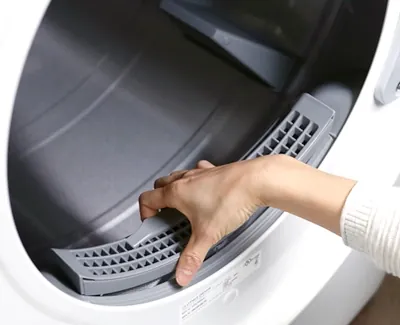
A thermal fuse failure is the most common reason a Samsung dryer won’t start, often caused by blocked airflow. If the dryer has power to the display but refuses to run, check your lint filter and exhaust vent first. You can also verify your model’s specific power requirements on the official Samsung support page.
Common reasons your Samsung dryer wont start
| Cause | How common | How to confirm it | Fix it yourself? |
|---|---|---|---|
| Blown thermal fuse | Very common | Check for continuity | Yes with care |
| Tripped circuit breaker | Common | Check electrical panel | Yes |
| Faulty door switch | Common | Dryer light stays off | Yes |
| Control board error | Occasional | No response to buttons | No |
| Start switch failure | Rare | Switch feels loose | No |
| Motor failure | Very rare | Humming sound | No |
A blown thermal fuse is almost always triggered by restricted airflow. If you replace the fuse without cleaning the vent line, the new part will fail within hours. Check your exterior vent cap for lint buildup before ordering replacements.
If the dryer hums but the drum refuses to spin, don’t assume the motor is dead. A broken drive belt often mimics motor failure. Reach inside the drum and try to turn it by hand. If it spins with zero resistance, the belt has snapped.
Never ignore a tripped breaker. If it trips repeatedly after a reset, the heating element is likely shorting against the metal housing. In this case, stop using the unit immediately to prevent a potential fire hazard.
Safety: Inside a mains-powered machine, the parts behind the outer cover can hold a dangerous electrical charge even after it has been unplugged — that’s why they sit behind a cover. Opening the housing, or testing or replacing anything behind it, is a job for a qualified technician, never a home repair.
Blown thermal fuse from restricted airflow
A thermal fuse is a small safety device designed to cut power if the dryer gets too hot. When the internal air path is blocked by lint, the heat builds up rapidly, causing the fuse to blow permanently. This happens because the hot air can’t escape, forcing the dryer to reach dangerous temperatures. Once the fuse blows, it creates an open circuit, and the machine won’t start again until the part is replaced.
To confirm this, a professional technician can determine if the part has failed. If you aren’t comfortable with the repair process, you should contact a professional appliance repair technician.
Fixing this requires replacing the fuse with an exact match for your model. If you don’t clear the vent ducting while replacing the fuse, the new part will likely blow within a few uses. If your dryer vent run is longer than 15 feet, you should consider professional duct cleaning to prevent the fuse from failing repeatedly. Always prioritize safety by keeping the dryer unplugged during any inspection of internal components.
Tripped circuit breaker or power issues
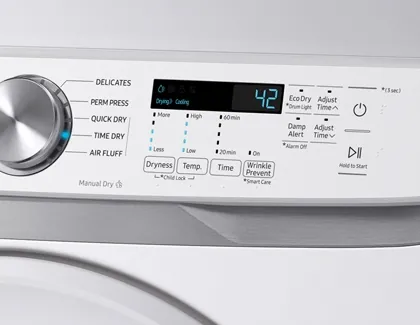
A tripped circuit breaker is a frequent cause for a dryer that shows no lights or signs of life at all. Dryers require a high-voltage connection, and if only one leg of the power supply trips, the dryer might show a display but lack the power needed to spin the drum or heat the elements.
You can verify this by checking your home’s electrical panel. Look for a double-pole breaker that has moved to the center position or the “off” position. If you find one, flip it all the way to “off” and then back to “on” to reset it. If the breaker trips again immediately after you try to start the dryer, you have a short circuit that requires a licensed electrician to diagnose.
Many homeowners make the mistake of assuming a breaker is fine because it looks upright. Always apply firm pressure to push the switch into the full “off” position before clicking it back to “on.” If the switch feels loose or spongy, the internal mechanism is likely worn out and needs replacement.
Never ignore a breaker that trips repeatedly, as it indicates a wiring fault or a failing motor. If the breaker stays on but the dryer still won’t start, the issue is likely within the dryer itself rather than your home’s electrical system. If you’re uncertain about testing voltage or working with your home panel, stop immediately and call a professional. Never attempt to bypass a breaker or use an undersized fuse to keep the machine running.
Faulty door switch mechanism
The door switch acts as a safety interlock that prevents the dryer from spinning while the door is open. If the switch is damaged or the door isn’t closing securely, the dryer will interpret this as an “open” state and refuse to start. You can often tell if this is the problem by listening for a distinct click when you close the door.
If you don’t hear a click, or if the drum light stays on even when the door is closed, the switch may be stuck or broken. You can try cleaning the area around the door strike to ensure there’s no debris preventing a tight seal. Sometimes the plastic tab on the door wears down over time, which prevents the switch from being fully depressed.
If the switch is indeed faulty, it must be replaced. This involves accessing the front or top panel of the dryer to reach the switch assembly. If you aren’t familiar with removing appliance panels, don’t attempt this repair, as you could damage the door hinges or internal wiring. For those who aren’t comfortable with these steps, a local appliance repair service can perform this replacement quickly.
Rare dryer startup failures
Control board failure occurs when the main processor ceases sending signals. You’ll know this is the culprit if the digital display remains blank or if no buttons respond when pressed. If the display lights up but the cycle refuses to initiate, the board is likely intact, and the fault lies elsewhere.
Drive motor failure stems from a burned-out internal winding. This is almost always preceded by a distinct humming sound or a sharp burning smell during the previous load. If the drum spins freely by hand but refuses to turn under power, the motor is likely seized.
A broken drive belt snaps and triggers a safety switch. This is rare as a primary cause for a “no start” symptom, as most machines will still hum if the belt breaks.
Attempting to force a fix on these components can lead to electrical hazards. Contact a factory-authorized service center if you suspect these parts are failing.
What a professional repair usually involves
Fixing a dryer that won’t start usually requires a mix of basic hand tools like a screwdriver and a nut driver. If you’re replacing a simple part like a door switch or a thermal fuse, the cost is relatively low, similar to the price of a standard household cleaning kit. However, if the issue is with the control board or the motor, the parts can be expensive, sometimes approaching the cost of a new appliance.
The total cost depends heavily on whether you perform the labor yourself or hire a technician. A technician will charge a service call fee on top of the part cost, which varies by your local labor rates. Always check your dryer’s serial number tag to ensure you’re getting the correct component. You can find this information on the official manufacturer website to avoid buying parts that don’t fit your specific machine.
Related guides
- Mr Heater 210 000 Btu Troubleshooting: Fix Common Start Issues in 2026
- 10 Best Golf Club Grip Repair Kits for Easy Home Replacement in 2026
Frequently asked questions
Can I bypass the door switch to start my dryer?
You should never bypass a safety switch, as it’s designed to prevent injury and fire. Bypassing the switch can allow the dryer to spin with the door open, which creates a significant safety risk. If your switch is broken, the only correct path is to replace the part with a new, matching component from the manufacturer.
How long does a thermal fuse last?
A thermal fuse can last for the entire life of the dryer, provided the venting system is kept clear and clean. If your fuse blows, it’s almost always a sign of a restricted exhaust vent or a dirty lint filter. If you clear the airflow, you shouldn’t need to replace the fuse again for many years.
Is it safe to use the dryer if it makes a humming sound?
It isn’t safe to continue using a dryer that makes a humming sound without starting, as this usually indicates a seized motor or a major electrical fault. Continuing to power the unit could lead to a fire or further damage to the internal wiring. Turn the dryer off at the circuit breaker and call a professional for an inspection.
What happens if I ignore a dryer that won’t start?
Ignoring a dryer that won’t start can lead to more expensive repairs if the underlying cause is an electrical short or a failing motor. If the dryer isn’t starting because of a blocked vent, you’re also increasing the risk of a house fire. It’s best to resolve the issue as soon as you notice the failure.
How do I know if my dryer has power?
You can confirm power by checking if the display lights up or if the drum light turns on when the door is opened. If the dryer is completely dead, check your home’s main electrical panel to ensure the circuit breaker hasn’t tripped. If the breaker is fine, the issue is likely a failed power cord or internal component.
Conclusion
If your machine still won’t hum to life after these checks, it’s best to call a certified technician. Don’t worry if you can’t fix it yourself; getting professional help ensures you won’t damage the internal components. They’ll have your laundry routine back on track in no time, so you’re not stuck air-drying clothes.