
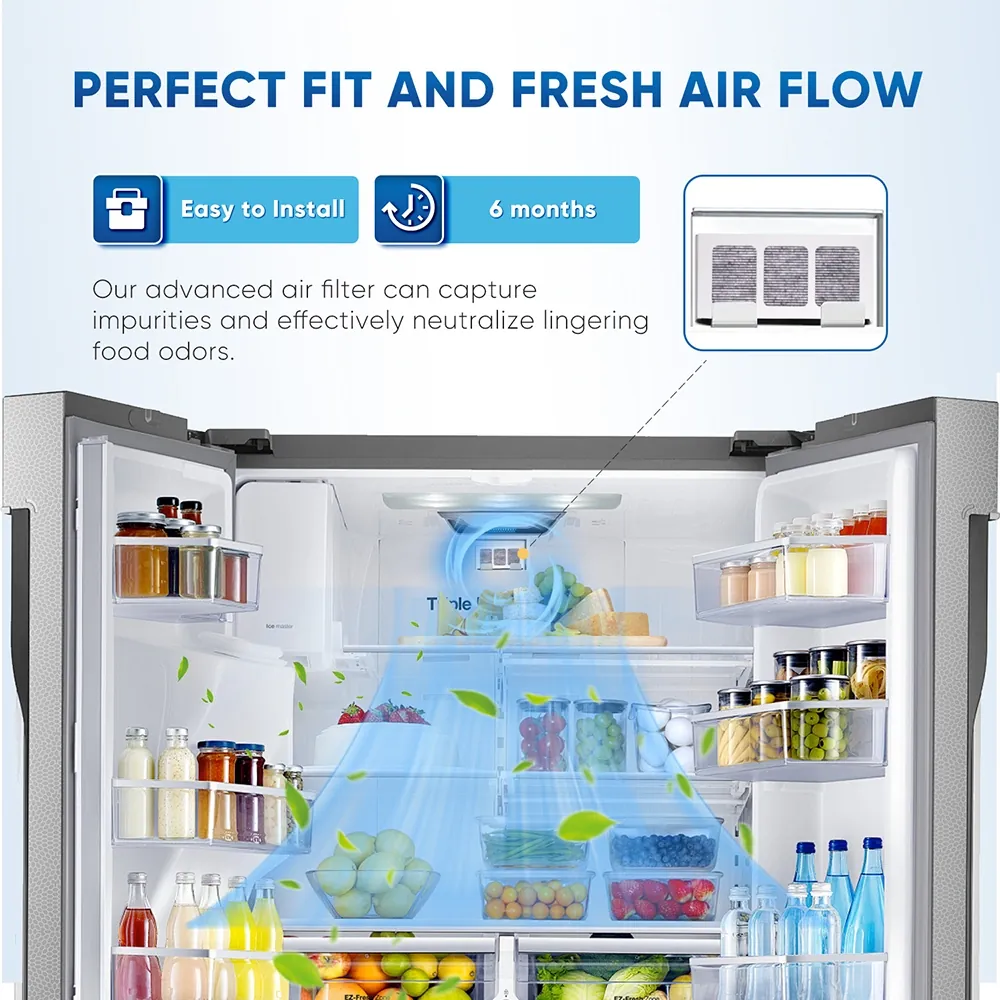
You should replace a refrigerator air filter every six months to keep your appliance working at its best. If you wait longer than this, the filter will stop trapping odors and bacteria, which can lead to stale air inside the fridge. This timeline assumes standard household use; if you store strong-smelling foods like fish or onions often, you may need to replace it every four months instead. Leaving a filter in for a full year usually results in poor air quality and noticeable food odors.
When to replace your refrigerator filter
The speed at which your filter gets dirty depends on how much food you store and how often you open the door. A busy family home with a full fridge will clog the filter faster than a household that eats out often.
| How you use it | How often | What tells you it’s due |
|---|---|---|
| Single person, light use | Every 9 months | Odors begin to linger |
| Typical family of four | Every 6 months | Reminder light turns on |
| Heavy use, lots of food | Every 4 months | Strong food smells present |
| Storing pungent ingredients | Every 3 months | Noticeable transfer of odors |
If you store open containers of onions, garlic, or fish, move your schedule up by one full interval. These ingredients saturate the carbon pores far faster than standard produce.
Most users make the mistake of waiting for the digital reminder light to blink. This light is merely a timer based on the day of installation, not a sensor that detects air quality. If your ice cubes taste metallic or your milk picks up the scent of leftovers, change the filter immediately regardless of the calendar.
As a rule of thumb, check the airflow every time you deep clean the interior shelves. If you feel a weak draft near the vent, the mesh is likely obstructed by dust or trapped particles. Replace it then to ensure optimal air circulation and odor control.
Consequences of skipping filter changes
Ignoring the need for a new filter causes the charcoal inside to become fully saturated. Once the activated carbon reaches its maximum capacity for absorption, it can no longer capture new odor molecules. This means that instead of cleaning the air, the filter becomes a neutral object that does nothing to stop the smell of leftovers from spreading to other items.
After several months of neglect, you’ll likely notice that your fresh produce, like strawberries or lettuce, picks up the scent of other items in the fridge. This process, known as odor transfer, happens because the air isn’t being circulated through an active cleaning medium. You might also notice a general staleness when you open the door, which is a sign that the airflow is no longer being scrubbed of bacteria or microscopic particles.
If you find that your butter or milk tastes like onions, the filter is already past its functional life. Replace it immediately to stop the migration of volatile organic compounds. If you wait until you can smell the fridge from across the kitchen, you have allowed the filter to become a source of odor rather than a solution.
If you continue to skip replacements for a year or longer, the filter housing itself can become a breeding ground for mold if moisture levels are high. When you fail to replace the unit, you lose the protection these standards provide.
Eventually, the air circulation fan may struggle to pull air through a heavily blocked filter, which puts unnecessary strain on the cooling system’s internal components. While the fridge will continue to run, the internal environment will stay less hygienic than the manufacturer intended. You can verify your specific model’s requirements by checking the user manual or the sticker inside the fridge cabinet near the filter slot.
Signs your filter is overdue
Lingering food smells: You notice the scent of last night’s dinner every time you open the fridge door. If the odor persists after a deep cleaning, the carbon media is fully saturated and can no longer trap volatile organic compounds.
Reminder light status: The digital display on your fridge shows a warning icon or a “replace filter” text. Don’t reset this timer without swapping the unit. Doing so forces the system to operate on a blind schedule, which risks mold growth within the housing.
Stale air quality: The air inside feels heavy or smells slightly “off” even when the fridge is mostly empty. If you notice a faint metallic or musty tang, the filter has lost its ability to neutralize airborne odors.
Taste transfer: Your butter or ice cubes start to taste like other items stored in the refrigerator. This happens when the filter’s adsorption capacity is exhausted.
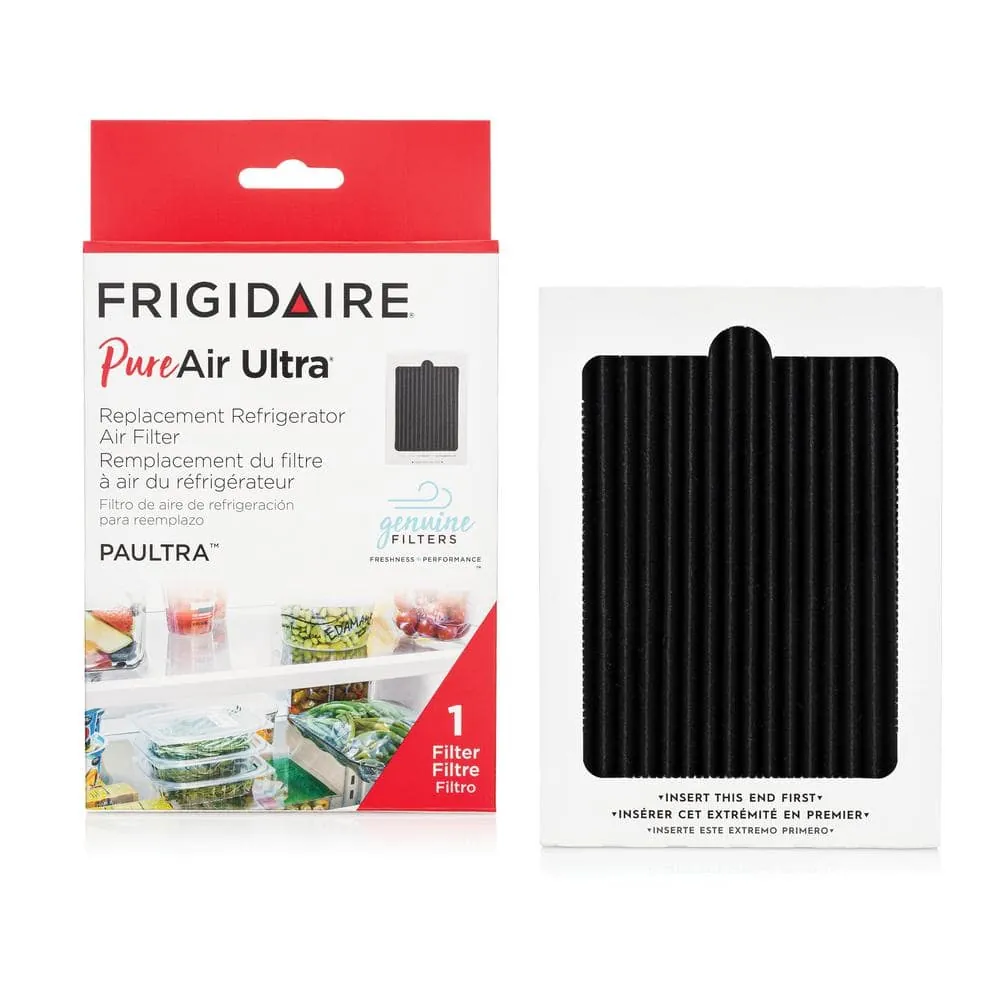
Discolored filter surface: The white or grey material of the filter looks dark, dusty, or brown upon inspection. If the pleats are clogged with visible sediment or debris, airflow is restricted.
Time since last change: It has been more than 180 days since you last installed a fresh unit.
Time and effort required for replacement
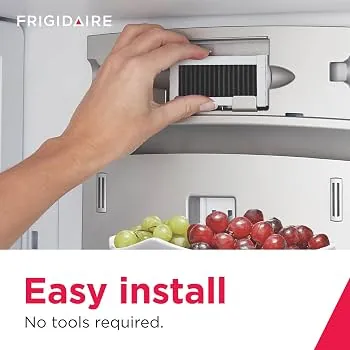
Replacing the filter is a quick task that takes about two minutes. You don’t need any tools, as most modern refrigerators use a simple clip-in or twist-lock mechanism. The effort is minimal, but you must make sure you have the correct part number before you start. You can find this number by looking at the old filter you’re removing or by checking the label inside your refrigerator’s filter compartment.
The cost is strictly limited to the price of the replacement part. Because these filters are often brand-specific, you should check your owner’s manual to ensure you buy a compatible version. Some generic filters exist, but they may not fit the housing perfectly or provide the same level of filtration.
If the filter doesn’t click into place, don’t force it. Take it out and align the tabs again to avoid cracking the plastic housing, which can lead to expensive internal leaks.
Manufacturers recommend changing these units based on your specific usage patterns. Consult your owner’s manual for the official replacement schedule, as the exact timing depends on your household’s water consumption and the quality of your local supply.
Habits to extend filter life
Cover all leftovers using airtight containers. This prevents strong odors from saturating the charcoal media, which otherwise exhausts the filter’s capacity prematurely. If you can smell the food from outside the container, the filter is already working overtime to neutralize it.
Clean spills immediately to stop bacteria from colonizing the interior surfaces. When organic matter decays inside the unit, it releases volatile compounds that clog filter pores. A quick wipe-down with mild soap saves the filter from scrubbing the air of constant, avoidable decay.
Check for rotting produce regularly, as spoiled food is the primary culprit for rapid filter depletion. Consult your owner’s manual for the recommended replacement frequency, as the ideal interval depends on your specific usage and the condition of your refrigerator.
Avoid overstuffing the shelves to ensure air circulates freely. When the unit is packed tight, the fan must force air through narrow channels, increasing the pressure drop across the filter. Aim to leave at least two inches of clearance between your items and the back wall. Proper airflow ensures the filter processes the entire volume of air evenly.
Frequently asked questions
Can I wash a refrigerator air filter to reuse it?
You can’t wash these filters because the activated carbon loses its effectiveness when wet. Water causes the charcoal to clump, ruining its ability to trap odors and bacteria. Once dirty, the filter must be replaced with a new one to function correctly.
Does it matter if I buy a generic filter?
It matters because generic filters often lack the proper seals and high-quality charcoal required to match the manufacturer’s performance standards. While they might be cheaper, they can allow air to bypass the filter material entirely if the fit isn’t precise. Always check the manufacturer’s website or your manual to see if they recommend using only official parts to maintain the air quality inside your specific appliance.
How do I know which filter my fridge needs?
You find the correct filter by looking at the model number on the sticker inside your refrigerator or by reading the original manual. The filter itself often has a part number printed on the side that you can use to search online. If you have the manual, look for the section on maintenance; it will list the exact part number and the recommended replacement schedule for your specific machine.
What happens if I never change the filter?
If you never change the filter, it becomes a source of odors rather than a solution. Saturated charcoal loses its absorption power, allowing dust and bacteria to accumulate. You’ll notice that your food smells and tastes like other items in the fridge as air quality declines.
Is it safe to run the fridge without a filter?
It’s safe to run the fridge without a filter, though you’ll lose protection against odors and bacteria. The appliance will continue to cool and freeze your food as normal because the filter is only for air purification. Without it, the air inside will circulate freely with any smells or particles present.
Conclusion
Start by checking your refrigerator’s manual to identify the correct replacement part number for your specific model. Once you have the new filter, turn it into the housing until you feel a firm click, which confirms it’s seated properly. If the filter doesn’t fit easily or the housing door won’t close, remove the unit and check the alignment again, as forcing the door can break the plastic clips that hold it in place.