
A faulty sensor or a disconnected wire is usually the reason you see samsung refrigerator error codes on your control panel. It’s safe to keep using the fridge for most of these alerts, provided the internal temperature remains below 40°F to prevent bacterial growth.
Understanding what your fridge is saying
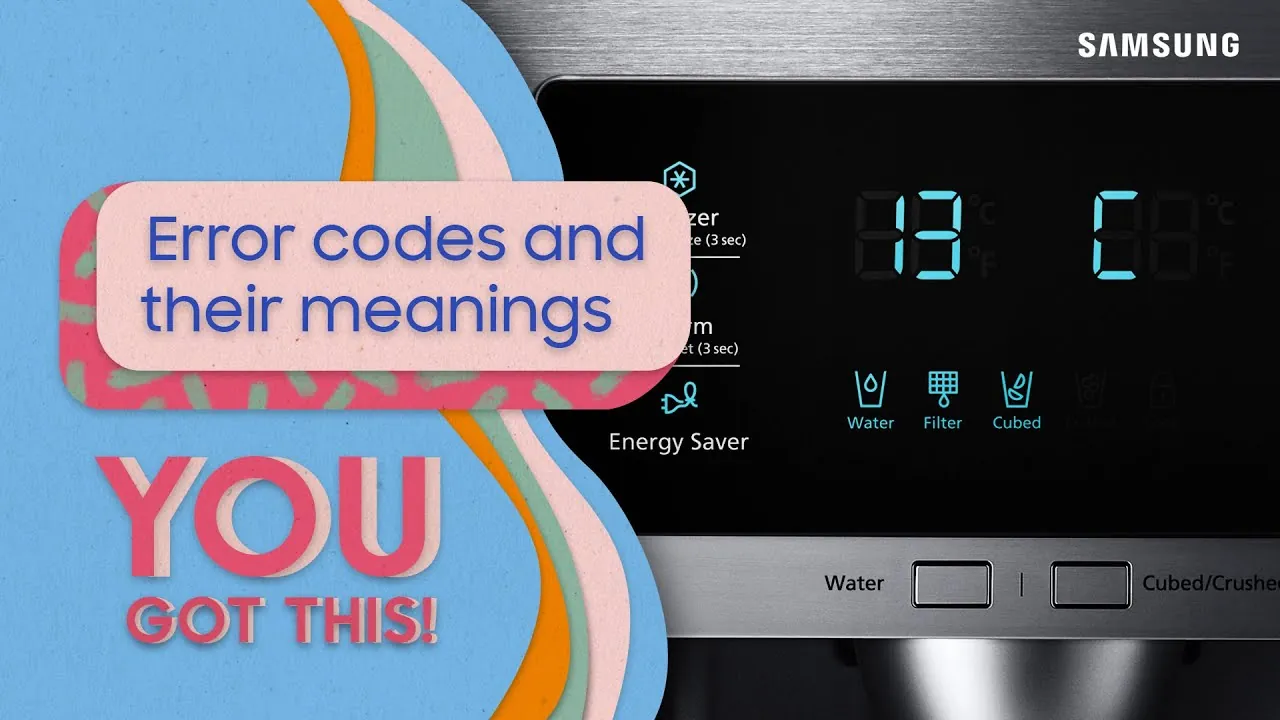
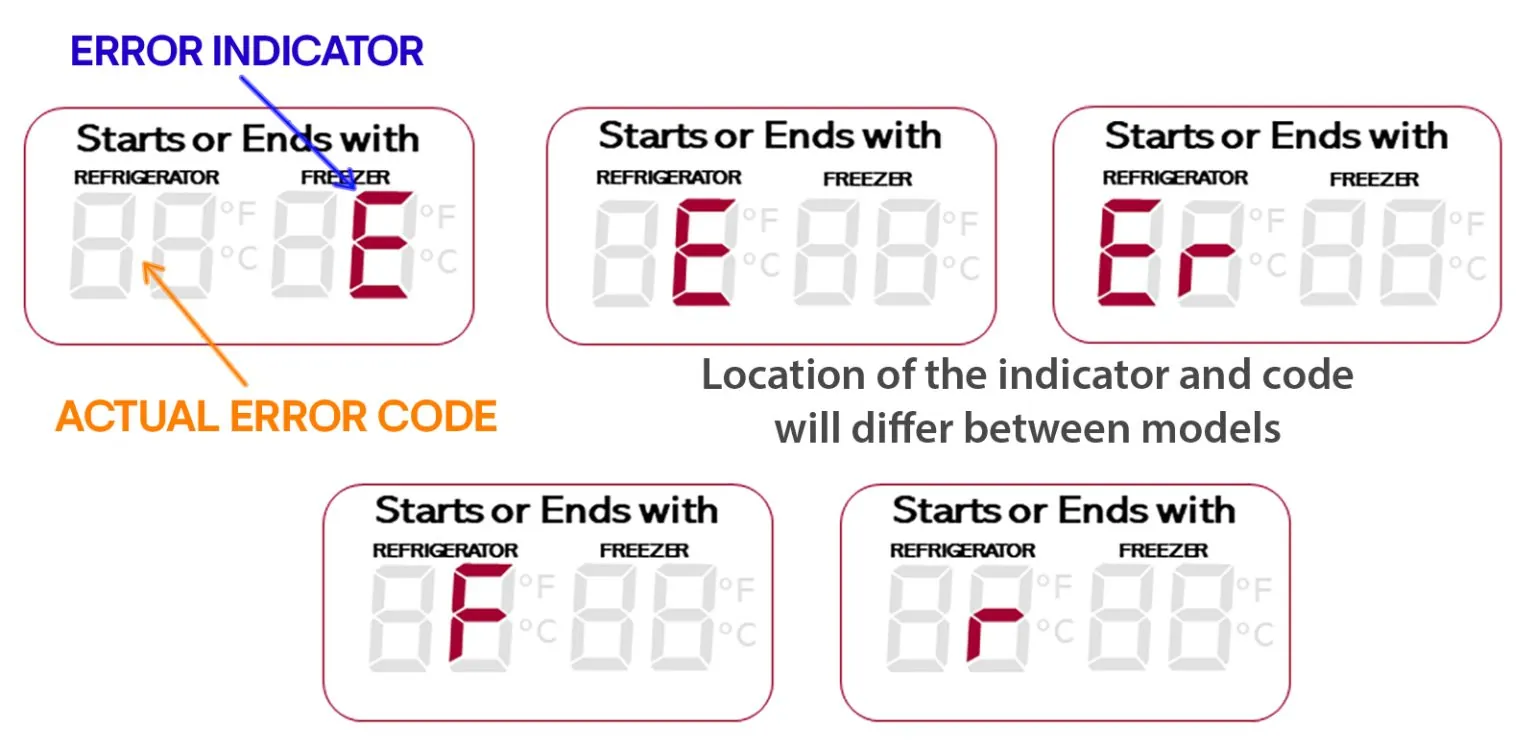
When your display shows a letter and a number, it’s providing a specific diagnostic signal. These codes identify which component has failed or which system isn’t communicating correctly with the main control board.
| What you notice | What it usually means | What to do first |
|---|---|---|
| 5E or 5 or E5 | Freezer sensor failure | Unplug for 60 seconds |
| 22E or 22 | Left side fan error | Check for ice buildup |
| 85E | Power supply voltage drop | Check your wall outlet |
| 40E | Ice room fan error | Clear ice around fan |
| 1E or SE | Ice maker sensor error | Reset the control panel |
| 88 88 | Control board communication | Turn power off/on |
If a hard reset fails to clear the code, check the wiring harness behind the kick plate. A loose connection here is often mistaken for a board failure, costing owners hundreds in unneeded repairs.
If your fridge displays a code while the internal temperature is rising rapidly, move your perishables to a cooler immediately. This indicates a compressor or sealed system failure that a simple power cycle can’t fix.
Distinguish between a persistent error and a transient glitch by timing the code. If the display flashes only after a power flicker, it’s likely a false positive caused by a voltage spike. If the code reappears within ten minutes of a hard reset, the component has physically failed and requires replacement.
Sensor failures and wiring issues
A sensor failure often happens because a wire has become loose or the sensor itself has stopped reading the temperature correctly. These sensors monitor the air inside the fridge and freezer to ensure the compressor runs only as needed. If the control board stops getting a signal, it triggers an error code to protect the food from spoilage.
You can verify if a sensor is the culprit by checking the temperature inside the fridge with a separate thermometer. If the thermometer reads a safe temperature, but the display shows an error, the sensor is likely sending a false report. If the temperature is actually rising above 40°F, you must move your perishable items to a cooler immediately.
To fix this, first perform a hard reset by unplugging the unit for 60 seconds. If the code returns, inspect the wire harness near the door hinge for any visible damage or pinching. If you see broken wires, you must stop and call a professional, as repairing wiring inside the door frame is difficult and can lead to further damage.
If the reset clears the code and the temperature stays stable for 24 hours, the issue was likely a temporary software glitch. However, if the error returns within minutes, the resistance in the sensor has drifted out of tolerance.
Use a multimeter to check the sensor’s ohms; a healthy thermistor typically reads between 5k and 10k ohms at room temperature. If your reading is infinite or zero, the sensor is dead and requires a direct replacement. Always match the exact part number from your manual, as using a generic sensor will cause the compressor to cycle incorrectly.
Airflow and fan obstructions
An error code related to a fan usually means the cooling air can’t circulate properly because of ice buildup or a physical blockage. Fans move cold air from the evaporator coils into the main compartments. When they’re blocked by ice, the motor works too hard and triggers an alert. This is common if the door was left slightly ajar, allowing warm, humid air to enter and freeze onto the fan blades.
Confirm this by opening the freezer or fridge door and listening for the hum of the fan. If the fridge is silent when it should be cooling, or if you hear a grinding noise, ice is likely hitting the blades. You can fix this by clearing all food away from the air vents and removing any ice chunks near the fan housing.
If the fan remains stuck, empty the unit and leave the doors open for 24 hours to allow a full manual defrost. If the fan starts running quietly after the ice melts, you have solved the problem. If the error remains, the fan motor has likely failed and requires a replacement part.
Don’t attempt to remove the back panel to access the fan motor yourself, as the internal evaporator coils can be sharp and the wiring is sensitive to damage. If you notice the temperature rising while the fan is silent, move your perishables to a cooler immediately.
A fridge that stays above 40 degrees Fahrenheit for more than four hours puts your food at risk for rapid bacterial growth. Always verify the error code in your manual first, as some models display fan alerts for electrical shorts rather than mechanical obstructions.
Power fluctuations and board errors
Communication errors occur when the main control board fails to send or receive data from the display panel. This often happens after a power surge or a brief outage, which can scramble the digital instructions the fridge uses to operate. If your fridge is plugged into a shared power strip or an overloaded extension cord, the voltage drop can cause these codes to appear randomly.
Check if other appliances on the same circuit are flickering or failing to confirm if the issue is with your home’s power. If the fridge is on a dedicated outlet, unplug it and plug it back in to restart the communication handshake between the boards. If the screen returns to normal after the restart, the system has successfully recalibrated.
Many users mistakenly assume a flickering light indicates a dying compressor, but it’s almost always a voltage regulation failure. If you see a code, check your breaker box first. If the circuit breaker has tripped, reset it before touching the fridge. If the breaker is fine, leave the unit unplugged for exactly ten minutes. This allows the capacitors on the control board to fully discharge, clearing the corrupted memory buffer that a quick plug-pull often misses.
If the display remains blank or shows a persistent error code despite a power cycle, the control board itself may be failing. This is a complex electronic issue that varies by model, so check your owner’s manual to find the specific reset sequence for your unit’s control board. If the code persists after a manual reset, the board is likely damaged beyond repair.
When to stop and call for service
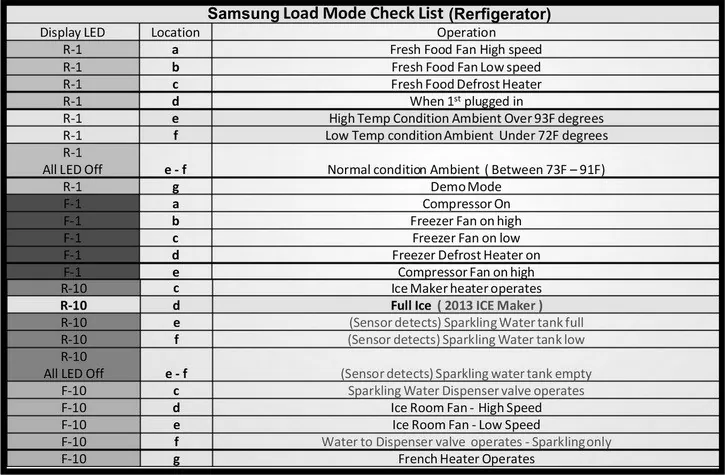
You must stop troubleshooting and contact a technician when the fridge shows signs of a deeper electrical or mechanical failure. Attempting to fix these issues without training can void your warranty or cause permanent damage to the unit.
- The smell of burning plastic or ozone indicates a short circuit in the wiring or a failing compressor motor.
- Visible sparks or smoke coming from the back or top of the unit pose a fire risk and require immediate disconnection.
- The compressor runs constantly but the fridge remains warm, suggesting a sealed system leak that only a licensed professional can repair.
- Attempting to open the sealed control housing or internal power supply components can expose you to electrical components that may retain a charge.
If the error persists after a hard reset, contact the manufacturer’s support line or a certified appliance repair service to handle the internal components.
Related guides
Frequently Asked Questions
Can I fix a display error myself?
Yes, you can fix most display errors by performing a hard reset, which involves unplugging the refrigerator for 60 seconds. This forces the control board to reboot and re-scan all connected sensors. If the code disappears after you plug the unit back in, the error was likely a temporary communication glitch. If the code returns immediately, a physical component like a sensor or fan likely needs professional attention.
Is it safe to eat food from a fridge showing an error code?
It’s safe to eat your food only if the internal temperature has remained at or below 40°F. Use a dedicated appliance thermometer to verify the temperature, as the display code may be inaccurate during a system error. If the temperature has risen above 40°F for more than two hours, the food is no longer safe to consume and should be discarded to avoid the risk of foodborne illness.
What does a blinking code mean?
A blinking code usually indicates that the refrigerator has detected a specific fault in a sensor or a motor that prevents it from running its normal cooling cycle. The blinking is the system’s way of highlighting the error on the control panel to alert you. Note the exact code that’s blinking, as this tells you which part of the fridge is failing, such as the ice maker or the fan.
How long does a hard reset take?
A hard reset involves unplugging the refrigerator for at least 60 seconds to allow the control board to fully power down and clear its temporary memory. If you plug the unit back in too quickly, the board may retain the error code in its memory, making it seem like the problem is still present when it’s not.
Does a power outage cause error codes?
Yes, a power outage or a sudden voltage spike can cause error codes because the control board loses its synchronization with the various sensors. When power returns, the board may perform a self-check and find a mismatch, triggering an alert. A simple power cycle often resolves these issues. If you live in an area with frequent power fluctuations, using a surge protector can prevent these codes from recurring.
Should I replace the control board?
Replace the control board only after a professional technician confirms it’s the source of the fault. Because this is an expensive repair, you should avoid purchasing a new part until you have ruled out simple issues like loose wires or stuck fans. Always verify the board’s health with a service center before proceeding.
Conclusion
If these simple resets don’t clear the display, don’t worry. You shouldn’t hesitate to reach out to a certified technician if the issue persists. They’ll have the right tools to inspect your unit’s wiring, ensuring your kitchen stays running smoothly and your food stays perfectly chilled for years to come.