
Food particles and grease buildup trapped in the filter or drain are the reasons why your dishwasher smell lingers after a cycle. This problem happens most of the time because small bits of debris decay inside the machine. You can confirm this by pulling out the bottom rack and checking the filter mesh for visible grime. If the mesh is clean, the issue often hides deeper in the drain hose or the door seal.
Why your dishwasher starts to smell

| Cause | How common | How to confirm it | Fix it yourself? |
|---|---|---|---|
| Dirty filter | Very common | Check mesh for food | Yes |
| Clogged drain hose | Common | Look for standing water | Yes with care |
| Moldy door seal | Common | Inspect rubber for spots | Yes |
| Old food in drain | Occasional | Remove debris from trap | Yes |
| Stagnant water | Rare | Check bottom of tub | Yes |
| Vent blockage | Very rare | Test airflow from vent | No |
Most odors originate in the filter. If you see a gray, slimy film on the mesh, you have waited too long to clean it. Scrub the screen with a stiff nylon brush and hot, soapy water based on your usage and the recommendations in your owner’s manual to prevent bacterial buildup.
If the smell persists after cleaning, check the drain hose loop. If the hose sits lower than the drain connection point, dirty water flows back into the tub. Ensure the hose creates a high loop secured near the top of the cabinet.
Don’t mistake a musty scent for a plumbing issue if the door seal is intact. Black spots on the rubber gasket indicate trapped moisture. Wipe the seal down with a damp cloth and mild soap after every cycle to keep the rubber clean.
If you find standing water at the bottom of the tub after a cycle, your air gap or garbage disposal connection is likely obstructed. Clear the disposal side first, as food debris often blocks the dishwasher’s discharge port. If the water remains, the drain pump may be failing.
Safety: Inside a mains-powered machine, the parts behind the outer cover can hold a dangerous electrical charge even after it has been unplugged — that’s why they sit behind a cover. Opening the housing, or testing or replacing anything behind it, is a job for a qualified technician, never a home repair.
Removing buildup from the filter
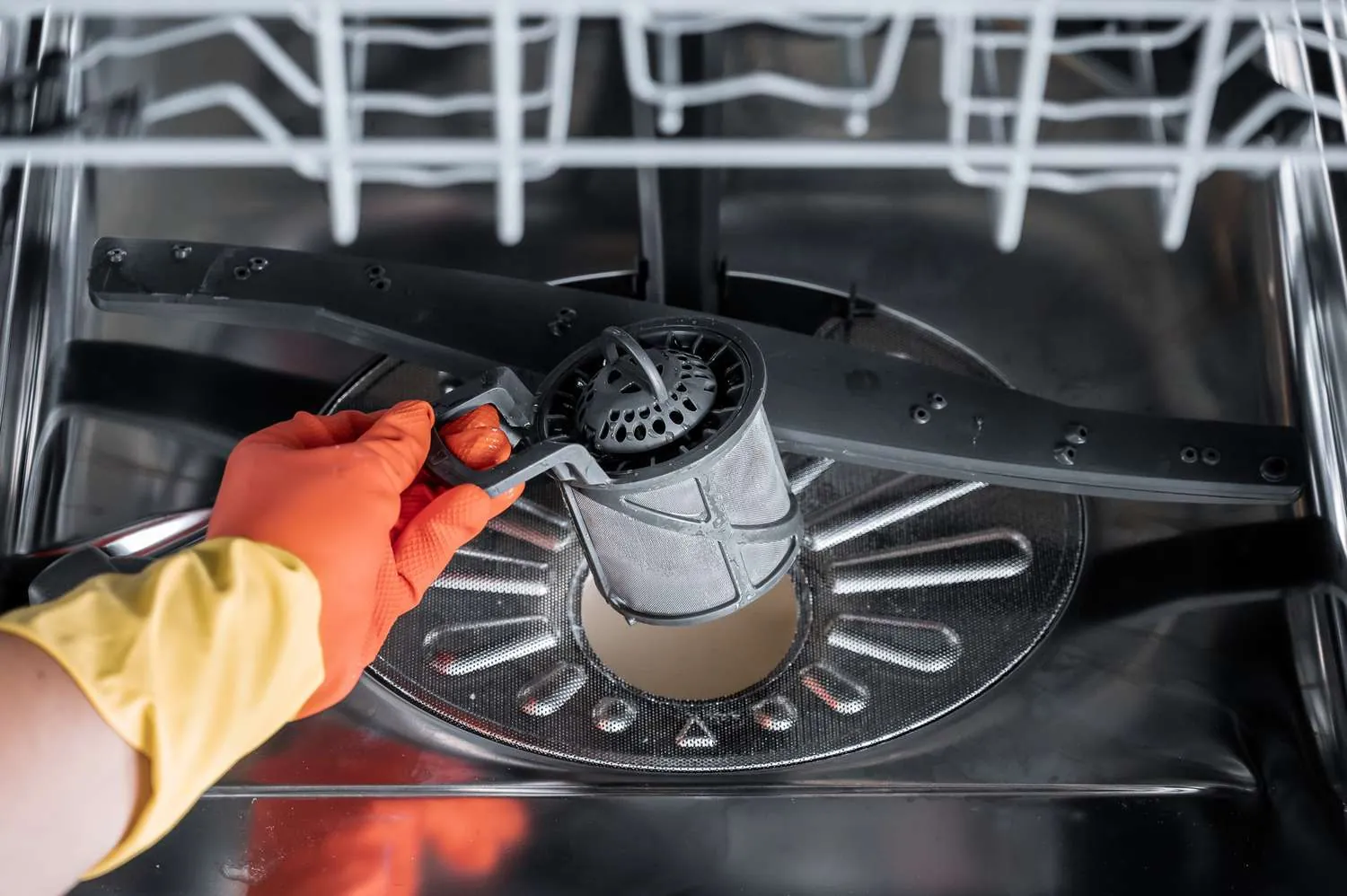
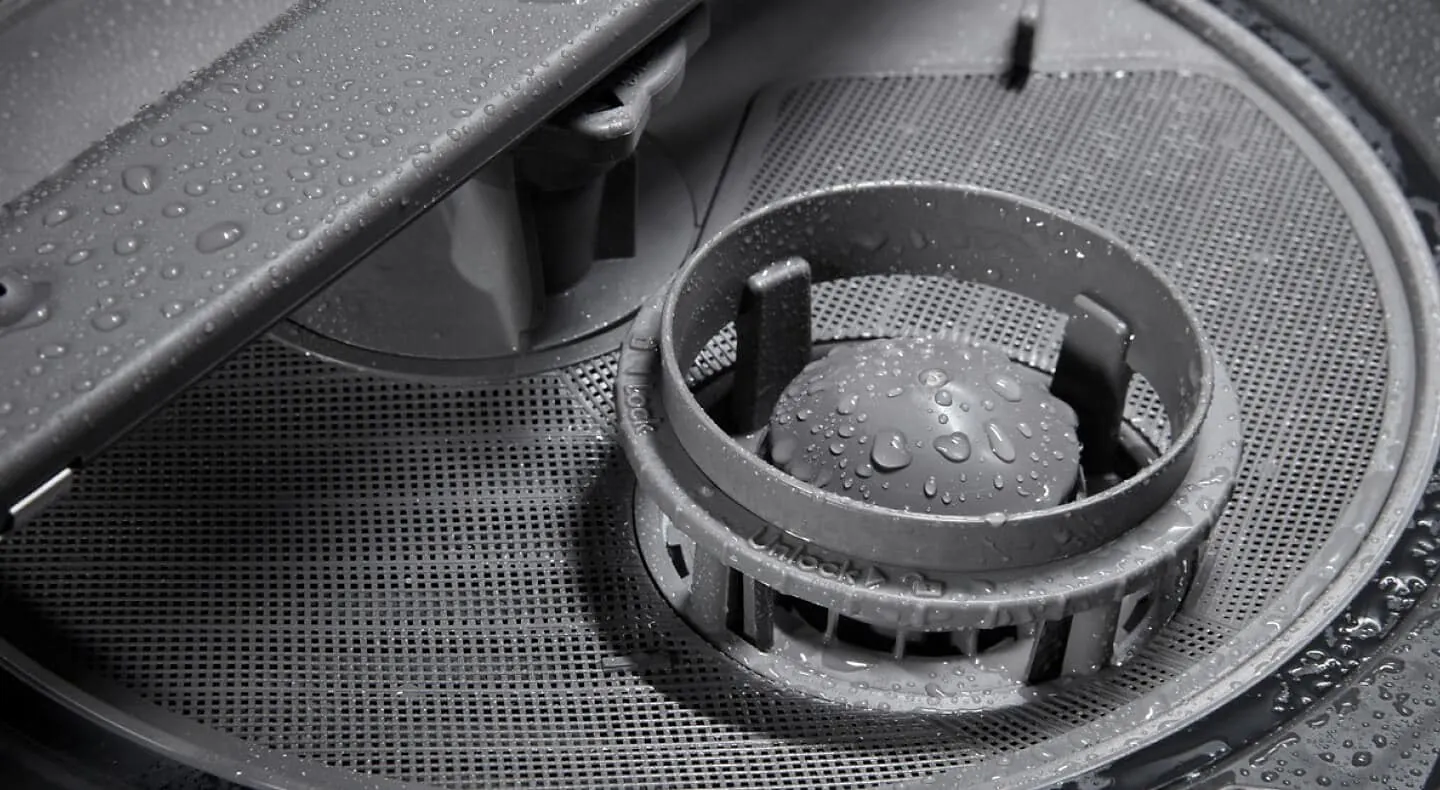
The filter is the most frequent place where food particles collect and start to rot. When these bits stay wet for too long, they create a foul odor that fills the entire kitchen. You should remove the filter by twisting it counter-clockwise and pulling it out from the floor of the machine. Rinse the mesh under hot, running water and use a soft brush to scrub away any sticky grease.
If the filter feels slimy, a mild dish soap helps break down the oils that trap bacteria. Never use a wire brush or steel wool on the mesh, as these tools create microscopic tears that trap food more aggressively in the future. If you see white, chalky deposits, soak the filter in a bowl of white vinegar for ten minutes to dissolve the mineral buildup.
Once the filter is clean, inspect the area beneath it for large items like seeds or glass shards. If you find a blockage, remove it carefully to ensure water can drain away freely. If the water still pools after clearing the debris, the drain hose itself may be obstructed. Replacing a clean filter takes about 5 minutes of your time. This simple task keeps the machine running fresh without needing any special tools.
Clearing a clogged drain hose
A clogged drain hose causes water to sit in the bottom of your dishwasher instead of flowing out. This stagnant water quickly turns sour and creates a persistent, swampy scent. You can tell this is the issue if the machine fails to empty completely after a wash cycle ends. Check the sink drain or the garbage disposal connection, as these are common spots for blockages to form.
If you have a high-loop drain setup, ensure the hose stays above the level of the sink drain to prevent backflow. You can clear minor clogs by running a cycle with a dishwasher-safe cleaner or by gently shaking the hose if it’s accessible under the sink. If the hose looks kinked or blocked by hard debris, you might need to disconnect it to clear the path.
Most homeowners make the mistake of using a metal wire hanger to poke through the hose. This often punctures the thin rubber, leading to a slow leak that rots your cabinetry over time. Use a flexible plastic plumber’s snake or a stiff nylon brush instead.
If you disconnect the hose and find the interior is coated in a thick, waxy gray sludge, you have a buildup of detergent and grease. If the water flows freely but the machine still won’t drain, the obstruction is likely inside the pump impeller rather than the hose. If the hose is brittle or shows visible cracks, replace the entire length immediately to avoid water damage.
Addressing mold on the door seal
Mold grows on the rubber door gasket because it stays damp and holds onto food residue. You can tell this is the cause if you see black or grey spots on the rubber when you wipe it with a paper towel. The seal creates a warm, dark environment that encourages mold to thrive if you don’t dry it out. Use a damp cloth with vinegar to wipe the entire length of the gasket.
Wipe the area with plain water immediately after to prevent the chemical from degrading the seal’s elasticity.
Be careful not to pull or stretch the rubber too hard during cleaning, as this can break the seal and cause leaks later. You should also check the corners of the seal where gunk often hides in the folds. Use a cotton swab to reach deep into the crevices.
If the mold persists after a thorough cleaning, the gasket might need a professional replacement. A healthy seal is vital for keeping the machine airtight and preventing moisture from escaping into the cabinet. If you see cracks in the rubber, it’s time to call a technician for a new part.
Rarer causes of bad odors
Stagnant water in the sump area often points to a failing drain pump that can’t push water out. If the water remains after a full cycle, check the impeller for debris. A simple blockage here often mimics a mechanical failure, saving you a costly service call.
A blocked air gap on the sink top can trap sewer gases and prevent the machine from venting properly. If you detect a rotten egg smell, clear the debris from the cap immediately. Neglecting this allows moisture to back up into the hose, creating a permanent breeding ground for mold.
Hard water deposits trap smells by creating a rough, calcified surface where bacteria and food particles cling. Use a citric acid wash once a month to dissolve these minerals. If you see white, chalky buildup on the spray arms, you must descale the unit to prevent recurring odors.
Electrical components near the motor produce a sharp, acrid burning smell if they overheat. This indicates a failing capacitor or a short circuit. If you smell ozone or singed plastic, kill the power at the breaker box immediately to prevent a fire.
What a typical fix involves
Fixing a smelly dishwasher usually requires only basic cleaning supplies like vinegar, baking soda, and a soft nylon brush. These tools are inexpensive and likely already sitting in your kitchen cabinet.
You’ll spend roughly 15 to 30 minutes on a deep cleaning session depending on how much buildup has accumulated over the months. If you need to replace a part like a drain hose or a door seal, the cost will be higher and depends on the specific model of your machine.
You can find the exact part numbers you need in your owner’s manual or on the manufacturer’s website. If you’re unsure about the model, look for the sticker inside the door frame. Always get a quote from a certified repair shop before committing to a professional service. Most simple maintenance tasks don’t require professional help, but if the smell persists after a deep clean, a pro can inspect the internal pump and venting system.
Related guides
Frequently Asked Questions
How long should a dishwasher stay clean?
A dishwasher should stay clean for a period determined by your usage and the owner’s manual if you clear the filter regularly. This timeframe assumes you scrape heavy food off your plates before loading them. If you notice a smell sooner, check the filter first, as it’s the most likely spot for debris to accumulate.
Is it safe to use bleach?
Don’t use bleach in your dishwasher, as it can damage the stainless steel interior and degrade the rubber seals. You should use white vinegar or a commercial dishwasher cleaner instead to keep the machine fresh. Bleach can cause corrosion that leads to leaks or permanent damage to the internal components over time.
Why does my dishwasher smell like rotten eggs?
A rotten egg smell usually means food is trapped in the drain or the filter is clogged with organic waste. This happens when food particles decay in the warm, moist environment of the machine. You can fix this by cleaning the filter and running a hot cycle with a cup of white vinegar to kill the bacteria.
Does it matter if I leave dishes inside?
It matters because leaving dirty dishes inside for more than 24 hours leads to bacterial growth and strong odors. The moisture from the food creates a perfect home for mold to start growing on the racks and the door seal. You should run a full cycle or rinse the dishes if you can’t wash them right away.
How often should I run a cleaning cycle?
You should run a cleaning cycle as directed by your owner’s manual and your specific usage to prevent buildup and keep the internal parts fresh. This regular maintenance helps remove invisible grease and lime deposits that trap odors. If you have very hard water, you might need to clean the machine more often to avoid mineral accumulation.
What happens if I ignore the smell?
Ignoring the smell causes more than just a bad scent, as it leads to mold buildup and potential drainage issues. Over time, the gunk can harden and block the pump, which makes the machine work much harder to drain water. This extra strain can shorten the life of the pump and lead to more expensive repairs later on.
Conclusion
Routine maintenance is the best way to keep your kitchen smelling fresh. By checking the filter once a month and keeping the door gasket dry, you prevent the most common causes of odors. If you have tried these steps and the smell remains, it may be time to contact a professional to look at the internal pump or drain lines.