
As an Amazon Associate, we earn from qualifying purchases. This post contains affiliate links – if you buy through them, we may earn a commission at no extra cost to you.
When you want to buy survival gear online, the huge number of choices can feel overwhelming. Many kits look identical on screen, yet they serve very different emergency needs. You don’t need to buy every single gadget to build a practical disaster plan. For most households facing unexpected bad weather, the Ready America 70280 Backpack gives two people 72 hours of food and drinking water in one grab-and-go bag.
What Actually Matters
Calorie and Water Supplies vs. Water Filters
Pre-packed rations and water pouches keep you alive without any prep work or nearby streams. A water filter like a hollow-fiber tube instead gives you thousands of liters, but it only helps if a natural freshwater source is near your shelter. To understand baseline home survival supplies, review the Ready.gov basic disaster supplies kit recommendations. Measure your household’s daily fluid needs before choosing between sealed water pouches and field filters.
Shelter Type and Body Heat Retention
Plastic emergency blankets keep wind off you, but tube tents and bivy sacks trap ambient heat much better during cold nights. The feature that sells kits the most is often a flimsy foil sheet that tears easily in heavy winds. A true bivy sack or structured mylar tent gives full-body coverage that actually decides whether you stay warm. Check the material thickness and shape specs before trusting your shelter to open weather.
Standalone Tools vs. Massive Multi-Packs
Huge multi-piece survival sets boast dozens of small tools, yet many parts repeat functions you already have covered. A single dedicated folding saw or solid ferro rod performs much better than six tiny gadgets tucked into a novelty bracelet. High piece counts catch buyers’ eyes, but durable standalone tools make fire and shelter faster. Count the distinct heavy-use tools in a kit rather than the total parts.
Weight and True Portability
A heavy bag sitting in your closet does no good if you can’t walk a mile carrying it. Evacuation kits need strong straps and balanced weight distribution so anyone in your house can grab them quickly. Check the listed weight of any kit before ordering, making sure it stays light enough for your weakest family member to carry.
1. Ready America 70280 Emergency 2-Person 3-Day Survival Backpack

Best for: couples wanting simple 72-hour home emergency supplies
The Ready America 70280 Backpack focuses entirely on short-term disaster survival. It includes 4,800 calories of food bars and 12 water pouches to sustain two people across three days. Because it relies on sealed rations, you don’t need cooking equipment or water purification steps to stay fed. This directly answers the decision between pre-packed supplies and field treatment tools.
The pack includes a 33-piece first aid kit, lightsticks, dust masks, survival blankets, and ponchos. This product isn’t for wilderness bushcrafters who need to build semi-permanent shelters or chop heavy timber, as it contains no heavy cutting blades. The trade-off is fixed shelf-life supplies: once the food bars and water pouches expire, you’ll need to replace them.
Pros
- Pre-packed food bars supply 4,800 total calories
- Includes 12 sealed drinking water pouches
- Contains basic first aid, blankets, and ponchos
- Backpack holds everything ready for fast evacuation
Cons
- Contains no heavy wood cutting tools
- Supplies only last for three days
2. 258-Piece Emergency Survival Kit

Best for: outdoor adventurers needing wide tool variety
The 258-Piece Emergency Kit gathers 258 items inside a 25L backpack. It provides heavy-duty gear like a 14-in-1 axe and hammer, a wire saw, a camping trowel, and a multi-use spoon. It addresses the standalone tools decision by placing cutting, hammering, and digging items inside one modular carry pack with D-ring carabiners.
You also get a portable water filter, an emergency tent, an LED lantern, and a flint stone with fire sticks. It isn’t for buyers wanting instant, pre-cooked emergency calories, because you won’t find food bars packed inside. The trade-off for having 258 items is managing a crowded bag full of loose parts during high-stress outdoor situations.
Pros
- Contains 14-in-1 axe and hammer tool
- Includes emergency tent and portable water filter
- Comes packed inside a 25L backpack
- Provides flint stone and fire starting sticks
Cons
- Doesn’t include ready-to-eat food rations
- High part count makes organization harder
3. LifeStraw Peak Series Personal Water Filter

Best for: backpackers needing safe outdoor drinking water
The LifeStraw Peak Series is a personal water filter built for rugged conditions. It removes 99.999999% of bacteria, 99.999% of parasites, and 99.999% of microplastics from untreated outdoor water. With a fast flow rate of 2.5L per minute, you won’t waste time waiting for safe water. It answers the water purification decision by giving you up to 1,000 gallons (4,000 L) of clean drinking capability.
The leak-proof housing attaches directly to standard water bottles and gravity hoses with its removable bottom cap. This filter isn’t for people facing sudden city power outages without access to a river, lake, or rain barrel. The trade-off is clear: you get endless filtration capacity, but you must find an existing water source to use it.
Pros
- Removes bacteria, parasites, and microplastics effectively
- Delivers fast flow rate of 2.5L per minute
- Filters up to 1,000 gallons of water
- Connects to water bottles and gravity hoses
Cons
- Requires an existing outdoor water source
- Provides no warmth, food, or shelter
4. Go Time Gear Survival Life Tent • 2 Person Mylar

Best for: quick two-person emergency storm protection
The Go Time Gear Life Tent is an ultralight emergency tube shelter engineered for bad weather. It weighs just 8.7 ounces, making it simple to pack inside any emergency bag without dragging down your pace. This directly tackles the shelter decision by replacing flat, thin foil sheets with an enclosed tube tent that protects against rain, wind, and winter cold.
Setup uses included paracord strung between trees or rocks, and it features an integrated high-decibel whistle for rescue signaling. It isn’t for campers expecting roomy, multi-room comfort on long summer vacations. The trade-off of its ultralight polyester construction is that you must have anchor points like trees or heavy rocks to pitch it properly.
Pros
- Weighs a very light 8.7 ounces
- Enclosed tube design holds off cold weather
- Includes high-decibel signaling whistle and paracord
- Packs small into any go-bag
Cons
- Requires trees or rocks to set up
- Sized strictly for emergency shelter for a pair of survivors.
5. Go Time Gear Life Bivy Emergency Survival Sleeping Bag Thermal
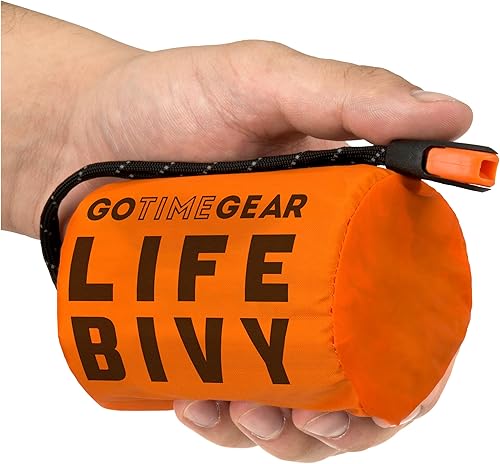
Best for: solo hikers wanting reliable hypothermia defense
The Go Time Gear Life Bivy is a thermal emergency sleeping bag made of tough polyethylene. It weighs a mere 4.1 ounces, fitting easily into vehicle glove boxes or hiking packs. The listing states it retains up to 90% of body heat, directly answering the shelter and body warmth decision for solo travelers caught in sudden drops in temperature.
The bivy also functions as a sleeping bag liner or standard emergency blanket, and comes with a 120-decibel whistle and 20 feet of paracord. It isn’t for couples or groups needing shared coverage, as it only fits one adult. The trade-off for such extreme light weight is its tight, solo-sleeper profile that limits your movement inside.
Pros
- Listing states it retains up to 90% body heat
- Extremely lightweight at only 4.1 ounces
- Includes 120-decibel whistle and 20-foot paracord
- Made of durable, tear-resistant polyethylene
Cons
- Accommodates only a single adult sleeper.
- Snug bivy shape limits overall mobility
6. Überleben – Hexå Ferro Rod Fire Starter Survival Tool

Best for: all-weather bushcraft fire starting
The Überleben Hexå Ferro Rod throws 5,500°F sparks to start fires in any weather or altitude. It measures 6 inches long and 1/2 inch thick, providing up to 20,000 strikes from its flat hexagon profile. Its six flat sides give your striker better purchase, producing more molten ferrocerium per strike than round rods.
The tool includes a mil-spec 550 paracord lanyard and a 6-function multi-tool striker that doubles as a ruler, map scale, and bottle opener. It isn’t for users who want an instant push-button flame without gathering dry tinder first. The trade-off is manual operation: you must prepare your kindling beforehand and practice your striking technique to get a stable fire going.
Pros
- Rated for up to 20,000 total strikes
- Flat hexagon profile creates better striking grip
- Multi-tool striker features ruler and bottle opener
- Sparks reliably in wet and high-altitude conditions
Cons
- Requires manual striking effort and dry tinder
- Heavier than small disposable fire matches
7. Sucrain Pocket Chainsaw with Paracord Handle
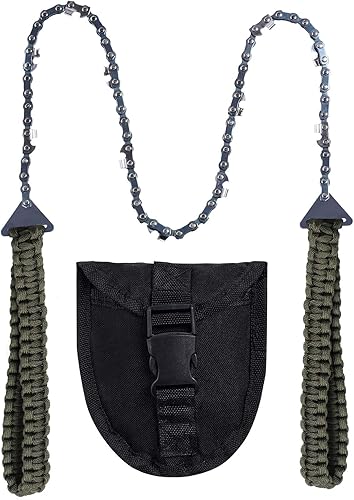
Best for: cutting thick firewood along hiking trails
The Sucrain Pocket Chainsaw measures 24 inches long and uses 11 bidirectional teeth to slice through logs. Made from heat-treated manganese steel alloy, it resists rust and handles heavy sawing force. It weighs just 170 grams and folds into a small 5.91 by 5.31 inch pouch, addressing the cutting tools decision without adding axe-like weight to your pack.
Soft nylon paracord handles protect your palms from blisters while you pull the chain back and forth. It isn’t for people who lack the upper-body endurance to maintain a continuous, synchronized sawing stroke. The trade-off is physical effort: you must use both hands in a rhythmic pulling motion, which can tire your arms quickly on larger tree trunks.
Pros
- Cuts wood quickly with 11 bidirectional teeth
- Lightweight build weighs only 170 grams
- Heat-treated manganese steel resists rust
- Folds into a compact storage pouch
Cons
- Demands continuous physical effort from both hands working in tandem.
- Limited reach compared to pole saws
8. Bushcraft Manual Drill
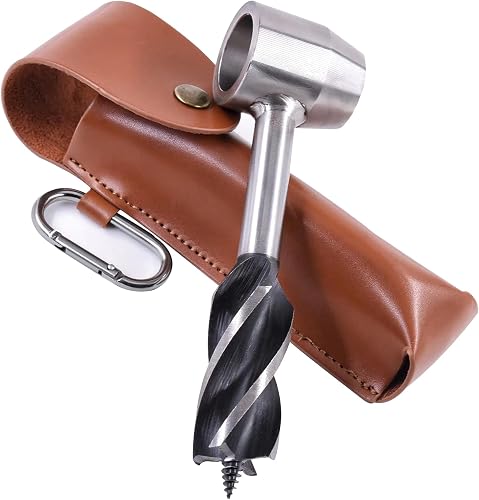
Best for: off-grid shelter construction and woodworking
The Bushcraft Manual Drill combines an aggressively ground steel auger bit with a scotch eye wrench. It bores 1-inch diameter holes through dry or green timber to help you build chairs, shelters, and wooden mallets. By sliding a sturdy stick through the eye, you gain mechanical leverage to turn the self-tapping guide screw smoothly into heavy logs.
The scotch eye features a cutting edge that hammers into branches to shave matching connection pegs. It isn’t for urban evacuations or quick vehicle kits, because boring holes into timber serves no purpose in a city power outage. The trade-off is specialized utility: it excels at off-grid carpentry, but it does nothing to provide food, water, or immediate weather shelter.
Pros
- Self-tapping screw bores clean 1-inch holes
- Scotch eye edge shapes matching wooden pegs
- Heavy-duty steel build with protective case
- Delivers high leverage using a wooden stick
Cons
- Serves zero purpose in urban emergencies
- Heavy steel adds noticeable tool weight
9. Coghlan’s Portable Folding Camp Stove
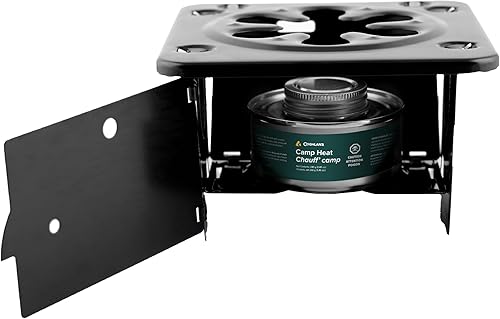
Best for: heating emergency canned food and drinks
Coghlan’s Folding Stove provides a stable, coated steel platform for boiling water and cooking rations. It measures 6.5 by 6.5 inches across the cooking surface, easily holding small to medium pots or tin cups. It supports multiple heat sources like fuel cubes, canned heat, and solidified alcohol, directly solving the hot meal problem during power failures.
The stove folds completely flat for packing and weighs only 16 ounces (1 lb). It isn’t for hikers who refuse to carry separate fuel supplies, because it requires pre-made canned heat or chemical fuel tabs to burn. The trade-off for its stable steel frame is that the fuel itself must be purchased and packed alongside it.
Pros
- Folds flat to save storage space
- Coated steel frame holds medium cookware
- Burns fuel cubes, canned heat, or alcohol
- Weighs a manageable 16 ounces
Cons
- Fuel tablets or heat cans sold separately
- Cooking surface measures just 6.5 inches
10. Atomic Bear Paracord Bracelet

Best for: wearable, backup emergency signaling and fire
The Atomic Bear Paracord Bracelet packs four survival essentials into an adjustable wristband. It integrates a ferro rod striker, an emergency whistle, a small compass, and 12 feet of military-grade cord. The band adjusts from 8 to 10.5 inches to fit wrists of different sizes, answering the portable wearable gear decision.
You get a pair of bracelets in the pack, providing extra backup gear for a hiking partner. This product isn’t for people who need robust tools for cutting logs or setting up roomy family shelters. The trade-off of the wristband form factor is that its ferro rod and compass are tiny, making them harder to manipulate than full-sized standalone navigation and fire tools.
Pros
- Packs 12 feet of paracord on your wrist
- Features built-in ferro rod and whistle
- Adjustable band fits wrists from 8 to 10.5 inches
- Sold as a convenient set for a pair of users.
Cons
- Built-in ferro rod is very small
- Not a replacement for full-sized camp tools
Who Should Buy Which
If you need a complete home evacuation setup for a couple, choose the Ready America 70280 Backpack for its pre-packed food and water. Outdoor adventurers who want the largest variety of camp tools will prefer the 258-Piece Emergency Kit with its axe, trowel, and lantern. If you already have shelter and simply need safe wilderness hydration, the LifeStraw Peak Series handles years of filtering. Hikers facing unexpected cold snaps should grab the Go Time Gear Life Bivy, while campers setting up camps for a pair will appreciate the Go Time Gear Life Tent. For absolute fire reliability, pack the Überleben Hexå Ferro Rod.
Mistakes That Catch Buyers Out
- Buying massive toolkits that boast hundreds of pieces while forgetting to secure basic drinking water and food rations.
- Choosing novelty gadgets like tiny compasses over durable shelters that can protect your body from freezing rain.
- Assuming every water filter removes chemicals or works without a nearby freshwater stream or river.
- Taking claims about lightweight gear at face value without checking if the material requires trees or poles to stand.
For most households looking to prepare for sudden storms, the Ready America 70280 Backpack provides the most practical coverage.
Frequently Asked Questions
Is a ferro rod better than regular strike matches?
A ferro rod works reliably even after being dropped in deep water, buried in mud, or exposed to high winds. While a ferro rod requires you to prepare dry kindling first, its long lifespan makes it superior for wet conditions.
What should I check on an emergency backpack before storing it?
Review the total weight to make sure every family member can lift and carry it comfortably. Inspect the first aid supplies, check the seal on all water pouches, and test the whistle and lightsticks. Store the pack in an accessible spot near your main doorway so you can grab it instantly during sudden evacuations.
Also Worth Considering
The Ready America Hour Emergency Kit provides a dedicated 3-day survival backpack scaled down for a solo traveler. It includes basic food, water, a blanket, and a first aid kit to keep solo dwellers prepared for floods or fires.
The LUXMOM Kit First Aid Kit gathers 142 survival and first aid pieces inside a compact MOLLE pouch. It’s aimed at dads and campers who want basic outdoor medical gear mounted easily to an existing hunting or hiking pack.
The Don’t Die in The Woods poncho focuses purely on personal heat retention and rain protection. It serves as an ultra-compact emergency garment that shields solo outdoor explorers from harsh wind and soaking storms.
Final Thoughts
Keep your supplies in a cool, dry closet where you can reach them quickly. If you’re worried about a specific local threat, check your city’s website for extra tips on staying safe. You’ll feel much more confident once your kit is tucked away, ready for whatever comes your way next.