
Are you wondering, “What size air purifier do I need?” Choosing the right size can feel confusing, but it’s key to keeping your air clean and healthy.
If your purifier is too small, it won’t do the job. Too big, and you might waste money and energy. You’ll discover how to pick the perfect size for your space. By the end, you’ll feel confident that your air purifier is just right for your home or office.
Keep reading to breathe easier and make the smartest choice for your air quality.
Air Purifier Basics
Understanding the basics of air purifiers helps you choose the right size for your space. These devices clean indoor air and remove dust, pollen, smoke, and other harmful particles. Knowing how they work and what features matter makes the selection easier.
Air purifiers come in different sizes and types. Each model has a specific capacity for cleaning air in rooms of various sizes. Picking the right size ensures better air quality and efficient use.
How Air Purifiers Work
Air purifiers pull air from the room into the device. Inside, filters trap dust, pollen, pet dander, and smoke particles. Clean air then flows back into the room. Some models use extra technology like UV light to kill germs or ionizers to capture tiny particles.
Filters vary by type. HEPA filters catch the smallest particles. Carbon filters reduce odors. Some units combine both for better cleaning power. The air purifier’s fan speed also affects how fast it cleans the air.
Key Features To Consider
Look for the Clean Air Delivery Rate (CADR) rating. It shows how quickly the purifier cleans air in a room. Higher CADR means faster cleaning and better performance.
Check the room size the purifier covers. Match it to your room’s square footage. A small purifier in a large room will not work well.
Noise level matters, especially for bedrooms or offices. Some models run quietly, while others are louder at high speeds. Energy efficiency can save money over time.
Filter replacement costs and frequency are important. Some filters last longer and cost less. Choose a model with easy-to-change filters.
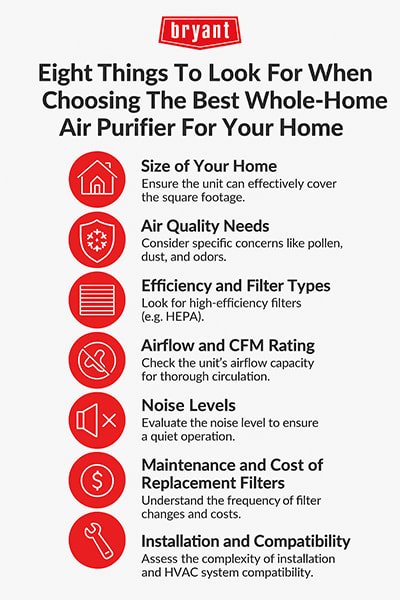
Credit: www.bryant.com
Measuring Room Size
Choosing the right air purifier size starts with measuring your room. The purifier must match the space to clean air effectively. Too small, and it won’t work well. Too large, and it wastes energy and money. Measuring room size helps pick the perfect purifier.
Focus on the room’s floor area and height. These two factors affect how much air the purifier must clean. Accurate measurements make sure you get fresh, healthy air.
Calculating Square Footage
Measure the length and width of your room in feet. Multiply these two numbers to get the square footage. For example, a 12-foot room by 10-foot room equals 120 square feet. This number shows how much floor space you have.
Use a tape measure or a ruler for accuracy. Write down the numbers to avoid mistakes. Square footage is the base number for choosing air purifier size.
Considering Ceiling Height
Most rooms have 8-foot ceilings, but some are taller. High ceilings mean more air volume to clean. Multiply your square footage by the ceiling height. This gives the room’s total air space in cubic feet.
Air purifiers work best with cubic feet per minute (CFM) ratings. Knowing the room’s volume helps pick a purifier with the right airflow. This ensures clean air reaches every corner of the room.
Matching Purifier Size To Room
Choosing the right air purifier size matters for clean air. A purifier too small won’t clear the air well. One too large may waste energy. Matching the purifier size to your room keeps air fresh and healthy. This section explains how to find the right size for your space.
Cadr Ratings Explained
CADR stands for Clean Air Delivery Rate. It shows how fast an air purifier cleans air. The higher the CADR number, the faster it cleans. CADR ratings focus on removing smoke, dust, and pollen. These ratings help compare purifier power. Check the CADR to match your room size.
Recommended Coverage Area
Each purifier has a recommended room size. This tells the largest area the purifier can clean well. Measure your room’s square feet to compare. Choose a purifier with coverage that meets or exceeds your room size. This ensures the air purifier works efficiently and keeps air clean.
Factors Affecting Purifier Choice
Choosing the right size air purifier depends on several important factors. These factors help decide the power and capacity needed. Understanding them ensures cleaner air and better health in your space.
Air Quality Levels
Air quality varies by location and environment. High pollution areas need stronger purifiers. Clean places require less powerful models. Testing your air quality helps pick the right size. It also tells how often to run the purifier.
Allergies And Sensitivities
People with allergies need more effective purifiers. Smaller particles like pollen and dust trigger symptoms. A larger purifier with HEPA filters works best. Sensitive individuals benefit from higher air changes per hour. This keeps allergens at a minimum level.
Pet Dander And Smoke
Homes with pets or smokers face extra air pollution. Pet dander and smoke particles are tough to remove. A bigger purifier with strong filters is necessary. It cleans the air faster and more thoroughly. This helps keep the air fresh and healthy.
Choosing The Right Capacity
Choosing the right capacity for an air purifier is key to clean air. The purifier must match your room size. Too small a purifier will not clean well. Too large one may waste energy. Knowing room size helps pick the right purifier power.
Air purifiers are rated by the area they cover. This rating guides you to choose a suitable model. Consider your room type and size before buying. This ensures fresh and healthy air every day.
Small Rooms And Personal Spaces
Small rooms need purifiers designed for limited space. Bedrooms, offices, or nurseries often fall here. A purifier covering 100 to 200 square feet usually works well. These models use less power and are quiet. Perfect for sleeping or working without noise.
Medium To Large Rooms
Living rooms and dining areas often need medium-sized purifiers. Look for models covering 300 to 500 square feet. These have stronger fans and bigger filters. They clean air faster and handle more pollutants. Great for spaces where family spends time together.
Open Floor Plans
Open floor plans require high-capacity purifiers. These spaces can be large and connected. Choose purifiers that cover 600 square feet or more. Some people use multiple purifiers for better coverage. This keeps air fresh throughout the whole area.
Placement Tips For Best Performance
Proper placement of your air purifier helps it clean air better. Poor positioning lowers its efficiency. Follow simple tips to get the best results from your device.
Ideal Location In The Room
Place the air purifier where air flows freely. Near the center of the room works well. Avoid corners or tight spaces where air circulation is weak. Position it away from walls, at least a few inches. Keep it on a flat surface, not on the floor. Higher spots can help with air intake and output. Bedrooms and living rooms benefit most from well-placed purifiers.
Avoiding Obstructions
Remove objects that block the purifier’s air vents. Curtains, furniture, and walls can stop airflow. Clear a space of at least one to two feet around the device. Avoid placing it behind large furniture or inside cabinets. Obstructions reduce the purifier’s ability to clean air. Keep pets and children away from the unit to prevent accidental blockage. Regularly check and clear dust or items near the purifier.
Maintenance And Filter Replacement
Maintaining your air purifier is key to keeping your air clean. Regular care and timely filter changes help the device work well. A clean filter catches dust, pollen, and other pollutants better. Neglecting maintenance can reduce the purifier’s efficiency and air quality.
Filter Types And Lifespan
Air purifiers use different filter types. HEPA filters remove tiny particles like dust and smoke. Carbon filters absorb odors and gases. Some units have pre-filters to catch large dust and pet hair.
Each filter type has a lifespan. HEPA filters usually last 6 to 12 months. Carbon filters need replacing every 3 to 6 months. Pre-filters can be cleaned or replaced every 1 to 3 months. Check your user manual for exact times.
Signs You Need A New Filter
Notice a dusty or smelly room? The filter might be clogged. Reduced airflow or strange noises can also signal a dirty filter. Some purifiers have indicator lights to tell you when to change filters. If air quality drops, replace the filter soon.
Changing filters on time keeps the purifier effective. It also helps protect your health and saves energy. Regular checks make sure your air purifier works at its best.

Credit: smartairfilters.com
Additional Features To Consider
Choosing the right air purifier size is important. But extra features also affect your experience. These features can make using the purifier easier and more effective. Consider noise levels, energy use, and smart controls. Each plays a role in your comfort and convenience.
Noise Levels
Air purifiers run quietly or can be loud. Noise can disturb your sleep or work. Check the decibel rating before buying. Lower decibels mean quieter operation. A silent purifier suits bedrooms or offices well. Some models offer different speed settings. Use low speed for quiet times and high speed for fast cleaning.
Energy Efficiency
Energy-efficient air purifiers save electricity and money. Look for ENERGY STAR certified models. They use less power without losing performance. This matters for constant use in homes. An efficient purifier lowers your monthly bills. It also helps reduce your carbon footprint. Consider energy use if you run the purifier all day.
Smart Controls
Smart controls add convenience to air purifiers. You can control them with apps or voice commands. Some models adjust settings automatically. They detect air quality and clean accordingly. Smart features help maintain clean air without effort. They also offer timers and filter alerts. Perfect for busy people who want easy air care.

Credit: yourelegantbar.com
Frequently Asked Questions
What Room Size Should My Air Purifier Cover?
Choose an air purifier that matches your room’s square footage. Check the Clean Air Delivery Rate (CADR) for best fit. This ensures the purifier cleans air effectively.
How To Calculate Air Purifier Size For My Room?
Measure your room’s length and width in feet. Multiply these numbers to get square footage. Select a purifier designed to cover that area.
Can A Small Air Purifier Clean A Large Room?
A small purifier works best in small rooms only. It may not clean the air well in larger spaces. For big rooms, pick a purifier with higher coverage.
What Does Cadr Mean In Air Purifiers?
CADR stands for Clean Air Delivery Rate. It shows how fast the purifier cleans the air. A higher CADR means better air cleaning performance.
Should I Buy A Bigger Air Purifier Than Needed?
Bigger purifiers clean air faster and cover more space. But they may use more energy and cost more. Pick the right size for your room to save money.
Conclusion
Choosing the right air purifier size improves air quality effectively. Measure your room size first. Match the purifier’s coverage to your space. A small purifier won’t clean large rooms well. Bigger isn’t always better—choose wisely. Clean air helps you breathe easier and stay healthy.
Keep filters changed and the unit maintained. Enjoy fresh air every day with the right purifier size. Simple steps lead to better indoor air quality. Breathe well, live well.