
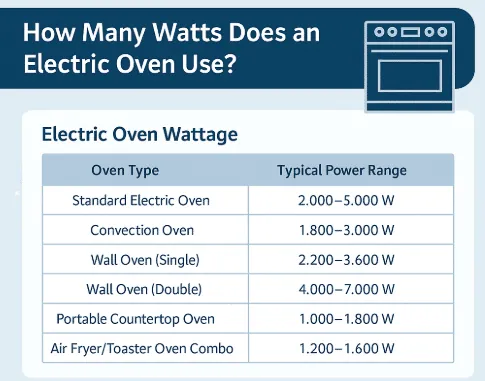
An electric oven consumes a significant amount of electricity, typically between 2,000 and 5,000 watts per hour depending on its size and heat setting. While it doesn’t run constantly like a refrigerator, it’s one of the most power-hungry appliances in your home.
How to monitor your oven electricity consumption
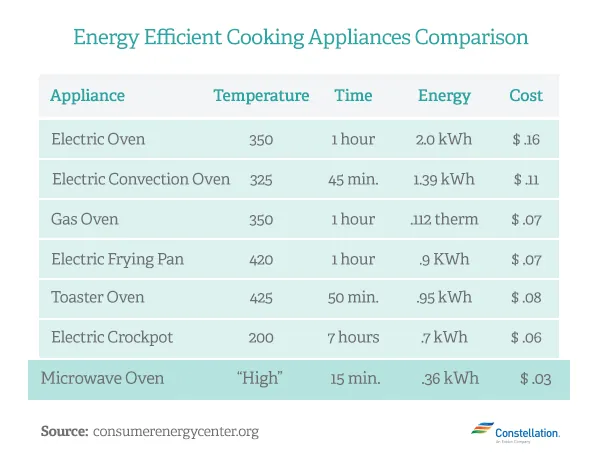
Check the rating plate on your appliance for the maximum wattage, usually found inside the door or on the back. Most standard residential electric ovens draw between 2.0 and 5.0 kilowatts (kW) when the heating elements are fully active.
Energy usage depends on the temperature; a preheated oven uses less power once it maintains a steady heat level. If your oven has a digital display, track the time it spends in the “preheat” phase versus the “maintain” phase. The preheat cycle consumes nearly double the energy of the maintenance phase because the elements run continuously to reach the target temperature.
Use a plug-in electricity monitor for smaller countertop ovens to see real-time consumption in kilowatt-hours (kWh). These devices identify “vampire” draw, where the clock or display panel consumes power even when the heating elements are cold.
Multiply the kilowatt rating of your oven by the total hours of use to calculate your specific energy demand. If you lack a rating plate, assume an average draw of 3.0 kW for a standard range.
Switching to a convection setting can often reduce cooking time by up to 25%, which lowers your total energy intake. Avoid the common mistake of opening the door to check progress; every opening drops the internal temperature by up to 50 degrees, forcing the oven to restart its high-wattage heating cycle.
Why ovens use so much power
The physics of heating a large, insulated metal box requires significant energy to raise the internal temperature to baking levels. Unlike a microwave that excites water molecules in food, an oven must heat the entire interior air volume and the heavy metal racks. This process requires powerful electrical resistance coils that convert electricity into intense heat, which naturally demands high current from your home electrical panel.
Most residential ovens pull between 2,000 and 5,000 watts. This is roughly the same energy load as running twenty-five to fifty 100-watt light bulbs simultaneously. If your oven takes twenty minutes to preheat, you have already consumed enough electricity to power a standard refrigerator for an entire day.
This high demand is necessary to maintain the thermal mass inside the oven cavity. Once the oven reaches your set temperature, the heating elements cycle on and off to maintain that heat level. If you open the door frequently, you release that stored heat, forcing the elements to turn back on and pull more power to return to the target temperature.
The efficiency of your oven is also tied to its insulation. Older models often have worn-out door seals or thin insulation, which allows heat to escape into your kitchen. You can test your seal by closing the door on a thin strip of paper; if the paper pulls out without resistance, your oven is leaking heat and wasting money.
When heat escapes, the oven works harder to stay hot. If you’re roasting a whole chicken, the energy cost is negligible compared to the loss caused by a faulty seal. Keep the door closed during the cooking process to prevent this unnecessary energy loss and help the appliance operate more efficiently.
Factors changing your energy usage
| Situation | What changes | What to do instead |
|---|---|---|
| Frequent door opening | Heat loss occurs | Use the window light |
| Cooking small meals | Large cavity heating | Use a toaster oven |
| Poor door seals | Constant heat escape | Replace the gasket |
| High temperature | Increased wattage draw | Use lower heat settings |
| Preheating too long | Wasted energy | Start cooking immediately |
Every time you pull the oven door open to check on your dinner, you lose roughly 25 to 50 degrees of internal heat. The heating element must then cycle back to full power to recover that lost temperature, which spikes your energy consumption. If you can’t see through the glass, your seal is likely failing.
Test your gasket by closing the door on a single sheet of paper. If you can pull the paper out without resistance, the seal is compromised and you’re paying to heat your kitchen air.
Most modern ovens don’t require a long preheat period unless you’re baking delicate pastries. For roasting meats or vegetables, start your timer the moment you turn the dial. You’ll save approximately 10 percent of the energy used during the cycle.
If you’re cooking for one or two people, avoid the main oven entirely. A toaster oven uses roughly one-third of the electricity of a full-sized unit because it heats a smaller volume of air. If your recipe calls for 400 degrees but you’re only reheating leftovers, drop the setting to 350 degrees and add five minutes to the timer.
How to operate your oven efficiently
Check that the door gasket is tight by closing the door on a piece of paper; if it slides out easily, the seal is likely failing. A compromised seal forces the heating element to cycle on constantly to compensate for heat loss, which can increase your energy consumption by up to 20 percent.
Avoid preheating for longer than 10 to 15 minutes, as most modern ovens reach the required temperature within this time frame. If you’re baking delicate pastries, preheat fully, but for roasts or casseroles, you can safely place the food in as the oven warms.
Use glass or ceramic pans when possible, as they retain heat better than metal, often allowing you to lower the oven temperature by 25°F. If you must use metal, choose dark, non-stick surfaces, which absorb heat faster than shiny aluminum.
Cook multiple dishes at the same time to maximize the energy used for a single heating cycle, provided they require similar temperatures. Ensure there’s at least one inch of space between pans to allow for proper air circulation.
Turn the oven off 5 to 10 minutes before the end of the cooking time, allowing the residual heat to finish the job without extra power. This is ineffective for soufflés or cakes that require a steady rise, but works perfectly for hearty braises or roasted vegetables.
Clean the interior regularly to remove burnt-on food, which can reflect heat more effectively and improve the internal heating distribution. A clean oven maintains a more consistent temperature, preventing the thermostat from triggering unnecessary heating bursts.
Mistakes that increase your power bill
Opening the door to “peek” at food causes a temperature drop of up to 25 degrees, forcing the oven to draw maximum power to recover. Resist the urge to check until the timer hits the final five minutes.
Using a full-sized oven for a small dish wastes energy by heating excess air. If your meal fits in a toaster oven or air fryer, use those instead. You’ll save roughly 30% on energy costs for that specific cooking session.
Leaving the oven on after removing your food is a common habit that adds nothing but cost to your utility bill. Turn the dial to off the moment the tray clears the threshold.
Failing to clean heating elements leads to uneven performance. You can tell if your elements are failing by the presence of cold spots on your food.
Related guides
Frequently asked questions
How much does it cost to run an oven for an hour?
It’s relatively inexpensive to operate per hour, though this varies based on your local utility rate. To find your exact cost, multiply your oven’s kilowatt rating by your local electricity rate found on your monthly utility bill.
Is it cheaper to use a microwave than an oven?
Yes, using a microwave is almost always cheaper because it uses significantly less power and cooks food much faster. Microwaves typically draw 600 to 1,200 watts, while ovens draw 2,000 to 5,000 watts. Because the microwave focuses energy directly on the food rather than heating the entire oven cavity, you’ll use a fraction of the electricity for tasks like reheating leftovers or steaming vegetables.
Does a convection oven use more electricity?
No, a convection oven doesn’t use more electricity; it actually uses less energy because it cooks food faster. The fan circulates hot air, which helps food cook evenly at slightly lower temperatures or for shorter durations. Even though the fan motor uses a tiny amount of extra power, the reduced cooking time results in a net savings on your total energy consumption compared to a traditional oven.
What happens if I use the self-cleaning feature?
The self-cleaning cycle uses a lot of electricity because it heats the oven to extreme temperatures, often above 800°F, for several hours. This process is designed to burn off food residue, but it’s the most energy-intensive function your oven performs. If you need to clean your oven, try using manual cleaning methods first to save on your energy usage during that billing cycle.
Does the oven temperature affect electricity usage?
Yes, higher temperature settings require the heating elements to stay on longer and draw more power to reach and maintain that heat. If a recipe allows, cooking at a slightly lower temperature for a longer time can sometimes save energy, though this depends on the specific dish. Always aim for the lowest temperature that still achieves the desired cooking result to keep your electricity consumption at a manageable level.
Can I save energy by using a toaster oven?
A toaster oven is more efficient for small meals because its smaller cavity heats up quickly. By avoiding the need to heat a large, empty space, you save energy on tasks like toasting bread or heating single portions. This makes it an ideal solution for one or two people who don’t require a standard oven’s full capacity.
Conclusion
You don’t have to stop using your oven to save on your monthly bills. Simply keep the door closed while cooking to trap the heat inside, and you’ll notice a difference. It’s a small habit, but it’s an easy way to make your kitchen routine more efficient starting tonight.