
A chest freezer typically uses less energy than an upright model because the cold air stays trapped inside when you open the lid. While upright freezers are easier to organize, the chest freezer vs upright freezer efficiency gap exists because cold air is denser than warm air and sinks to the bottom. If you need to access items daily, the convenience of an upright model may justify the slightly higher electricity cost.
Comparing freezer types for your home
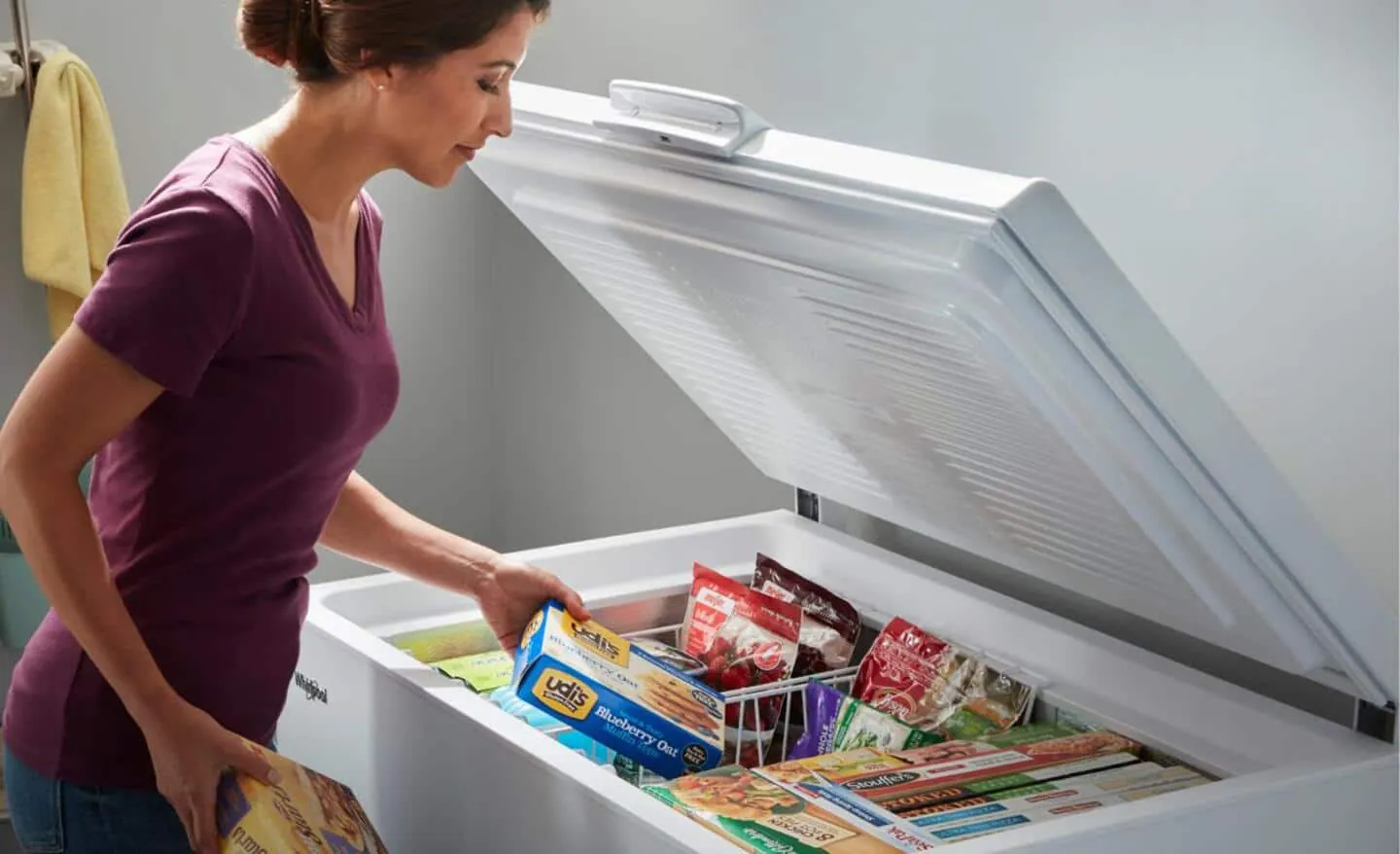
You should choose your freezer based on how often you plan to open the door and how much space you have. Upright models act like a kitchen fridge, while chest models require you to reach down into the unit.
| Method | How long | Effort | Cost | Best for |
|---|---|---|---|---|
| Chest Freezer | Long life | High | Low | Bulk storage |
| Upright Manual | Long life | Medium | Low | Long-term use |
| Upright Auto-Defrost | Medium life | Low | High | Daily access |
If you buy a unit with the ENERGY STAR label, you ensure the model meets strict efficiency standards set by the U.S. Environmental Protection Agency. These units often use high-efficiency compressors and better insulation to lower your monthly utility bills. Always check the annual energy guide sticker on the unit before you buy, as efficiency varies by size and motor quality.
Chest freezers and energy savings
A chest freezer saves energy primarily due to its design. When you lift the lid, the heavy cold air remains at the bottom of the bin rather than spilling out into your room. Upright models lose more chilled air than chest models when the door is opened, which forces the compressor to run longer to recover the temperature.
Place the freezer in a cool, dry area away from direct sunlight or heat sources. Ambient temperatures above 80 degrees Fahrenheit force the motor to work significantly harder, increasing your monthly utility bill by as much as 15%.
Keep the unit at least 75% full to help maintain a stable internal temperature. Frozen items act as a thermal mass, keeping the air cold even if the power fluctuates. If you have empty space, fill the gaps with jugs of water to stabilize the environment.
Check the lid seal regularly. Slide a piece of paper into the closed lid; if it pulls out without resistance, the gasket is failing and needs replacement. A compromised seal causes frost to accumulate rapidly, which acts as an insulator and forces the compressor to run continuously. Consult your owner’s manual for the recommended maintenance schedule based on your usage.
If you live in a humid climate, defrost the unit manually once a year to prevent ice buildup. Excess frost thicker than a quarter-inch forces the motor to cycle twice as often to achieve the same cooling effect.
Upright manual defrost freezers
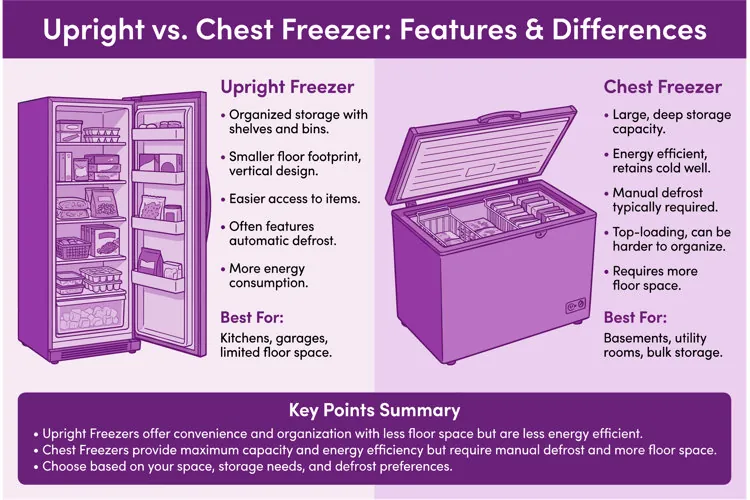
Manual defrost upright freezers offer a middle ground between convenience and efficiency. Because they don’t have an automatic heating cycle to melt ice, they use significantly less electricity than frost-free models.
Set the thermostat to 0°F to ensure food remains safely frozen. Monitor the walls for frost and scrape it off when it reaches 1/4 inch thick. If you wait until the ice reaches 1/2 inch, the compressor will run 20% longer to maintain the same internal temperature.
Keep the door closed as much as possible to prevent warm air from entering. Verify the door gasket is clean and free of debris once a month. If you can slide a piece of paper through the closed seal, the gasket is failing and must be replaced immediately to prevent rapid ice buildup.
These freezers are ideal for long-term storage where you rarely access items. Avoid them if you need daily access, as the frequent door openings will force you to defrost every few weeks.
The primary disadvantage is the time you spend manually scraping ice. If you forget to defrost, the ice layer acts as an insulator, forcing the motor to work harder and increasing your energy bill. Keep a plastic scraper tethered to the unit to ensure you never use metal tools, which can puncture the refrigerant lines.
Upright automatic defrost freezers
Automatic defrost models use a heater to melt ice buildup on the coils, which provides the highest level of convenience. This feature prevents frost from accumulating on your food packages, keeping them easier to identify and use.
Install the unit on a level surface so the door seals tightly every time. If the door gasket doesn’t seat perfectly, warm air enters and forces the heater to cycle continuously. This mistake can spike your monthly power bill by 15% or more.
Leave at least 3 inches of space around the back and sides for proper airflow. Without this clearance, the compressor struggles to dissipate heat, which shortens the lifespan of the cooling system.
Organize your items using the built-in shelves to minimize the time the door stays open.
Clean the condenser coils once every 6 to 12 months to maintain peak performance. Use a vacuum attachment to remove dust, as a clogged coil forces the motor to run longer.
These units are ideal for families who access their freezer items multiple times a week. If you prioritize long-term food quality over energy efficiency, the automatic defrost cycle is your best choice.
Choosing between chest and upright freezer efficiency
When you’re in a hurry to grab dinner, an upright model is best because the shelving allows you to see everything at a glance. If you’re doing this for the first time and want to save as much money as possible, a chest freezer is the superior choice. If you want the best possible result regardless of cost, an upright unit with a high energy rating provides the best user experience.
The trade-off is simple: you either choose a lower electricity bill with a chest design or better organization with an upright model. Chest freezers hold more volume per square foot, but items at the bottom often become “forgotten food” that eventually requires disposal. If you lose track of inventory, you lose the money you saved on the unit itself.
If your kitchen space is limited, an upright unit saves floor space, but it will likely require more frequent cleaning of the condenser coils to keep it running well. Always match the size of the freezer to your actual food storage needs, as a large, empty freezer is less efficient than a smaller, full one.
A good rule is to allow three cubic feet of space per person in your household. If you live alone but buy in bulk, lean toward a smaller chest model to minimize wasted energy.
Rules for all freezer types

Regardless of which model you select, following basic maintenance ensures your appliance lasts for years. Always keep the internal temperature at 0°F to inhibit bacterial growth and maintain the quality of your food.
If the freezer stops cooling, check the power outlet and the circuit breaker before calling a technician. A common mistake is assuming the compressor has failed when the issue is merely a tripped GFCI outlet or a loose plug.
Never attempt to repair a sealed cooling system yourself. These units contain refrigerant that requires specialized training and licensing to handle legally. If you notice a strange noise or a persistent leak, contact the manufacturer’s service department or a licensed professional. They possess the gauges required to test the compressor and thermostat without compromising the sealed lines.
If you’re unsure about the safety of your food after a power outage, use the four-hour rule. Discard anything that has thawed completely or reached temperatures above 40°F for more than four hours. If the freezer door remained closed, food will typically stay safe for 48 hours in a full unit or 24 hours in a half-full one.
Frequently asked questions
How long does a freezer last?
A well-maintained freezer typically has a long lifespan. This assumes you clean the condenser coils regularly and keep the door seals in good condition. If you live in an area with extreme temperatures or high humidity, the life of the motor may decrease. Always check the manual for specific maintenance schedules provided by your manufacturer to extend the life of your specific model.
Is it safe to put a freezer in the garage?
Yes, it’s safe if you choose a model rated for garage use. Many standard freezers aren’t designed to handle the extreme heat or cold of an unconditioned garage, which can cause the motor to fail. Before you buy, check the manufacturer’s specifications to ensure the unit is “garage ready” and can function in your local climate’s temperature range.
Why is my freezer building up ice?
Ice buildup usually happens because warm, moist air is entering the unit. Check the door gasket for gaps or cracks where air might be leaking in. If the seal is intact, you might be opening the door too frequently or leaving it open for too long. For manual units, ice is normal, but it should be removed once it hits 1/4 inch thick.
How much energy does a freezer use?
Energy use varies by model size and efficiency rating, but most modern chest freezers use between 300 and 500 kilowatt-hours per year. Upright automatic defrost models often use 500 to 800 kilowatt-hours per year. Your actual usage depends on the ambient temperature of the room and how often you open the door, so check the EnergyGuide label on the specific unit you’re considering.
Can I save money by unplugging my freezer?
No, you shouldn’t unplug your freezer unless you’re moving or cleaning it for an extended period. The energy cost to re-chill the unit and the food inside after it warms up is higher than just keeping it running. If you only need a freezer for a few months a year, it’s better to buy smaller amounts of food rather than turning the appliance on and off.
What happens if the freezer door is left open?
If the door is left open, the internal temperature will rise, which causes the compressor to run constantly to compensate. This increases your electricity bill and can cause the motor to overheat or fail prematurely. If you notice the door was left open, close it immediately and check your food for ice crystals or signs of thawing to ensure everything remains safe to eat.
Conclusion
Keeping your freezer at the correct temperature and clear of frost is the best way to ensure your food stays safe and your energy bills stay low. Regular maintenance takes only a few minutes each year but prevents the most common reasons for appliance failure. Always prioritize the manufacturer’s guidance for your specific model to keep it running as efficiently as possible.