
You can fix an oven not cooking evenly by adjusting your rack placement or recalibrating the internal thermostat to match the actual heat levels. When food burns on one side or stays raw in the middle, the most common cause is poor airflow inside the cavity or an inaccurate temperature sensor. These issues often arise from simple physical obstructions or parts that have drifted out of calibration over time.
Why your oven isn’t cooking evenly
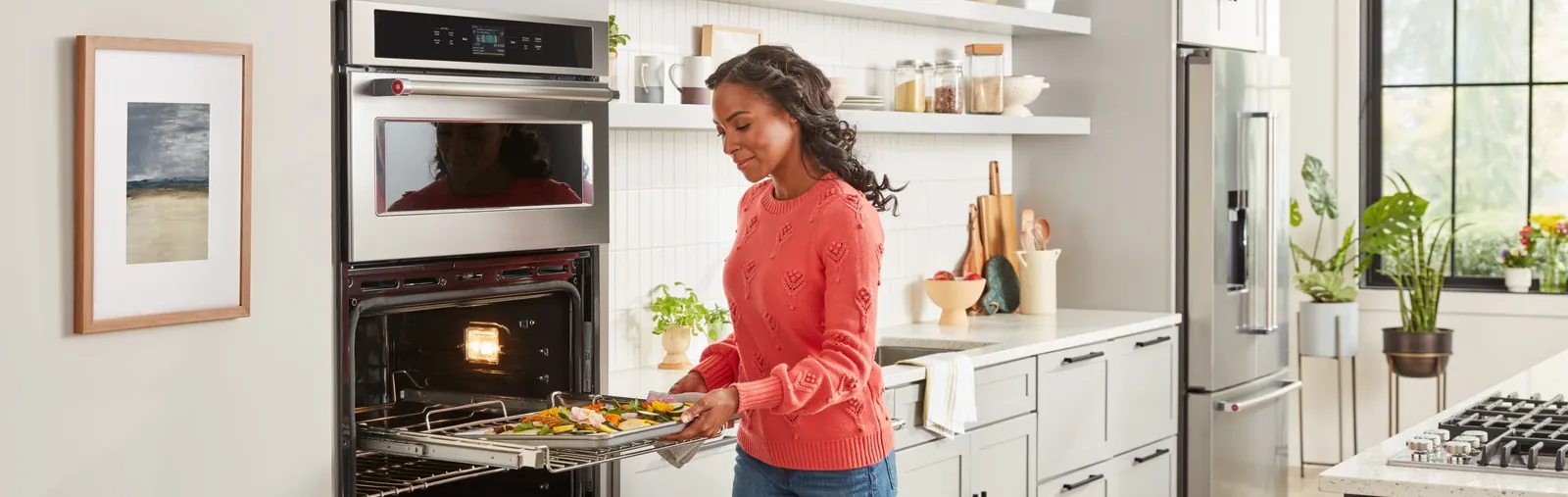
Uneven heating usually happens because the air can’t move freely around your cookware. Your oven relies on a steady flow of hot air to distribute heat, which is why blocking the vents or overcrowding the racks leads to cold spots. If you place a large baking sheet directly over the bottom element or use too many trays at once, you disrupt the circulation needed for a consistent bake.
Another primary reason is a faulty or misaligned temperature sensor. This small probe inside the oven monitors the heat and tells the control board when to turn the heating element on or off. If the probe is bent, touching the wall, or covered in thick grease, it will provide the wrong data to the computer. This causes the oven to cycle too frequently or stay too cool, resulting in uneven browning.
Finally, the door seal or gasket plays a vital role in keeping heat inside. If the seal is loose, torn, or cracked, hot air leaks out of the corners. This forces the oven to work harder to maintain its set temperature. When the seal fails, the temperature drops near the door, which is why your cookies might brown on the back of the tray but stay pale near the front.
Safety: Inside a mains-powered machine, the parts behind the outer cover can hold a dangerous electrical charge even after it has been unplugged — that’s why they sit behind a cover. Opening the housing, or testing or replacing anything behind it, is a job for a qualified technician, never a home repair.
Adjust your cookware and rack placement
If your oven is mostly working but gives inconsistent results, you should change how you load the space. Always leave at least two inches of room between your pans and the oven walls to allow air to circulate. If you’re baking multiple trays, stagger them so they don’t sit directly above one another, which blocks the vertical heat flow.
This approach is for you if you notice your food is consistently darker on one side. If your recipes call for a specific rack level, follow it, but don’t crowd the bottom rack if you’re using a convection setting. For standard baking, use the center rack for the most stable results. If you need to use two racks at once, rotate your pans halfway through the cooking time to balance the heat exposure.
If you’re unsure about your oven’s true temperature, you can use an oven-safe thermometer to check the heat. Place the thermometer in the center of the middle rack and set your oven to 350°F. Wait for the preheat cycle to finish and check the reading after 20 minutes. If the reading is off by more than 25 degrees, you may need to look into an offset adjustment in your specific manual.
Clean the internal components
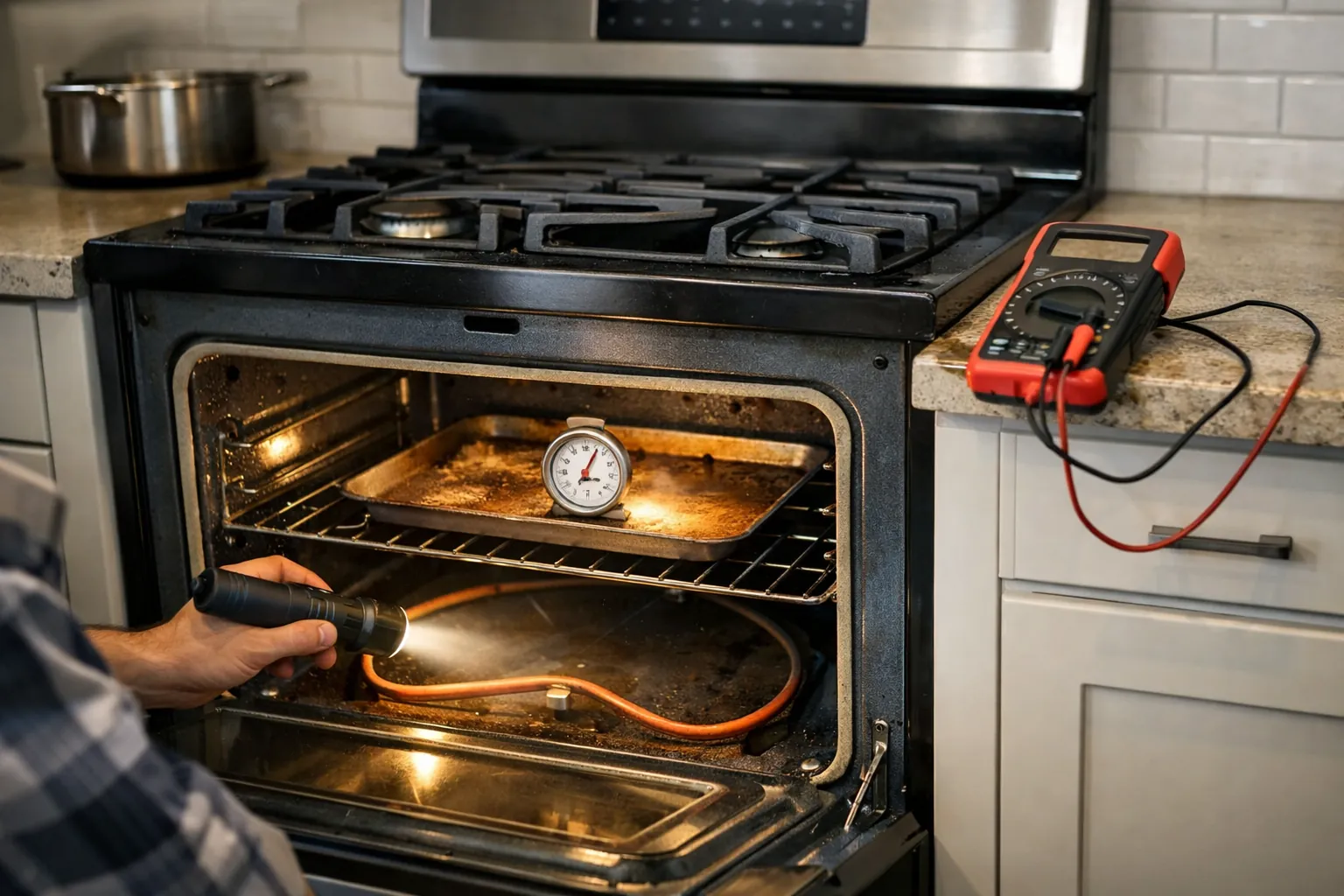
A dirty oven is a common cause of heat distribution problems. Baked-on grease and food debris act as insulators, preventing the heating elements from working at full efficiency. You should check the bottom of your oven for spills that might be blocking the lower heating element or the air intake vents.
Use a soft cloth and mild soap to wipe down the interior walls and the sensor probe. Never use harsh scrapers or steel wool on the probe, as scratching the surface can damage the sensitive internal components. If the probe is covered in thick, carbonized food, it will provide inaccurate readings to the control board.
If you see that the heating element itself is blistered, sagging, or has visible white spots, it may be reaching the end of its life. A damaged element won’t glow evenly or reach the proper temperature. You can test this by setting the oven to 350 degrees and watching the element for three minutes.
Many owners mistakenly scrub the heating element with soapy water, which can cause internal corrosion or short circuits. Keep the element dry at all times. If the element is clearly damaged, it must be replaced by a qualified technician to ensure the electrical connections remain grounded and safe.
Check the door seal integrity
If you feel a draft of air when you stand near the closed oven door, the door gasket is likely failing. This seal is designed to keep the heat trapped inside the cooking chamber. Over time, these gaskets become brittle or lose their elasticity, allowing heat to escape and creating a temperature imbalance.
To test the seal, close the oven door on a simple piece of paper. If you can pull the paper out with almost no resistance, the seal isn’t tight enough. Test this at the top, bottom, and both sides of the door. If the paper slides out easily in any of these spots, the gasket is compromised.
If the gasket is loose or has visible gaps in the corners, it’s time to replace it. A tight seal is essential for efficient heat retention and even cooking results. Neglecting these gaps often leads to a 25-degree drop in internal temperature, which forces the heating element to run constantly. This mistake spikes your energy bill and leads to uneven browning on baked goods.
Be aware that replacing a door seal depends on your model’s design. If the seal is held in place by simple metal clips, you can swap it yourself. If the door requires disassembly to reach the mounting points, call a professional. Attempting to force a seal into a recessed track often bends the door frame, which creates a permanent gap that no new gasket can fix.
Common mistakes that cause uneven cooking
Using dark, non-stick pans for everything causes the bottom of your food to burn because dark surfaces absorb radiant heat faster than light-colored aluminum. If you’re baking delicate pastries, switch to light-colored pans to ensure an even golden crust.
Opening the oven door constantly to check on food drops the internal temperature by up to 25 degrees. This forces the heating elements to cycle back on, creating localized heat spikes that ruin the rise of cakes. Resist the urge to peek; rely on the oven light instead.
Lining the bottom of your oven with aluminum foil blocks essential airflow and reflects heat back onto the heating elements. This mistake can permanently damage the floor of your appliance and cause uneven browning.
Preheating for too short a time means the oven walls remain cold even if the air is hot. Wait at least 15 minutes after the preheat chime sounds before sliding your food inside.
Maintain consistent oven performance
The best way to keep your oven cooking evenly is to establish a routine for cleaning and monitoring its performance. If you’re currently struggling with uneven results, use this table to determine if you need to adjust your habits or if it’s time to seek professional help.
| If you’re doing this | Do this instead | Why |
|---|---|---|
| Crowding every rack | Use only one or two racks | Air needs space to move |
| Using dark metal pans | Switch to light-colored aluminum | Light pans reflect heat evenly |
| Opening the door to look | Use the oven light | Prevents heat loss |
| Foil on the oven floor | Use a baking sheet on a rack | Keeps air vents open |
If your baked goods consistently brown on one side but remain raw on the other, rotate your pans 180 degrees halfway through the cooking time.
If you notice a persistent burnt smell or smoke despite a clean interior, check the door gasket for brittle spots. If you see visible light leaking through the seal, replace the gasket immediately to restore thermal efficiency.
Related guides
- Monte Carlo Fan Remote Troubleshooting: Fix Pairing Issues
- Craftsman Power Washer Troubleshooting: Fix Pressure Issues
- Liftmaster Lock Button Troubleshooting: How to Fix Remote Issues
Frequently asked questions
Can a misaligned rack cause uneven cooking?
An unlevel rack causes batters to bake at an angle, resulting in uneven thickness and cooking. Always ensure racks are fully seated in the manufacturer’s level grooves. If racks are warped from high heat, replace them to ensure pans sit flat during the entire baking process.
How long should I preheat my oven?
You should allow at least 15 to 20 minutes of preheating time for a standard gas or electric oven to reach a stable 350°F. Many ovens beep as soon as the air hits the target, but the walls and racks need extra time to soak up the heat. If you put your food in the moment the beep sounds, your bake will often be uneven because the oven is still cycling heavily.
Is it safe to use an oven with a damaged door seal?
It’s safe to operate, but your cooking results will suffer because the oven will struggle to maintain a consistent temperature. A leaking seal allows hot air to escape, which creates a cool zone near the door and forces the heating elements to work harder. This leads to longer cooking times and food that’s unevenly browned. You should replace the gasket if you notice it’s cracked or loose.
Why is my oven hot on the outside?
Your oven should be warm to the touch, but it shouldn’t be uncomfortably hot, as this indicates that the insulation or the door seal is failing.
What happens if I use a convection setting for everything?
Using the convection fan on every recipe can lead to uneven results if you don’t adjust your temperature or time. Convection moves air rapidly, which can dry out the edges of delicate cakes before the middle is set. If you aren’t using a recipe designed for convection, reduce the temperature by 25°F and start checking your food about 10 minutes earlier than the original recipe suggests.
How often should I clean the sensor probe?
You should wipe the sensor probe whenever you notice a buildup of grease or food residue. A clean sensor is essential for the oven to read the internal temperature accurately. Use a soft, damp cloth to remove any debris, and be very careful not to bend the probe, as even a small change in its position can affect how the oven regulates its heat. Consult your owner’s manual for specific maintenance frequency, as it depends on your usage.
Conclusion
If these quick adjustments don’t solve the problem, it’s time to consult your manual or contact a professional technician. Don’t let a faulty appliance ruin your favorite meals any longer. Getting a reliable repair expert to inspect the heating element will ensure you’re back to baking perfectly golden treats in no time.