
Are you tired of sneezing, itchy eyes, and constant congestion? Allergies can make your home feel less like a sanctuary and more like a battleground.
But what if there was a simple way to breathe easier and reduce your symptoms? An air purifier might be the answer you’re looking for. You’ll discover how an air purifier works and whether it can truly help with your allergies.
Keep reading to find out how you can take control of your indoor air and finally find relief.
How Allergies Affect Indoor Air
Allergies can make indoor air feel uncomfortable and unhealthy. Tiny particles in the air can cause sneezing, coughing, and itchy eyes. These particles are called allergens. They come from many sources inside the home. Allergens float in the air and settle on surfaces. Breathing in these allergens can trigger allergy symptoms quickly.
Understanding what allergens are in your home helps to improve air quality. It also helps to reduce allergy problems. Cleaning and air purifiers can reduce allergens in the air. This makes indoor air easier to breathe and safer for allergy sufferers.
Common Indoor Allergens
Dust mites are a very common indoor allergen. They live in mattresses, carpets, and furniture. Pet dander is another frequent allergen. Cats, dogs, and other pets shed tiny skin flakes. Mold spores grow in damp places like bathrooms and basements. Pollen can enter through open windows and doors. Cockroach droppings also add to indoor allergens.
Air Quality And Allergy Symptoms
Poor air quality worsens allergy symptoms. Allergens in the air cause runny nose and watery eyes. Some people feel tired or have trouble breathing. Dust and pet dander make symptoms last longer. Mold spores can cause coughing and wheezing. Clean air lowers these symptoms and improves comfort. Using an air purifier helps remove allergens from indoor air.
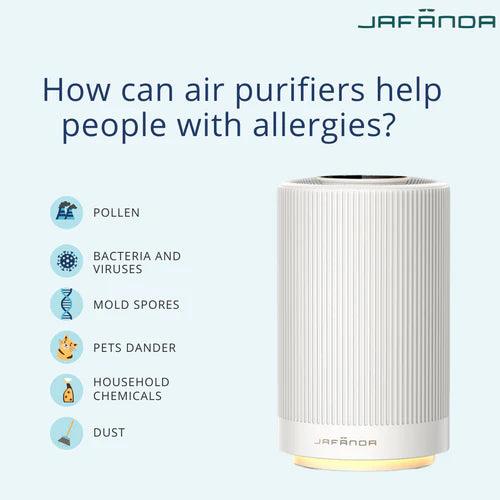
Credit: www.jafanda.com
Role Of Air Purifiers In Allergy Relief
Air purifiers can reduce allergens in indoor air. They help remove dust, pollen, pet dander, and mold spores. Cleaner air means fewer allergy symptoms like sneezing and itchy eyes.
Many people with allergies find relief by using air purifiers regularly. These devices improve air quality and create a healthier living space. Understanding how they work helps you choose the right one.
Types Of Air Purifiers
There are several types of air purifiers available. The most common is the HEPA purifier. It uses a special filter to trap tiny particles from the air.
Other types include activated carbon purifiers. These remove odors and some chemicals. Some air purifiers use UV light to kill germs and bacteria. Each type targets different allergens.
How Filters Capture Allergens
Filters work by trapping particles as air passes through. HEPA filters have very fine mesh that catches small allergens. Dust, pollen, and pet dander get stuck in the filter fibers.
Activated carbon filters absorb gases and odors. They do not trap particles but help with smells. Regular filter cleaning or replacement keeps purifiers effective.
Choosing The Right Air Purifier
Choosing the right air purifier plays a big role in easing allergy symptoms. Not all purifiers work the same way or fit every space. Picking the best one helps remove allergens like dust, pollen, and pet dander from the air. This section guides you through key points to consider.
Hepa Filters Vs. Other Filters
HEPA filters trap tiny particles that cause allergies. They catch up to 99.97% of particles as small as 0.3 microns. Other filters, like carbon or ionic, remove odors or smoke but may not catch all allergens. HEPA filters are usually the best choice for allergy relief. They clean the air more thoroughly.
Room Size And Coverage
Air purifiers work best when matched to room size. Check the purifier’s coverage area before buying. A small purifier in a large room will not clean the air well. For big rooms, choose one with higher coverage. This ensures all the air circulates through the filter. It helps reduce allergens effectively.
Additional Features To Consider
Some purifiers offer extra features that improve usability. Look for quiet operation if you want it in a bedroom. Timers and automatic sensors can save energy. Filters that are easy to replace keep the purifier working well. These features make daily use simple and effective.

Credit: alen.com
Effectiveness Of Air Purifiers For Allergies
Air purifiers claim to reduce allergy symptoms by cleaning the air. They remove particles that cause sneezing, itching, and other reactions. Understanding how well they work helps in choosing the right one. Here is a look at the science and limits behind air purifiers for allergies.
Scientific Studies And Findings
Research shows air purifiers can lower airborne allergens like pollen, dust, and pet dander. Studies often find fewer allergy symptoms when using HEPA filters. These filters trap tiny particles that trigger allergies.
Some research suggests air purifiers improve breathing and reduce irritation. They may help people with asthma, too. Still, results vary by purifier type and room size. Proper use is key to getting benefits.
Limitations To Keep In Mind
Air purifiers do not remove all allergens or solve allergy problems alone. They work best with other cleaning methods like vacuuming and dusting. Filters need regular replacement to stay effective.
Some purifiers produce ozone, which can irritate lungs. Avoid those models for allergy relief. Also, air purifiers only clean air in one room at a time. They cannot remove allergens from furniture or carpets.
Tips For Maximizing Allergy Relief Indoors
Maximizing allergy relief indoors takes more than just using an air purifier. Small daily habits help reduce allergens and improve air quality. Simple steps create a cleaner, healthier space for allergy sufferers.
Here are key tips to get the most benefit from your air purifier and keep allergies at bay.
Regular Cleaning Habits
Dust and vacuum your home often. Use a vacuum with a HEPA filter to trap tiny particles. Wash bedding and curtains weekly in hot water to kill dust mites. Clean surfaces with a damp cloth to avoid spreading dust into the air. Keep clutter low to reduce places where allergens hide.
Managing Humidity Levels
Keep indoor humidity between 30% and 50%. Use a dehumidifier in damp areas like basements. Dry wet spots quickly to stop mold growth. Proper humidity slows dust mites and mold. Measure humidity with an inexpensive meter for accuracy.
Combining Air Purifiers With Other Strategies
Use an air purifier with a HEPA filter to catch allergens. Run it in rooms where you spend most time. Keep windows closed during high pollen seasons to reduce outdoor allergens. Avoid smoking indoors and limit pet access to bedrooms. Together, these steps lower allergen levels and improve air quality.
Maintenance And Care For Air Purifiers
Proper maintenance and care keep your air purifier working well. Clean air depends on a clean machine. Regular attention helps remove dust, allergens, and other particles. This keeps the air fresh and safe to breathe. Simple steps extend the life of your purifier and improve its performance.
Filter Replacement Frequency
Filters trap dust, pollen, and allergens. Over time, these filters fill up and lose effectiveness. Changing filters regularly is important. Most filters need replacement every 3 to 6 months. Some models have indicators to show when to replace filters. Check your air purifier’s manual for exact timing. Using old filters reduces air quality and strains the machine.
Cleaning And Upkeep
Cleaning the air purifier body prevents dust buildup. Wipe surfaces with a soft, damp cloth weekly. Avoid using harsh chemicals that can damage parts. Clean the air intake and outlet vents carefully. Some models have washable pre-filters. Remove and rinse them gently under water. Dry completely before reinstalling. Regular upkeep ensures the purifier runs quietly and efficiently.
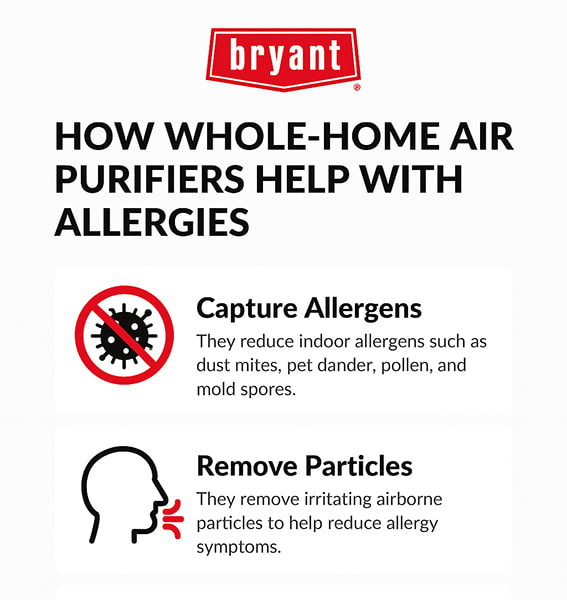
Credit: www.bryant.com
Frequently Asked Questions
Can Air Purifiers Reduce Allergy Symptoms Effectively?
Air purifiers trap allergens like dust, pollen, and pet dander from the air. This lowers allergen levels and helps ease symptoms. They work best in small to medium rooms.
What Types Of Allergens Can Air Purifiers Remove?
Air purifiers can remove dust, pollen, mold spores, pet dander, and smoke particles. HEPA filters are most effective at capturing tiny allergy triggers. Not all purifiers handle gases or odors well.
How Often Should Air Purifier Filters Be Changed?
Filters should be changed every 3 to 6 months, depending on use and model. Dirty filters reduce air purifier efficiency. Regular cleaning helps keep allergy relief consistent.
Can Air Purifiers Help With Indoor Mold Allergies?
Yes, air purifiers with HEPA filters can capture mold spores in the air. They reduce airborne mold but do not fix mold growth on surfaces. Controlling moisture is also important.
Is An Air Purifier Enough To Control Allergies At Home?
An air purifier helps but should be part of a full allergy plan. Cleaning, reducing dust, and keeping windows closed during pollen season also matter. It’s a useful tool, not a complete solution.
Conclusion
Air purifiers can reduce many allergy triggers in your home. They trap dust, pollen, and pet dander from the air. Breathing cleaner air may ease allergy symptoms over time. Still, air purifiers work best with other allergy control steps. Keep your space clean and avoid known allergens.
Choose a purifier with a HEPA filter for the best results. Small changes can make your home more comfortable. Breathing easier feels good, right? An air purifier can help, but it’s not a cure-all. Use it as part of a simple allergy care routine.