
Are you worried about viruses floating in the air you breathe every day? You’re not alone.
Many people wonder if air purifiers can actually protect them from harmful viruses. Imagine having a device that cleans the air around you, making your home or office safer and healthier. But does it really work? You’ll discover how air purifiers handle viruses and whether they are a smart addition to your space.
Keep reading to find out what science says and how you can make the best choice for your health.

Credit: www.stadlerform.com
How Air Purifiers Work
Understanding how air purifiers work can help you decide if they’re the right tool to reduce viruses in your space. These devices clean the air by trapping or neutralizing harmful particles, including some viruses. But not all air purifiers operate the same way or offer the same level of protection.
Types Of Air Purifiers
Air purifiers come in various types, each designed to tackle airborne pollutants differently. The most common are:
- HEPA Purifiers: Use high-efficiency filters to trap particles as small as 0.3 microns.
- UV-C Light Purifiers: Use ultraviolet light to kill or inactivate microbes like bacteria and viruses.
- Ionizers: Release charged ions that attach to particles, making them easier to capture or settle out of the air.
Choosing the right type depends on your specific needs, like allergy relief or virus reduction.
Filtration Technologies
Filtration technology is key to how effectively an air purifier cleans your air. HEPA filters physically trap particles by forcing air through a dense mat of fibers.
UV-C light purifiers don’t trap particles but instead damage the DNA or RNA of viruses and bacteria, stopping them from replicating. Ionizers change the charge of particles so they stick to surfaces or collection plates inside the purifier.
Each method has strengths, but combining technologies often improves overall air quality.
Effectiveness Against Particles
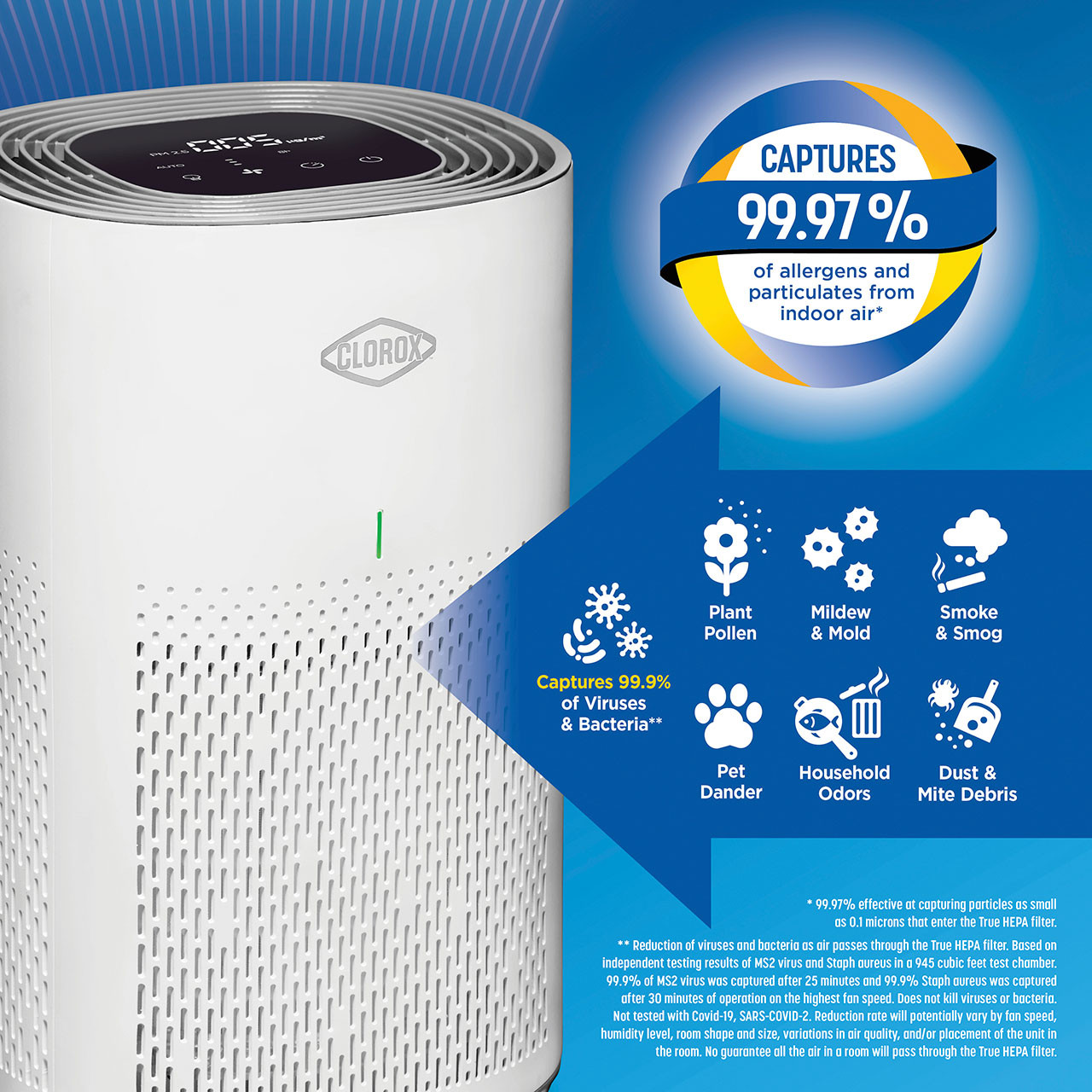
HEPA filters are proven to capture many virus-sized particles, but they don’t kill viruses—they just trap them. UV-C light can deactivate viruses but requires the air to pass close enough to the light for a sufficient time.
Ionizers may reduce some airborne viruses but can produce ozone, which might irritate your lungs.
Have you noticed if your air feels fresher or if you get sick less often after using an air purifier? That personal experience can tell you a lot about its effectiveness in your environment.
Credit: cloroxhomeappliances.com
Viruses In Indoor Air
Viruses can float in indoor air and cause illnesses. Understanding how they spread inside buildings helps us stay safe. Indoor air often holds tiny virus particles. These particles can come from coughs, sneezes, or talking.
Closed spaces with poor ventilation make virus spread easier. Knowing more about virus particle sizes and risks helps choose better protection methods.
How Viruses Spread Indoors
Viruses spread through droplets and aerosols. Droplets are larger and fall quickly. Aerosols are smaller and stay in the air longer. Breathing in these particles can infect the lungs. Crowded rooms and poor airflow increase virus spread. People close to an infected person have higher risk.
Virus Particle Sizes
Virus particles vary in size but often attach to droplets. Droplets can be larger than 5 microns. Aerosols are smaller than 5 microns. Smaller particles travel farther and stay airborne longer. Air purifiers can capture many of these tiny particles. Knowing size helps choose the right air purifier filter.
Airborne Virus Risks
Airborne viruses can infect people without direct contact. Small particles can spread across rooms. Poor ventilation traps virus particles indoors. Activities like talking loudly increase airborne virus levels. Using fans or opening windows helps reduce risk. Air purifiers lower virus particle concentration in the air.
Air Purifiers And Virus Removal
Air purifiers can help reduce viruses in the air. They clean the air by removing tiny particles that carry viruses. This lowers the chance of breathing in harmful germs. Different technologies work in different ways to fight viruses.
Understanding how each type works helps choose the right air purifier for virus removal. Some focus on trapping viruses, while others kill them.
Hepa Filters And Viruses
HEPA filters capture very small particles, including virus particles. They trap up to 99.97% of particles as small as 0.3 microns. Viruses often attach to larger droplets, which HEPA filters catch easily. These filters do not kill viruses but stop them from spreading in the air.
Uv-c Light Technology
UV-C light kills viruses by damaging their DNA or RNA. This stops viruses from multiplying and infecting people. Some air purifiers use UV-C lights inside the device to disinfect the air. The light works best when air passes slowly near the UV-C source.
Ionizers And Ozone Generators
Ionizers release charged particles that attach to viruses. This makes viruses heavier and causes them to fall out of the air. Ozone generators produce ozone gas, which can kill viruses. Ozone can be harmful to humans, so these devices need careful use. Many experts advise against using ozone generators in occupied spaces.
Credit: www.choice.com.au
Scientific Evidence On Virus Reduction
Air purifiers are popular for cleaning indoor air. Many people wonder if they can reduce viruses too. Scientific studies explore this question. Research shows some air purifiers can lower virus particles in the air. This section reviews the key scientific evidence on virus reduction by air purifiers.
Laboratory Studies
Laboratory tests use controlled settings to check air purifier performance. Scientists release virus-like particles in a sealed room. Air purifiers run to capture these particles. Results often show a drop in airborne virus particles. Some purifiers use HEPA filters that trap tiny virus-sized particles. UV light air purifiers can also inactivate some viruses. Labs prove air purifiers can reduce virus particles under ideal conditions.
Real-world Testing
Real-world tests study air purifier effects in homes, offices, and schools. These tests are less controlled than labs. Air flow, room size, and people movement affect results. Some studies report lower virus presence with air purifiers. Others find mixed or small effects. Real-world results depend on purifier type and room use. Still, many experts agree air purifiers help reduce virus spread indoors.
Limitations Of Air Purifiers
Air purifiers cannot remove all viruses in every situation. They work best with closed windows and doors. Large rooms or open spaces reduce their effectiveness. Air purifiers do not replace masks or vaccines. Poor maintenance lowers purifier performance. Filters need regular changing for best results. Air purifiers help but are only one part of virus control indoors.
Choosing The Right Air Purifier
Choosing the right air purifier is key to improving your indoor air quality. Not all purifiers suit every room or need. Picking one that fits your space and lifestyle ensures better virus removal and cleaner air. Consider the size of your room, how easy it is to keep the filters clean, and the energy the purifier uses. These factors help you make a smart choice that works well and saves money.
Room Size And Coverage
Air purifiers have a specific coverage area. This shows how much space they clean effectively. Check the square footage of your room before buying. A small purifier won’t clean large rooms well. Choose a model that matches or exceeds your room size. This ensures virus particles get filtered out properly.
Filter Maintenance
Filters trap viruses and dust but need regular care. Dirty filters reduce air purifier performance. Look for models with easy-to-change filters. Some have indicators to tell you when to replace filters. Regular maintenance keeps the purifier working well and extends its life.
Energy Efficiency
Air purifiers run for many hours daily. Energy-efficient models lower electricity bills. Check energy ratings before buying. Some purifiers have eco or sleep modes to save power. Choosing an efficient model helps the environment and your wallet.
Complementary Virus Prevention Methods
Air purifiers can reduce some airborne viruses, but they work best with other methods. Using several virus prevention steps together keeps spaces safer. These methods lower virus spread and protect health. Below are important actions to use with air purifiers.
Ventilation Improvements
Good airflow helps remove virus particles from indoor air. Open windows or use fans to bring fresh air inside. Ventilation lowers virus concentration and reduces infection risk. HVAC systems with filters also improve air quality. Aim for steady air exchange in rooms.
Mask Wearing
Masks block virus droplets from spreading between people. Wearing masks indoors or in crowds adds a strong layer of protection. Masks help even if air purifiers are in use. Use masks that fit well and cover nose and mouth. They reduce exposure to airborne viruses effectively.
Regular Cleaning
Cleaning surfaces removes virus germs that settle on objects. Use disinfectants on high-touch areas like doorknobs and tables. Clean floors and counters often, especially in shared spaces. Regular cleaning cuts the chance of catching viruses from surfaces. Combine this with other methods for best results.
Frequently Asked Questions
Can Air Purifiers Reduce Airborne Viruses Effectively?
Air purifiers with HEPA filters can capture many airborne viruses. They help lower virus particles in the air but do not remove all.
What Types Of Filters Work Best Against Viruses?
HEPA filters and UV light are most effective. HEPA traps particles, while UV light can kill some viruses.
Do Air Purifiers Replace Masks Or Social Distancing?
No, air purifiers are an extra step. Masks and distancing remain important to reduce virus spread.
How Often Should I Change Air Purifier Filters?
Change filters every 6 to 12 months or as the manual suggests. Clean filters work better to trap viruses.
Can Air Purifiers Help In Small Or Large Rooms?
Air purifiers work best in small to medium rooms. Larger rooms need bigger or multiple purifiers for good effect.
Conclusion
Air purifiers can reduce some airborne viruses. They help clean the air in small spaces. Still, they don’t replace other safety steps. Masks, hand washing, and good ventilation matter too. Choose a purifier with a true HEPA filter. Keep it running as the instructions say.
Clean air supports healthier breathing every day. Use air purifiers as part of your virus defense. Small actions together make a big difference. Stay safe and breathe easier indoors.