
Are you planning to build a deck but can’t decide between composite decking and wood decking? This choice can shape how your outdoor space looks, feels, and lasts for years to come.
You want a deck that’s not just beautiful but also fits your lifestyle and budget. You’ll discover the key differences between composite and wood decking. By the end, you’ll feel confident making the right choice for your home and enjoy your outdoor oasis without any regrets.
Keep reading to find out which decking option suits you best.
Credit: www.decks.com
Material Comparison
Choosing the right decking material is important for your outdoor space. Both composite and wood decking have unique qualities. Comparing their materials helps you decide which fits your needs better.
Composition Of Composite Decking
Composite decking is made from a mix of wood fibers and plastic. This blend creates a strong, low-maintenance material. The plastic helps resist moisture and insects. Wood fibers give it a natural look. Some composites also include recycled materials. This makes them eco-friendly. Composite decking does not need painting or staining. It holds color well over time.
Types Of Wood Decking
Wood decking comes in several types. Common options include cedar, redwood, and pressure-treated pine. Cedar and redwood have natural oils that resist rot and insects. Pine is affordable but needs chemical treatment. Each wood type offers a different color and grain. Wood decking can be sanded and refinished. It requires regular staining or sealing to last longer.
Durability Factors
Composite decking resists fading, cracking, and warping. It stands up well to weather changes. Wood decking can crack, splinter, or rot over time. It is vulnerable to insects and moisture damage. Proper care extends wood’s life. Composite decking needs less upkeep. Both materials can last many years with good maintenance. Climate and usage affect durability the most.
Appearance And Style
Appearance and style play a big role in choosing between composite decking and wood decking. Both offer unique looks that suit different tastes. Understanding their differences helps you pick the right deck for your home.
Color Options
Composite decking comes in many colors. You can find shades like gray, brown, and even red. These colors stay consistent across all boards. Wood decking shows natural color variations. It ranges from light tan to deep brown. Wood also accepts stains well. This lets you change its color easily over time.
Texture And Finish
Composite decking often has a smooth or slightly textured surface. Some types mimic wood grain for a natural feel. Wood decking offers a real, rough texture. It feels warm and organic underfoot. You can sand wood to change its finish. Composite boards keep their original texture without changes.
Aging And Fading
Composite decking resists fading and looks good for years. It holds color even under strong sunlight. Wood decking fades and changes color over time. Sun and weather cause wood to gray or darken. Regular sealing helps protect wood’s original look. Without care, wood ages faster than composite.
Maintenance Needs
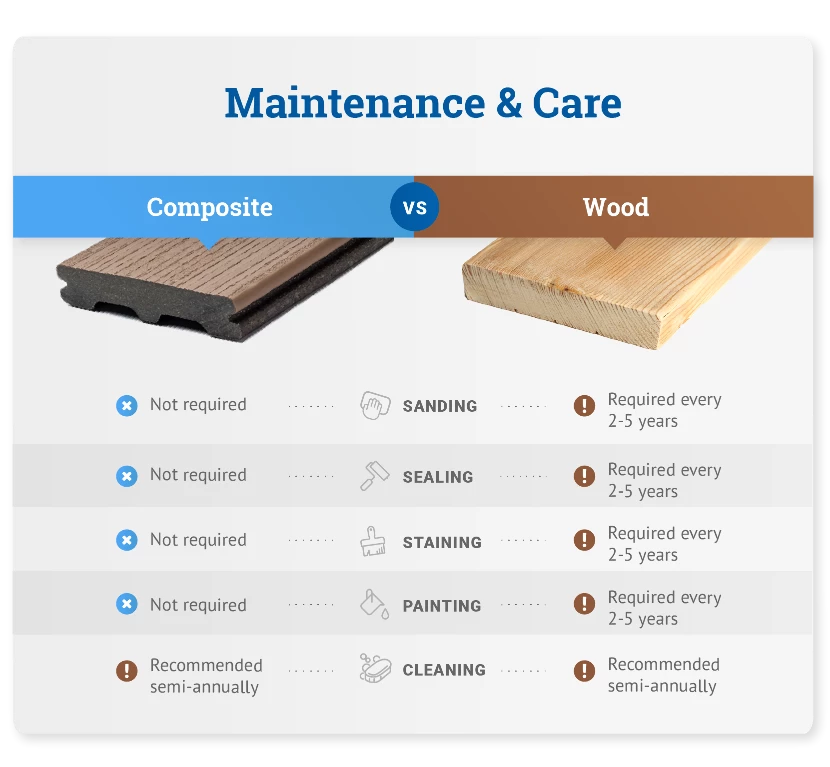
Maintenance needs differ greatly between composite and wood decking. Understanding these differences helps in choosing the right material. Both types require care but vary in effort and frequency.
Cleaning Requirements
Composite decks need simple cleaning with soap and water. A soft brush removes dirt and debris easily. No special cleaners are necessary.
Wood decks require more frequent cleaning to prevent dirt buildup. Using wood-specific cleaners helps protect the surface. Pressure washing is common but must be done carefully.
Repairs And Upkeep
Composite decking rarely needs repairs. It does not splinter or crack easily. Any damages are usually minor and simple to fix.
Wood decks often need sanding and sealing to maintain their look. Cracks and splinters appear over time. Regular staining or painting is necessary to protect wood.
Resistance To Pests And Mold
Composite materials resist pests like termites and do not rot. Mold growth is minimal and easy to clean.
Wood decks are vulnerable to insects and mold. Termites can cause serious damage. Mold and mildew require constant monitoring and treatment.
Installation Process
The installation process is a key factor when choosing between composite decking and wood decking. It affects the overall time, cost, and effort needed to complete your deck project.
Understanding how each material installs helps plan your work better. It also guides you in picking the right option for your skills and budget.
Ease Of Installation
Composite decking often has a simpler installation process. Many boards come with clip systems that hide screws and nails. This feature makes the deck look cleaner and saves time.
Wood decking requires more care in placing and securing each board. You need to measure and cut precisely to avoid gaps or uneven surfaces. It can be tricky for beginners.
Required Tools And Skills
Composite decking needs basic tools like a drill, saw, and level. The clip systems reduce the need for extra fasteners. Skills needed are moderate and easy to learn.
Wood decking requires more tools such as a hammer, nails, saw, and sometimes a nail gun. You must have some carpentry skills to work with wood properly.
Time And Labor Costs
Composite decks usually take less time to install. The hidden fastener system speeds up the process. Less labor means lower costs if hiring professionals.
Wood decks take longer due to cutting, fitting, and fastening each board. Labor costs can be higher because of the extra work involved.
Cost Analysis
Cost plays a big role in choosing between composite and wood decking. Understanding the costs helps you make a smart choice. This section breaks down the costs into three parts: initial investment, long-term expenses, and value retention. Each part shows how these decking options compare.
Initial Investment
Wood decking usually costs less at the start. The price depends on the type of wood. Common woods like pine are cheaper, while hardwoods cost more. Composite decking has a higher upfront price. It combines wood fibers and plastic, which adds to the cost. Still, many find the durability worth the initial spend.
Long-term Expenses
Wood decks need regular maintenance. Staining, sealing, and repairs add to costs over time. Wood can rot or warp, causing more expenses. Composite decks require less upkeep. They resist fading, staining, and insects. This lowers the money spent on repairs and maintenance in the long run.
Value Retention
Wood decks may lose value due to weather damage and wear. Composite decks keep their look longer. They often hold value better if you sell your home. Buyers may prefer composite decks because of low maintenance. This can make composite decking a better investment over time.
Environmental Impact
The environmental impact of decking materials is a key factor for many homeowners. Choosing the right material affects natural resources and waste. Both composite and wood decking have different effects on the environment. Understanding these differences helps make a better choice for your outdoor space and the planet.
Sustainability Of Materials
Wood decking comes from trees, a natural resource. Sustainable wood comes from forests that are carefully managed. This means trees are replanted to replace those cut down. Composite decking uses recycled materials like plastic and wood fibers. It reduces the need to cut down trees. Both options can support sustainability, depending on sourcing and production.
Recyclability
Wood decking can be reused or recycled, but options are limited. Old wood might be repurposed for other projects or burned for energy. Composite decking is often made from recycled plastics and wood waste. Some brands offer take-back programs to recycle old boards. Recycling composite materials reduces landfill waste and lowers environmental harm.
Carbon Footprint
Wood decking has a lower carbon footprint if sourced locally and from sustainable forests. Trees absorb carbon as they grow, which helps offset emissions. Composite decking requires more energy to produce due to plastic processing. However, it lasts longer and needs less maintenance. Longer lifespan means fewer replacements and less waste over time.
Safety And Comfort
Safety and comfort are key factors in choosing decking material. Both affect how much you enjoy your outdoor space. Choosing the right deck means fewer worries about accidents or discomfort. This section explores these aspects in composite and wood decking.
Slip Resistance
Composite decking often has a textured surface to reduce slipping. It stays safer when wet compared to smooth wood. Wood decking can become slippery with rain or dew. Rougher wood types may help, but they wear down over time. Composite decks provide better grip for bare feet and shoes.
Heat Retention
Wood decking usually stays cooler in the sun. It absorbs less heat than composite materials. Composite decks can get hot on sunny days, which may cause discomfort. This can make walking barefoot unpleasant. Wood offers a more comfortable surface during warm weather.
Splinter And Toxicity Risks
Wood decking can cause splinters, especially if it ages or cracks. This can be painful and unsafe for children and pets. Composite decking is made to resist splinters and feels smooth. Some older composite materials had chemicals, but modern options are safer. Overall, composite decking lowers the risk of splinters and harmful exposure.

Credit: www.thinkwood.com
Best Uses And Applications
Choosing the right decking material depends on its use and location. Each option offers unique benefits for different settings. Understanding where composite or wood decking works best helps make a smart decision.
Ideal Settings For Composite Decking
Composite decking suits busy outdoor spaces. It handles heavy foot traffic without damage. Perfect for family patios, pool areas, and decks near gardens. It resists stains and scratches well. Ideal for places needing low upkeep and long life.
Ideal Settings For Wood Decking
Wood decking fits natural, rustic spaces. Great for quiet gardens or cabins. It blends well with trees and plants. Wood offers warm, classic beauty for outdoor rooms and porches. Best for those who enjoy regular care and refinishing.
Climate Considerations
Composite decking excels in wet and humid climates. It resists mold, mildew, and fading. Wood decking needs protection in such areas. It can warp, crack, or rot if untreated. In dry climates, wood performs well with less risk. Choose based on local weather and maintenance willingness.

Credit: www.lowes.com
Frequently Asked Questions
What Are The Main Differences Between Composite And Wood Decking?
Composite decking is made from wood fibers and plastic, making it low maintenance. Wood decking is natural, needs regular care, and can rot or splinter over time.
Which Decking Option Lasts Longer, Composite Or Wood?
Composite decking generally lasts 25-30 years with little upkeep. Wood decking may last 10-15 years but requires frequent sealing and repairs.
Is Composite Decking More Expensive Than Wood Decking?
Composite decking costs more upfront but saves money on maintenance. Wood decking is cheaper initially but may cost more long term.
How Does Maintenance Differ Between Composite And Wood Decking?
Composite decks need only occasional cleaning with soap and water. Wood decks require sanding, staining, and sealing every 1-3 years.
Can Composite Decking Withstand Harsh Weather Better Than Wood?
Yes, composite resists moisture, fading, and insects well. Wood can warp, crack, or attract pests in harsh weather.
Does Wood Decking Offer Better Natural Beauty Than Composite?
Wood has a classic, natural look with unique grain patterns. Composite mimics wood but may lack the same authentic feel.
Conclusion
Choosing between composite decking and wood decking depends on your needs. Wood offers natural beauty but needs more care. Composite lasts longer and needs less upkeep. Both have pros and cons to think about. Consider your budget, style, and how much time you can spend on maintenance.
A good deck adds value and comfort to your home. Take your time to decide what fits best for you. Your perfect deck is waiting.