
Owning an RV means freedom, adventure, and the open road. But to keep your home on wheels running smoothly, you need a simple, reliable plan.
That’s where your RV maintenance checklist comes in. Imagine avoiding costly repairs, unexpected breakdowns, and stressful trips—all by following a few easy steps. You’ll discover exactly what to check, when to check it, and how to protect your investment. Ready to keep your RV in top shape and enjoy worry-free travels?
Let’s dive in.
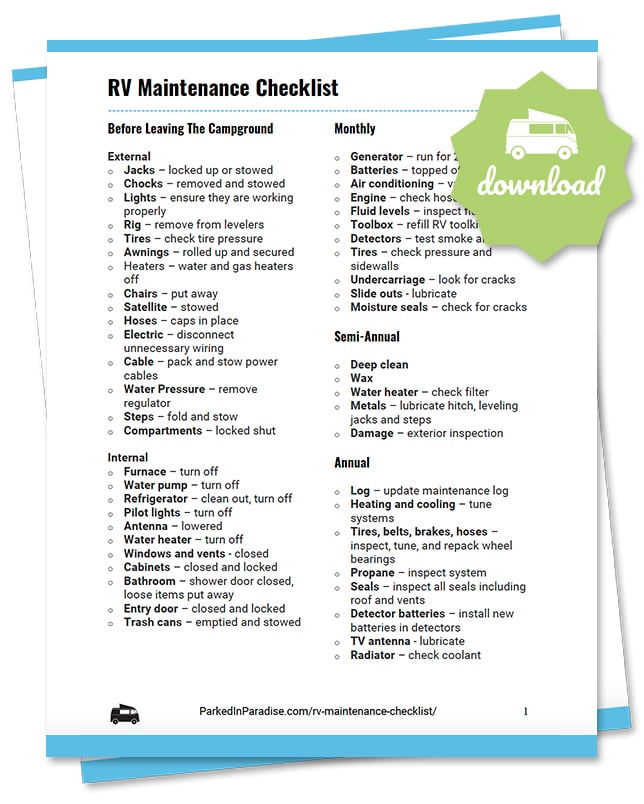
Credit: www.parkedinparadise.com
Daily Checks
Daily checks keep your RV safe and ready to go. Small problems turn big without regular care. Spend a few minutes each day to catch issues early. This helps avoid breakdowns and costly repairs.
Inspect Tires And Tire Pressure
Check tires for cracks, cuts, or bulges. Uneven wear shows alignment or suspension issues. Use a tire gauge to check pressure. Proper pressure improves fuel efficiency and tire life. Adjust pressure to match the recommended levels in your RV manual.
Test Lights And Signals
Turn on all lights: headlights, brake lights, and turn signals. Walk around the RV to see if any lights fail. Replace burnt-out bulbs quickly. Proper lighting keeps you visible and safe on the road.
Check Fluid Levels
Look at engine oil, coolant, brake fluid, and windshield washer fluid. Low levels can cause engine problems or unsafe driving. Top off fluids as needed. Clean fluid reservoirs help your RV run smoothly and last longer.
Weekly Tasks
Weekly tasks keep your RV safe and ready for adventures. Small checks prevent big problems later. These simple steps save time and money.
Clean Exterior And Roof
Wash dirt and grime off the RV’s outside. Use mild soap and water to avoid damage. Clean the roof carefully to stop leaks. Remove leaves and debris from vents and seams. A clean surface helps your RV last longer.
Examine Battery Health
Check the battery for corrosion or loose wires. Clean terminals with a brush if needed. Test the battery voltage to ensure strong power. Charge the battery fully before trips. Good battery health keeps your RV’s systems working.
Flush And Sanitize Water System
Drain old water to remove bacteria and buildup. Flush fresh water through pipes for cleanliness. Use a safe sanitizer to kill germs inside tanks. Run water through all faucets to spread sanitizer. This protects your health and keeps water fresh.
Monthly Inspections
Monthly inspections keep your RV in good shape. Small checks catch problems early. This saves time and money later. Spend time each month to inspect key areas. Focus on parts that wear out or break down easily. Regular care helps your RV last longer and stay safe.
Lubricate Moving Parts
Moving parts need regular lubrication. Doors, slide-outs, and hinges work better when greased. Use the right lubricant for metal and plastic parts. This prevents rust and reduces noise. Smooth operation avoids damage during trips. Apply lubricant monthly to keep parts moving freely.
Inspect Seals And Weatherstripping
Seals and weatherstripping protect your RV from water and air leaks. Check for cracks, gaps, or dry spots. Damaged seals cause leaks and mold inside the RV. Replace old or broken seals quickly. Clean the seals to keep them flexible and effective. This keeps your RV dry and comfortable.
Test Appliances And Electrical Systems
Test all appliances and electrical systems monthly. Check the refrigerator, stove, heater, and air conditioner. Make sure lights, outlets, and batteries work properly. Faulty systems can cause safety risks or breakdowns. Early testing helps fix problems before trips. This keeps your RV safe and comfortable.
Seasonal Maintenance
Seasonal maintenance keeps your RV safe and ready for each trip. It helps avoid costly repairs and extends your RV’s life. Each season demands specific checks and care. Focus on key areas to ensure smooth operation and comfort.
Prepare For Winter Storage
Drain all water tanks to prevent freezing and damage. Use antifreeze in pipes and drains for extra protection. Clean the RV inside and out to stop mold and dirt buildup. Cover vents and openings to keep pests out. Store the RV in a dry, sheltered place.
Check And Service Hvac Systems
Test heating and cooling units for proper function. Replace filters to improve air quality and efficiency. Clean vents and ducts to stop dust buildup. Schedule professional service if you notice strange noises or smells. Regular care prevents breakdowns during trips.
Inspect And Maintain Propane System
Check propane tanks for leaks and rust. Ensure valves open and close smoothly. Test all appliances using propane for safe operation. Replace damaged hoses and fittings immediately. A well-maintained propane system protects your safety.
Engine And Mechanical Care
Engine and mechanical care is crucial for your RV’s performance and safety. Proper maintenance keeps the engine running smoothly. It prevents costly repairs on the road. Regular checks help catch issues early.
Following a maintenance checklist saves time and money. It ensures your RV stays reliable for every trip.
Change Oil And Filters
Oil lubricates the engine parts and reduces wear. Dirty oil can cause engine damage. Change the oil every 3,000 to 5,000 miles. Replace oil filters with every oil change. Clean filters protect the engine from dirt and debris.
Inspect Brakes And Suspension
Brakes are vital for safe driving. Check brake pads and discs for wear. Listen for unusual noises when braking. Inspect suspension components like shocks and springs. Worn suspension affects ride comfort and control.
Check Transmission Fluid
Transmission fluid keeps gears working smoothly. Low fluid can cause shifting problems. Check fluid levels regularly. Look for changes in color or smell. Replace fluid according to the RV manual.
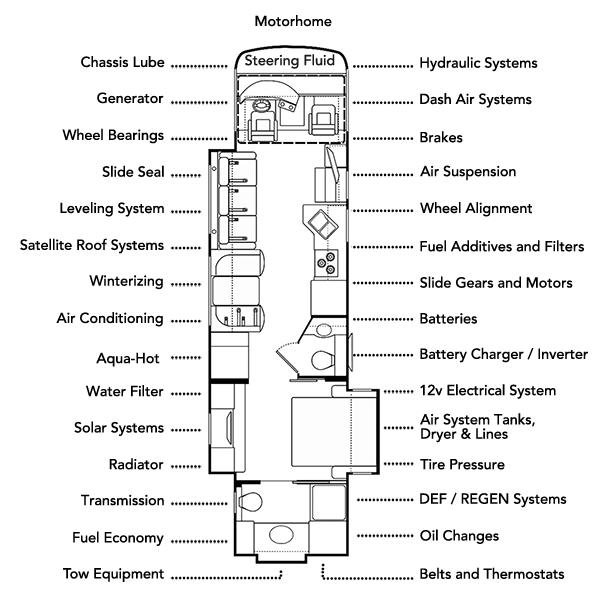
Credit: maintenance.rvlife.com
Safety Equipment Checks
Safety equipment is vital for every RV trip. It protects you and your loved ones from danger. Regular checks keep these devices ready to work. This section covers essential safety equipment checks.
Test Smoke And Carbon Monoxide Detectors
Smoke and carbon monoxide detectors save lives by alerting you early. Press the test button monthly to ensure they beep loudly. Replace batteries every six months or when low. Clean detectors gently with a soft cloth to remove dust. Swap out old detectors every 5-7 years for best protection.
Inspect Fire Extinguishers
Fire extinguishers must be easy to access and in good shape. Check the pressure gauge; it should be in the green zone. Look for cracks, dents, or corrosion on the extinguisher body. Shake it gently to prevent powder clumping inside. Replace or service extinguishers every year or after use.
Review Emergency Exits
Emergency exits provide a quick way out during danger. Ensure all exit windows and doors open smoothly without sticking. Remove any obstacles blocking these exits inside and outside. Test the exit locks and latches to confirm they work well. Practice using these exits with your family before the trip.
Storage Tips
Storing your RV properly keeps it safe and ready for your next trip. Good storage stops damage and costly repairs. It also helps keep your RV clean and working well.
Follow these simple storage tips to protect your investment during downtime.
Protect Against Pests
Check for holes or cracks where pests can enter. Seal all openings with caulk or weatherstripping. Use natural repellents or traps inside the RV. Remove food and crumbs to avoid attracting bugs. Inspect the storage area often to catch pests early.
Cover And Secure Rv
Use a breathable cover to shield your RV from sun and rain. Avoid plastic covers that trap moisture and cause mold. Park on a level surface to prevent tire damage. Block wheels to stop rolling. Lock all doors and windows to keep it safe.
Maintain Battery Charge
Disconnect the battery during long storage periods. Use a battery maintainer to keep it charged. Check battery fluid levels regularly. Clean terminals to avoid corrosion. A healthy battery ensures your RV starts smoothly next time.

Credit: www.lippert.com
Frequently Asked Questions
What Is The Basic Rv Maintenance Checklist?
Check tires, brakes, fluids, battery, lights, and propane system regularly for safety and efficiency.
How Often Should I Perform Rv Maintenance?
Monthly checks and seasonal deep inspections help keep your RV in good shape and prevent issues.
Why Is Tire Maintenance Important For Rvs?
Proper tire care ensures safe travel, prevents blowouts, and improves fuel efficiency.
How Do I Maintain The Rv’s Water System?
Sanitize tanks, check for leaks, and winterize pipes before cold weather to avoid damage.
What Should I Check In The Rv’s Electrical System?
Inspect battery charge, wiring, fuses, and outlets to avoid power failures on the road.
How Can I Prevent Mold And Mildew In My Rv?
Keep the interior dry, ventilate regularly, and fix leaks to stop mold growth.
Conclusion
Keeping your RV in good shape saves money and stress. Regular checks catch small problems early. Clean and inspect key parts often. Follow this checklist before every trip. Enjoy safe and smooth journeys every time. Taking care of your RV helps it last longer.
Simple steps make a big difference. Stay prepared and confident on the road. Your RV will thank you with many happy miles.